


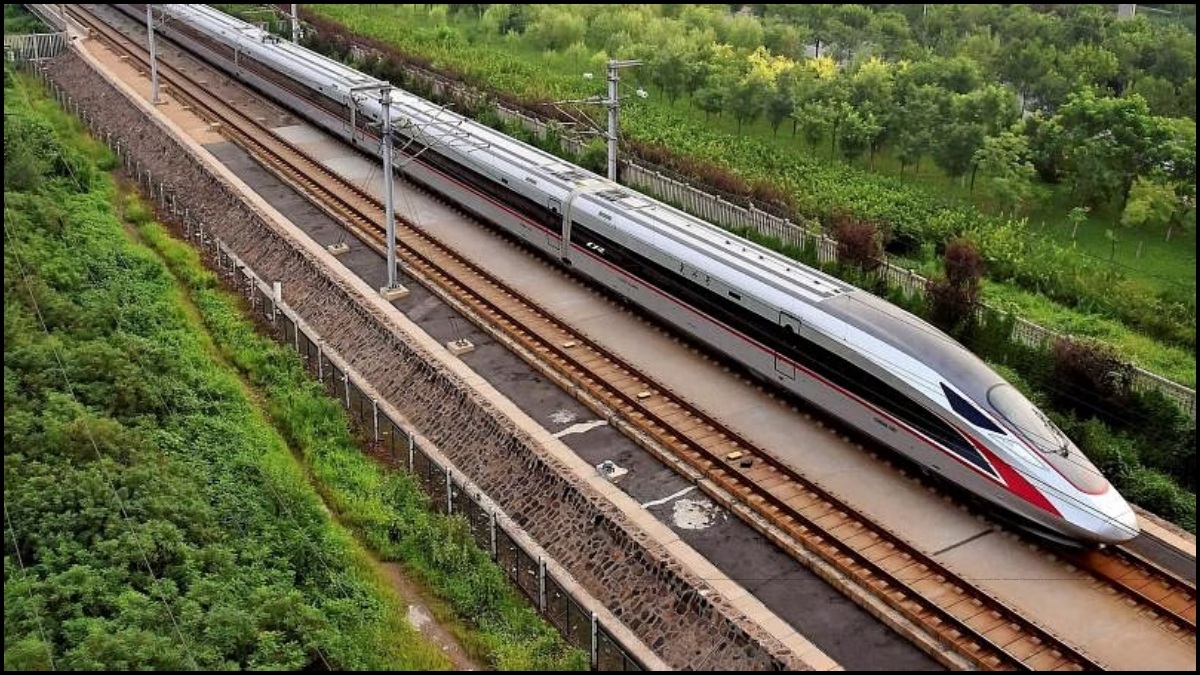
Indian Railways is preparing for its largest-ever investment cycle in high speed rail, signalling a decisive shift in how long-distance mobility, regional growth, and low-carbon transport are planned across the country. The strategy, spanning multiple corridors beyond the under-construction western flagship route, reflects a growing policy emphasis on rail-led development as cities expand and intercity travel demand accelerates.
According to officials familiar with the planning process, the national transporter is finalising a multi-year capital programme aimed at introducing dedicated high speed rail corridors capable of operating at speeds above 300 kmph. These investments are expected to run into record levels over the coming decade, positioning high speed rail as a central pillar of India’s future transport infrastructure rather than a standalone pilot. The push comes at a time when India’s largest urban regions are becoming increasingly interconnected through economic activity, labour migration, and real estate development. Transport economists note that faster, reliable intercity rail can compress travel time between metropolitan clusters, enabling new patterns of business travel, decentralised office locations, and housing markets that extend beyond traditional city cores. Beyond speed, the programme is being framed as a climate and capacity intervention. Railways officials point out that high speed rail offers significantly lower per-passenger carbon emissions compared to short-haul aviation and private road travel. As India works toward long-term emissions reduction goals, shifting intercity demand to electrified rail is seen as one of the most scalable options available.
The current planning roadmap includes feasibility studies and detailed project reports for corridors linking major economic regions in the north, south, and east of the country. While the western corridor has relied heavily on international financing and technology partnerships, future routes are expected to see greater domestic manufacturing participation, aligned with industrial policy goals and supply-chain resilience. Urban planners also highlight the implications for station-area development. High speed rail terminals tend to attract commercial offices, hospitality, and higher-density residential projects, reshaping land values and urban form. However, experts caution that without integrated land-use planning, such developments risk reinforcing inequality by pushing up prices without delivering inclusive public amenities or last-mile connectivity. Financing remains a key consideration. While long-term economic benefits are widely acknowledged, high speed rail requires substantial upfront capital and sustained political commitment. Industry analysts suggest a mix of sovereign funding, multilateral loans, and selective private participation is likely, particularly for station redevelopment and transit-oriented real estate components.
For Indian Railways, the expansion also represents an institutional shift. Managing high speed systems demands new safety regimes, advanced signalling, and specialised maintenance capabilities. Officials indicate that parallel investments are being planned in training, standards, and regulatory oversight to support safe operations at scale. As project preparation advances, the next phase will hinge on corridor prioritisation, state-level coordination, and land acquisition strategies. If executed with attention to affordability, integration, and environmental performance, India’s high speed rail programme could reshape intercity mobility while supporting more balanced, resilient urban growth across regions.
Also Read: Pune To Mumbai Journey Set for Under One Hour
Indian Railways Accelerates High Speed Rail Push
