


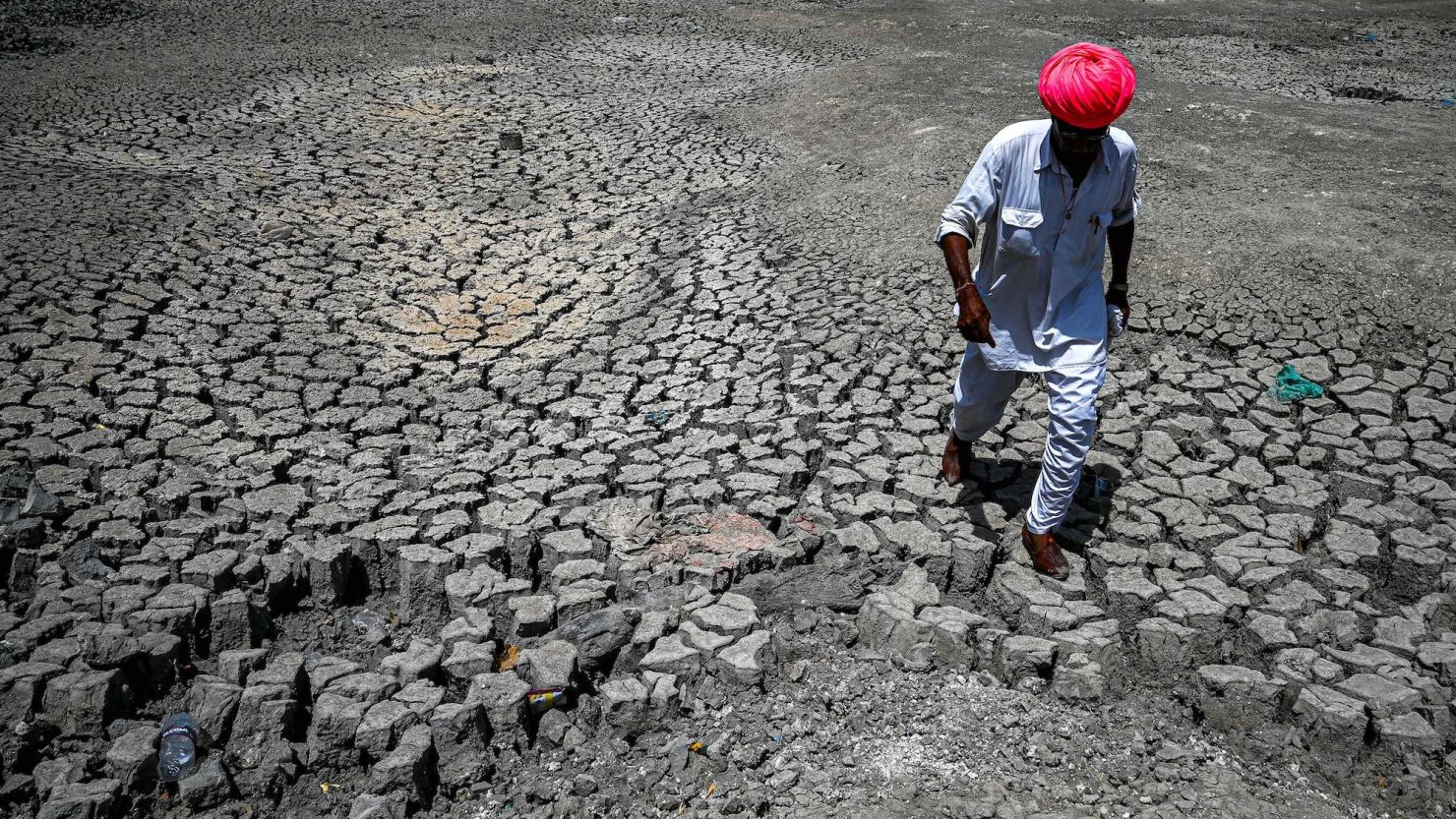
India is grappling with an unprecedented climate emergency as 2024 emerges as the hottest year ever recorded, according to global data. Temperatures have consistently stayed 1.5°C above the pre-industrial average, triggering extreme heatwaves across urban centres.
The India Meteorological Department (IMD) has flagged this as the hottest year since 1901, with 77 heatwave days recorded during summer and temperatures in over 37 cities surpassing 45°C. Delhi reportedly touched a blistering 52.3°C, placing millions at risk, especially the poor, elderly, and outdoor workers. The Union Ministry of Health and Family Welfare recorded over 40,000 heatstroke cases and 360 officially recognised deaths in 2024. However, independent estimates place the toll higher at 733 deaths between March and June. Worryingly, a recent IMD bulletin warns of another spike in average temperatures—up to 6°C above normal—in the coming weeks across 21 major Indian cities, including Barmer in Rajasthan where temperatures already hit 45.6°C.
This persistent climate volatility is no longer a distant threat but an urban humanitarian crisis. Yet, many Indian cities remain woefully underprepared. A national survey across nine cities by a climate policy think tank reveals that urban heat governance remains largely reactive. Most civic authorities have relied on short-term emergency measures such as public hydration points, adjusted work hours, and hospital preparedness. These are vital, but insufficient in the face of intensifying climate extremes. India’s vulnerability stems not just from climate change but also from unplanned urban expansion. Cities like Bengaluru, once celebrated for their temperate weather and abundant greenery, are now sweltering under dense concretisation. In the 1990s, Bengaluru recorded average summer temperatures of around 19°C. Today, the city regularly sees highs exceeding 35°C. Infrastructure projects like white-topped roads—costing significantly more than asphalt alternatives—have contributed to heat-trapping surfaces, reduced groundwater recharge, and worsened flooding. These projects, while politically popular, offer little long-term climate resilience.
Despite the launch of the National Programme on Climate Change and Human Health (NPCCHH) in 2019, implementation gaps persist. Emergency cooling rooms, active hydration points, and dedicated medical infrastructure for heatstroke patients remain underutilised or entirely missing in several regions. This was tragically evident during the 2024 general elections, when 33 election workers reportedly succumbed to heat-related illness in the absence of basic protection. Urban climate adaptation needs to move beyond stop-gap fixes. Long-term resilience lies in redesigning urban environments—expanding green cover, reducing population and infrastructure density, revisiting building regulations, and empowering local institutions. India’s urban heat battle is not only about rising mercury but also about how cities reimagine their relationship with nature, infrastructure, and human dignity.
As the world edges closer to climate tipping points, India’s urban governance must evolve from crisis reaction to climate foresight. A sustainable, equitable and net-zero carbon city is no longer a utopian aspiration it is the only viable path to survival in a warming world.
Also Read :Heatwave retreats as rainfall lowers temperatures in Ahmedabad and across Gujarat
Indian cities struggle to survive soaring heat as climate crisis worsens daily
