


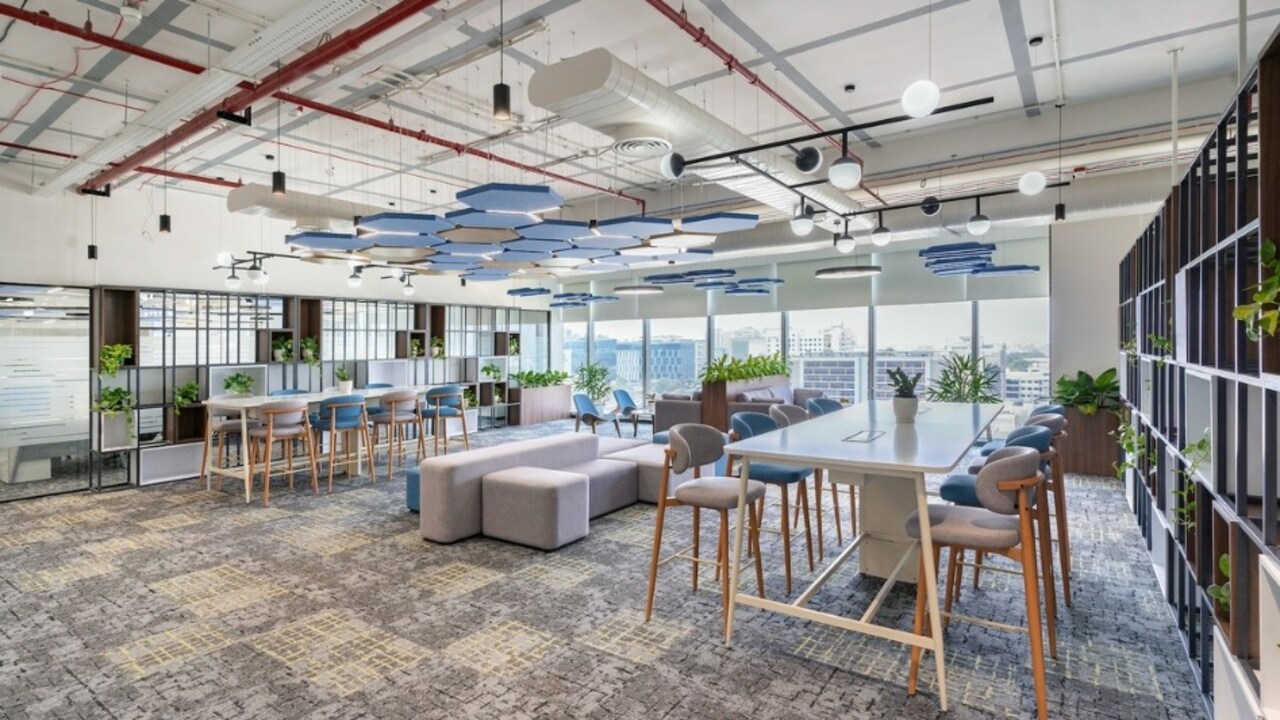
India’s commercial real estate sector reached a historic milestone in 2025 as office leasing activity surged to its highest-ever annual level, reinforcing the country’s position as a critical node in global business operations. Market data indicates that demand was not only strong but widely distributed across major metropolitan regions, reflecting structural changes in how firms approach location strategy, workforce planning and long-term investment.
Gross office leasing across India crossed 83 million square feet during the year, a scale rarely achieved even during earlier growth cycles. Industry analysts attribute this expansion to sustained commitments by multinational corporations, which accounted for well over half of total leasing activity. Despite ongoing geopolitical and economic volatility globally, occupiers continued to deepen their footprint in Indian cities, signalling confidence in the country’s talent base, cost efficiencies and digital infrastructure. Several urban centres posted their strongest leasing performance on record. Technology and financial hubs such as Bengaluru and Hyderabad saw consistent absorption, while Mumbai and Pune benefited from diversified occupier profiles spanning finance, engineering, professional services and advanced manufacturing. Urban planners note that this dispersion reflects a gradual move away from single-city concentration towards multi-city operating models, reducing risk while spreading economic opportunity. A defining feature of the 2025 cycle was the rise of Global Capability Centres, which emerged as the single largest demand driver. These centres, established to support global operations in technology, analytics, finance and design, absorbed a substantial share of new office space. Their growth has significant implications for urban employment, particularly for skilled and semi-skilled workers, and is reshaping transit demand, housing patterns and infrastructure priorities in host cities.
Flexible workspaces also expanded their market presence, especially toward the latter part of the year, as firms sought adaptable real estate solutions amid evolving hybrid work policies. This trend, experts say, is encouraging more efficient space utilisation and supporting smaller enterprises that might otherwise be priced out of prime commercial districts. Sectorally, technology firms remained the largest occupiers, but manufacturing-linked offices and banking and financial services showed comparable momentum. This balance suggests a maturing office market that is less dependent on a single industry and more resilient to sector-specific downturns. From a sustainability perspective, the scale of new leasing places renewed focus on building efficiency and emissions. Urban development specialists stress that future office supply must prioritise energy performance, transit connectivity and mixed-use planning to prevent carbon-intensive sprawl. Cities that integrate commercial growth with public transport and walkable districts are likely to see stronger long-term outcomes.
Looking ahead, deal pipelines suggest that India’s office market could approach another symbolic threshold within the next few years. Whether this growth translates into more inclusive, low-carbon urban environments will depend on how effectively policymakers, developers and occupiers align commercial expansion with broader city resilience goals.
Also Read: Hyderabad Consumer Ruling Reinforces Buyer Protection
