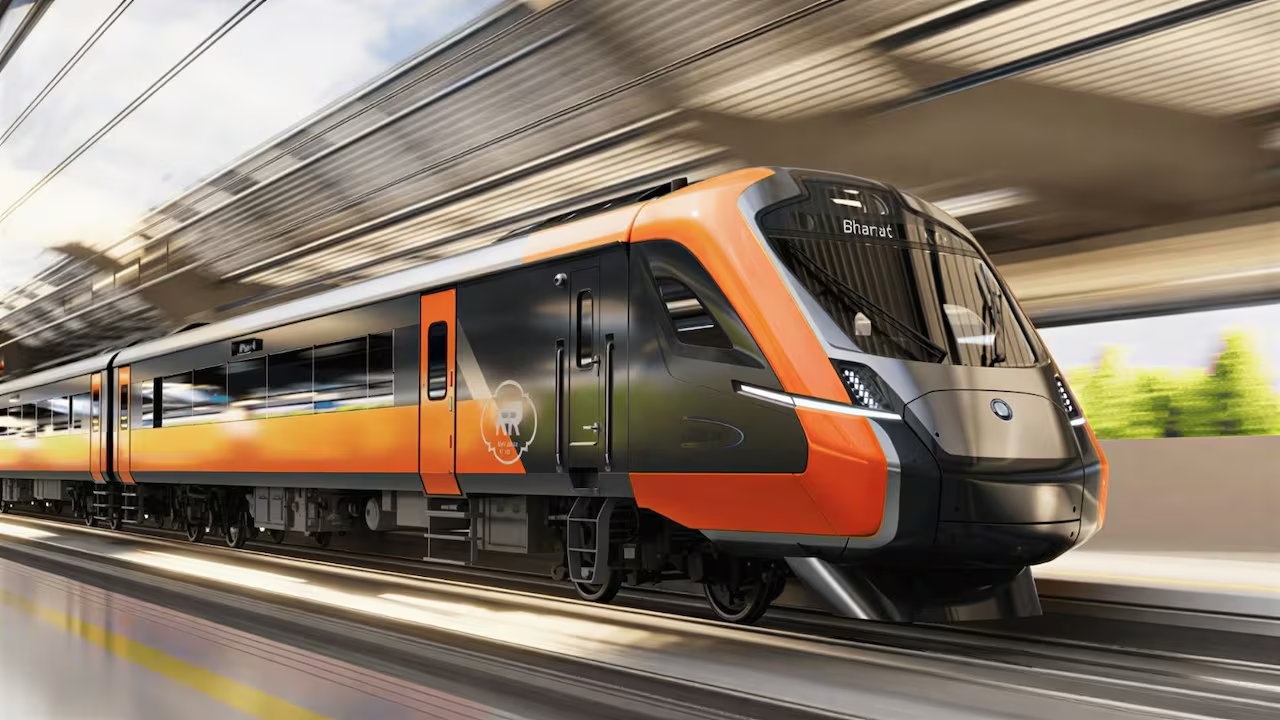
India To Launch Vande Bharat 4.0 On 7000 Km High Speed Rail
New Delhi: India’s railway network is gearing up for a massive transformation as the government prepares to construct 7,000 kilometres of dedicated high-speed passenger corridors and roll out the Vande Bharat 4.0 trains, capable of running at 320 kmph, within the next 18 months. The initiative signals a new era in sustainable, high-speed, and future-ready mobility for the world’s largest rail network.
According to senior railway officials, the upcoming passenger corridors will form the backbone of India’s long-term Viksit Bharat Vision 2047, enabling faster, cleaner, and more efficient travel between major cities. These high-speed routes, designed for a maximum speed of 350 kmph, will be indigenously developed, showcasing India’s engineering and technological capabilities.The corridors will feature advanced signalling systems, modern Operations Control Centres (OCCs), and cutting-edge safety mechanisms comparable to international benchmarks. The objective is to ensure that Indian Railways becomes a global leader in speed, reliability, and comfort while maintaining its commitment to sustainable infrastructure.
The highlight of this new phase is the introduction of Vande Bharat 4.0, the next generation of India’s flagship semi-high-speed train. Railway officials said the new model will redefine passenger experience through enhanced aerodynamics, improved noise control, and superior onboard technology. The upgraded version is expected to rival some of the world’s fastest trains in Japan, France, and Germany.The Vande Bharat 3.0, currently operating across several routes, can accelerate from 0 to 100 kmph in just 52 seconds, already matching the performance standards of advanced international systems. The upcoming 4.0 version aims to surpass these benchmarks, further solidifying India’s place among global rail innovators.
Officials have also stressed that strict quality compliance will guide the upcoming projects. Suppliers and manufacturers failing to meet railway standards will be removed from future contracts. The railway administration has instructed its procurement divisions to maintain zero tolerance toward substandard materials and workmanship to ensure the reliability and longevity of new systems.The focus of Indian Railways’ long-term plan lies in three key objectives: increasing passenger capacity and comfort, ensuring uncompromising safety, and building infrastructure that remains future-ready for the next 25 years. With this approach, India aims to not only meet domestic mobility demands but also project itself as a global hub for green, efficient, and sustainable transport solutions.The new developments mark a decisive shift in India’s transport policy from incremental upgrades to a vision of world-class high-speed connectivity. As construction begins on the upcoming corridors and the next-generation Vande Bharat trains take shape, the country’s railways appear firmly on track toward a smarter, faster, and cleaner future.