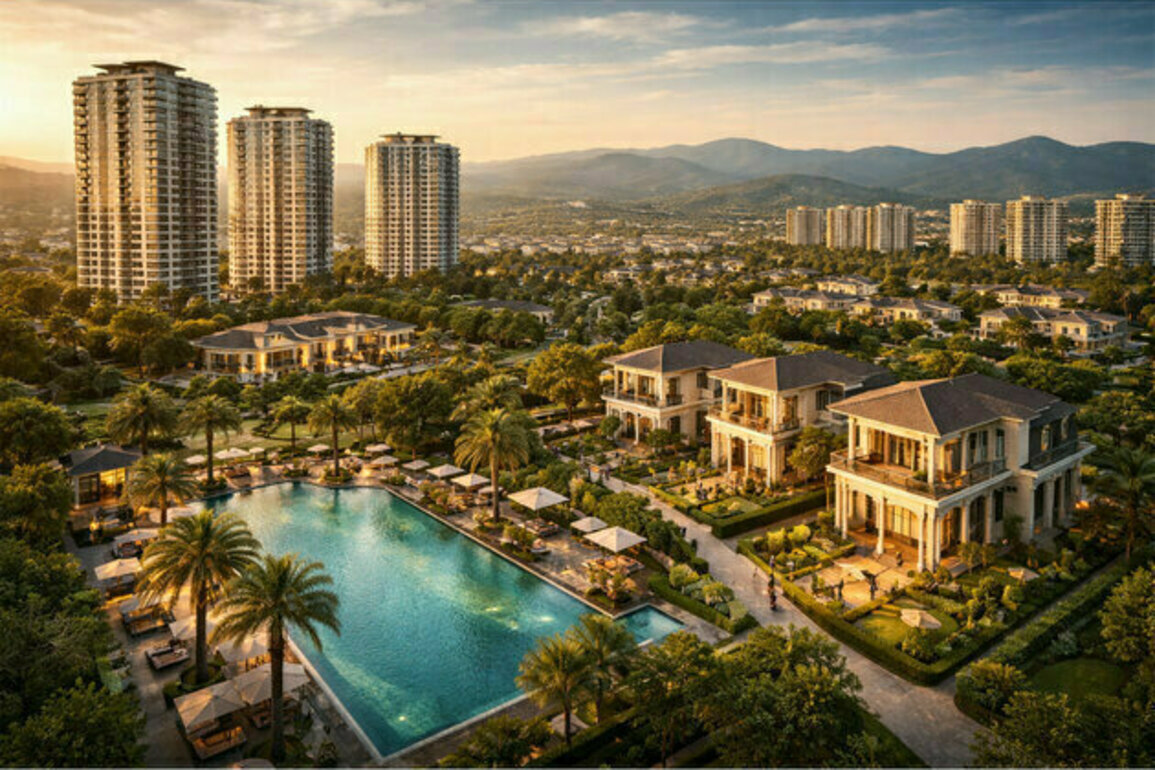
A structural shift is underway in India’s housing market, as Tier 2 cities emerge as the primary drivers of tier 2 luxury housing demand. Across regions such as northern and central India, developers are reporting a noticeable rise in premium residential projects, fuelled by locally generated wealth and changing lifestyle expectations. The trend marks a departure from decades of metro-centric growth and signals a broader redistribution of economic confidence across urban India.
Industry assessments indicate that high-end residential launches now form a growing share of new supply in several non-metro cities. This demand is not being driven by speculative investors but by end users primarily business owners, returning professionals, and next-generation homebuyers who are choosing to upgrade within their home cities rather than relocate. The shift reflects deeper economic diversification, where small and mid-sized cities are benefiting from industrial clusters, digital entrepreneurship, and regional enterprise growth. Urban planners note that this rise in tier 2 luxury housing is closely tied to changing patterns of wealth creation. Instead of salaried income concentrated in large metros, prosperity is increasingly anchored in family-run businesses, manufacturing hubs, and startup ecosystems located outside traditional urban centres. As a result, consumption patterns are also becoming more localised, with affluent households investing in primary residences that reflect long-term stability and identity.
Developers are responding with projects that prioritise space, privacy, and community planning. Low-density developments, gated villa clusters, and boutique residential formats are gaining traction, particularly in peripheral urban zones where land availability allows for more sustainable layouts. This has implications for urban form, potentially reducing pressure on overcrowded metropolitan cores while encouraging more balanced regional development. However, the expansion of premium housing in smaller cities raises questions around infrastructure readiness and environmental sustainability. Experts caution that while new road networks, airports, and digital connectivity are enabling this transition, urban governance frameworks must evolve simultaneously. Without careful planning, rapid upscale development could strain water resources, mobility systems, and green cover areas where Tier 2 cities often lack resilience compared to metros.
From a market perspective, the emphasis on end-use rather than investment-led buying may offer greater stability. Homes are increasingly viewed as long-term assets tied to family legacy rather than short-term financial instruments. This could reduce volatility in these markets while encouraging higher construction quality and accountability among developers. As India’s urbanisation story broadens beyond its largest cities, the rise of luxury housing in Tier 2 locations reflects more than a real estate trend. It signals a recalibration of aspiration, where economic opportunity, lifestyle, and identity are becoming more evenly distributed. The next phase will depend on how these cities integrate growth with inclusive planning and climate-sensitive infrastructure, ensuring that expansion remains both equitable and sustainable.