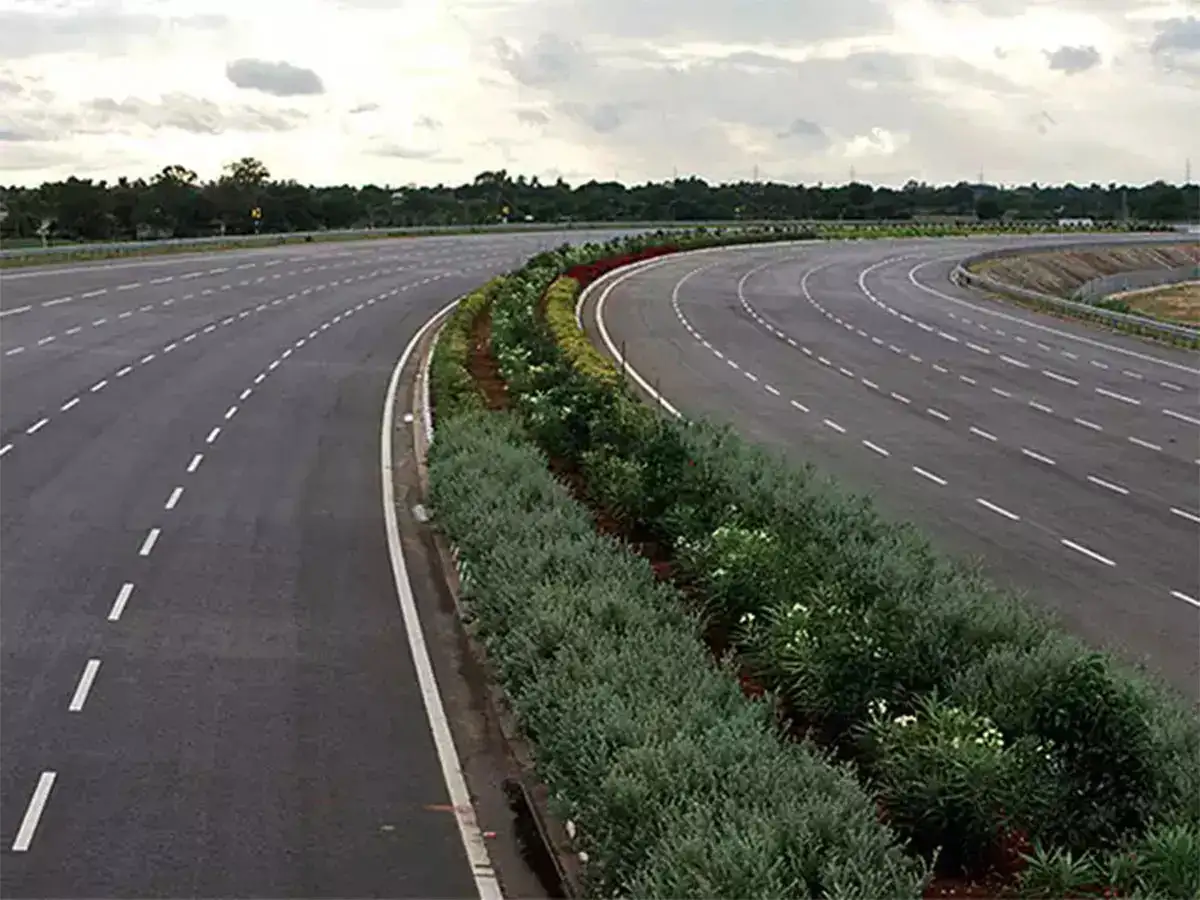
India Targets 100 Km Daily Highway Construction Boosting Auto Industry
India’s road infrastructure push is set to gain momentum, with the government announcing plans to accelerate the pace of highway construction from the current 38 kilometres per day to an ambitious 100 kilometres per day. The target, while challenging, underscores the administration’s commitment to boosting connectivity, cutting logistics costs, and fuelling economic growth through sustainable infrastructure development.
According to senior officials, highway projects worth ₹2.5 lakh crore have already been awarded in the current financial year, with the figure expected to quadruple to ₹10 lakh crore by March next year. The ministry’s recent record includes 10,660 kilometres of national highways built in 2024–25, following 12,349 kilometres in 2023–24 and 10,331 kilometres in 2022–23, making India one of the fastest-growing highway networks globally.Infrastructure experts view the 100 km-per-day target as a transformative leap. A faster, wider, and better-connected highway network is expected to enhance trade efficiency, ease passenger movement, and significantly reduce carbon emissions through smoother traffic flows and reduced congestion. Improved logistics efficiency could bring India’s logistics cost currently around 13% of GDP closer to the government’s target of 9%, rivalling China’s 8% and bettering the US and Europe’s average of 12%.
The infrastructure expansion plan is accompanied by a renewed push for cleaner mobility. The government is championing ethanol-blended petrol, currently at 20% (E20), with plans to introduce guidelines for 27% blending by the end of August. Ethanol, produced from sugarcane, broken rice, and other agricultural inputs, is projected to cut crude oil imports currently 88% of India’s needs thereby improving energy security and reducing greenhouse gas emissions.Officials have dismissed concerns circulating on social media about ethanol’s impact on vehicle engines, citing rigorous testing by the Automotive Research Association of India before rollout. They note that with minor engine adjustments, vehicles can run smoothly on higher ethanol blends, and the shift will support India’s commitment to cleaner transport solutions.
The government is also bullish on the electric vehicle market, predicting that EV prices will fall below those of petrol vehicles within six months. Combined with renewable energy integration and a greener transport strategy, this could further align the highway expansion drive with India’s zero-carbon ambitions.With the automobile industry already valued at ₹22 lakh crore and employing 4.5 crore people, faster highways are expected to unlock greater industrial competitiveness, stimulate rural economies, and strengthen India’s position as a global manufacturing hub. If the 100 km-per-day milestone is achieved, it would represent not only an engineering feat but also a decisive step toward a modern, sustainable, and equitable mobility ecosystem.