


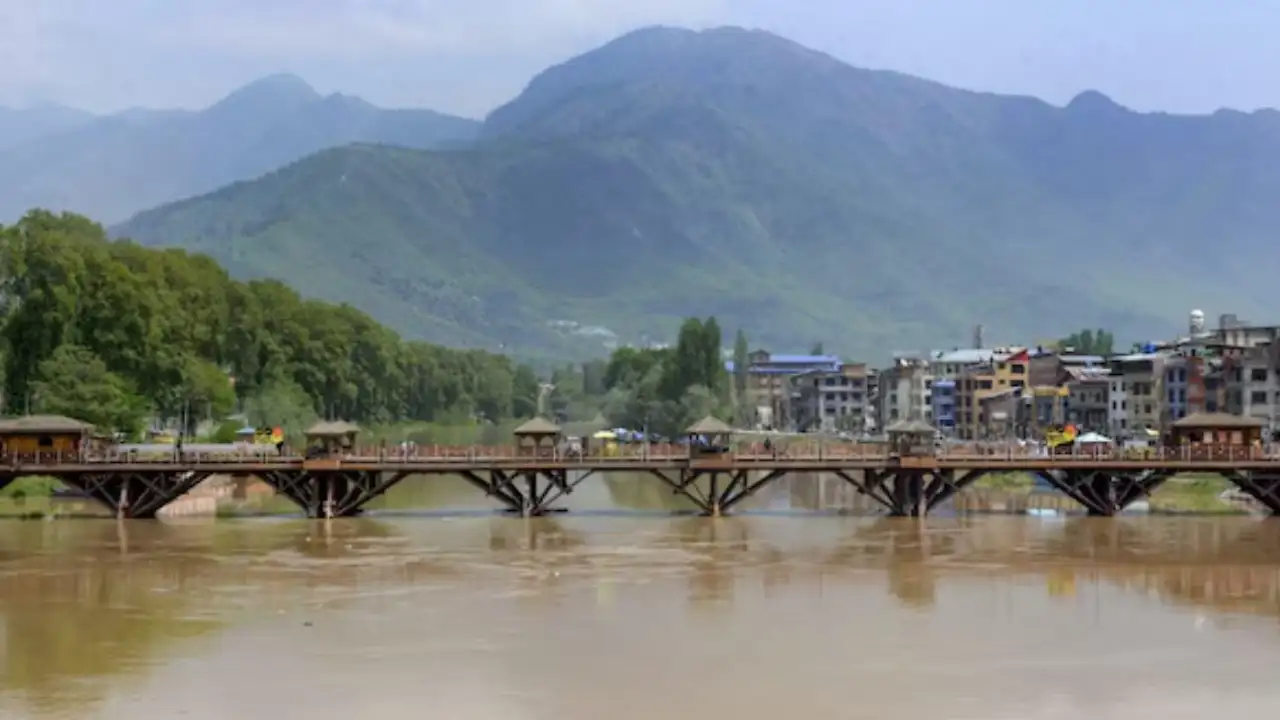
In a dramatic escalation of tensions between India and Pakistan, the sudden surge in water levels of the Jhelum River has led to widespread flooding in Muzaffarabad, Pakistan-occupied Kashmir. Local authorities have declared a water emergency in Hattian Bala, approximately 40 km from Muzaffarabad, urging residents to evacuate and take precautionary measures. The flooding has caused significant damage to infrastructure and homes, displacing hundreds of families.
Pakistan has accused India of releasing water from the Uri Dam without prior notification, a move that has been described as a “complete violation of international rules and water agreements.” The allegations come in the wake of India’s suspension of the 1960 Indus Waters Treaty, a decision taken in response to the deadly terror attack in Pahalgam that claimed the lives of 26 Indian tourists. The Indian government has stated that the treaty will remain suspended until Pakistan “credibly and irreversibly” abjures its support for cross-border terrorism. The Indus Waters Treaty, brokered by the World Bank and signed in 1960, has long been hailed as a rare instance of sustained cooperation between India and Pakistan. Under the agreement, India was granted exclusive control over the eastern rivers—Ravi, Beas, and Sutlej—while Pakistan was given rights over the western rivers—Indus, Jhelum, and Chenab—despite their origins in Indian territory in Jammu and Kashmir. The treaty has endured through wars and diplomatic breakdowns, but the recent developments have cast doubt on its future.
The suspension of the treaty has far-reaching implications for Pakistan, which is heavily dependent on the Indus River system for its agriculture, forming the backbone of its economy. Nearly 90% of Pakistan’s irrigation depends on water from the Indus basin. Any disruption—or even the perception of future disruption—in water supply from the western rivers could exacerbate water scarcity, reduce crop yields, and fuel domestic unrest, especially in the already water-stressed provinces of Punjab and Sindh. One of India’s key obligations under the treaty has been to ensure the timely dissemination of hydrological data to Pakistan. This includes providing advance flood warnings, sharing river discharge volumes, and reporting on glacier melt patterns, all of which are critical for managing water resources effectively. With the measures now paused, Pakistan faces a risk of possible drought or flooding with a dearth of information on the water levels of the Indus and its tributaries.
The current crisis underscores the delicate balance required in managing shared water resources and the potential for conflict when that balance is disrupted. As the situation develops, it remains to be seen how both nations will navigate this complex issue and whether the Indus Waters Treaty can withstand the pressures of geopolitical tensions and national security concerns. The international community watches closely, as the outcome of this dispute could set a precedent for transboundary water management in regions with similar geopolitical complexities.
Also Read : https://urbanacres.in/tourists-return-to-pahalgam-kashmir-despite-april/
Jhelum River Surge Sparks Panic in Pakistan-Occupied Kashmir
