


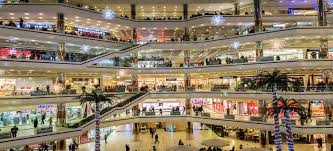
India’s retail sector is entering a phase of notable expansion, buoyed by rising consumer spending and growing confidence from institutional investors. According to recent research from ANAROCK, Indian malls are expected to attract capital inflows exceeding $3.5 billion over the next three years, reflecting strong market fundamentals and an appetite for high-quality commercial assets.
Industry experts attribute the resurgence to a combination of factors, including rising disposable incomes, constrained supply of premium Grade-A retail real estate, and aggressive growth strategies from international retailers. “More than 88 foreign brands have entered India’s retail market recently, seeking high-quality spaces to expand operations. Demand for top-tier Grade-A assets remains acute due to limited availability,” said a senior retail analyst. Currently, India operates around 600 malls, yet fewer than 100 meet the stringent benchmarks required to attract global institutional funds. This scarcity has created intense competition for prime assets and contributed to escalating valuations, particularly in metropolitan hubs. Analysts note that this contrasts sharply with mature markets such as the United States, where the retail sector is experiencing contraction. Data indicates that the US has seen a net closure of nearly 1,200 mall stores since 2020, with approximately 40% of vacant malls undergoing rezoning or redevelopment. In India, the heightened demand for premium retail spaces is driving innovative leasing and development strategies. Retailers are increasingly partnering with developers to secure long-term leases, often in mixed-use developments that integrate sustainability principles, green building design, and inclusive community spaces. “Well-designed retail centres can act as urban anchors, stimulating economic activity while supporting sustainable urban planning initiatives,” a senior urban planner noted.
Institutional investors are particularly focused on malls that combine high footfall with modern infrastructure, energy-efficient systems, and proximity to residential and transit hubs. Experts observe that these assets not only promise stable returns but also contribute to broader urban regeneration efforts. The integration of lifestyle, entertainment, and retail functions within Grade-A malls aligns with emerging consumer expectations and supports equitable urban experiences. Looking ahead, industry participants anticipate continued growth in the Indian retail ecosystem, driven by both domestic consumption and foreign brand expansion. The emphasis on sustainability, technology-enabled experiences, and inclusive design is expected to shape future investments. Analysts suggest that careful urban planning and strategic allocation of premium retail spaces will be essential to maintaining the sector’s momentum while minimising negative urban externalities.
India’s retail revival underscores a broader trend: markets with constrained high-quality real estate, growing middle-class consumption, and supportive investment frameworks are attracting both corporate and institutional interest, establishing a foundation for sustainable, inclusive, and future-ready urban commercial environments.
Also Read: Bengaluru IBM India Leases Office Space Worth 2.4 Crore Per Month
India Shopping Malls Expected To Receive 3.5 Billion Dollar Investment
