India Semiconductor Mission Strengthens Engineering Talent Pipeline
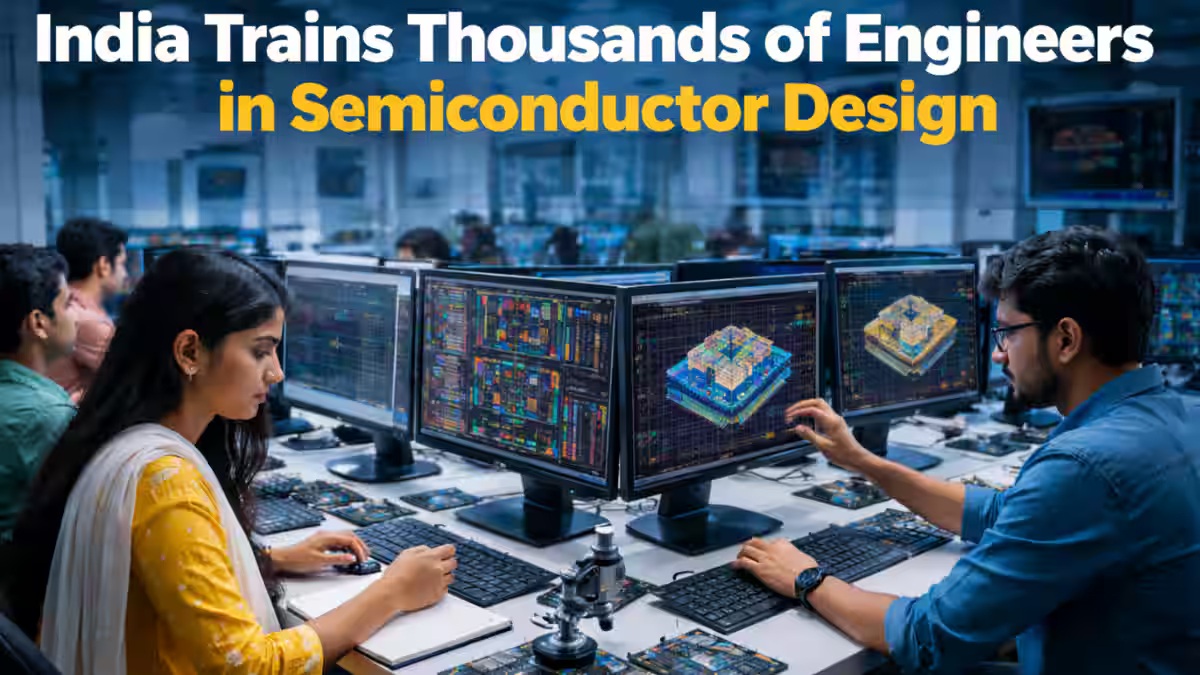
India’s effort to build a domestic semiconductor ecosystem is increasingly focusing on universities and engineering institutes, as policymakers seek to create a long-term talent pipeline capable of supporting the country’s emerging chip industry. Recent updates from the government indicate that the India Semiconductor Mission has expanded access to advanced chip design software across hundreds of academic institutions as part of a national capacity-building programme. The initiative, widely known as the Chips to Startups programme, aims to prepare a new generation of engineers with specialised skills in semiconductor design, verification and system architecture. Officials overseeing the programme say the broader goal is to train around 85,000 engineers in chip design disciplines over the next decade, creating a workforce capable of supporting India’s ambitions in electronics manufacturing and semiconductor innovation.
As part of this strategy, sophisticated electronic design automation tools — widely used by global chipmakers — have been introduced in more than 300 engineering and research institutions across the country. These software platforms allow students to work on real-world semiconductor design processes, from conceptual architecture to circuit simulation and testing. Experts involved in the programme say the expansion of design tools in academic institutions marks a crucial step in the evolution of the India Semiconductor Mission, which aims to reduce the gap between classroom education and industry requirements. Access to such platforms allows engineering students to gain hands-on exposure to chip development processes that were previously limited to specialised corporate laboratories. Urban economic analysts note that building a skilled semiconductor workforce has broader implications for India’s technology clusters and metropolitan economies. Semiconductor research and manufacturing typically stimulate investment in advanced manufacturing zones, technology parks, research laboratories and high-value employment ecosystems in cities.
For emerging technology hubs, the presence of trained semiconductor engineers can attract multinational firms seeking research partnerships or chip design operations. This in turn influences real estate development in knowledge districts, drives demand for innovation infrastructure and strengthens local supply chains connected to electronics manufacturing. Officials involved in the programme also indicate that the deployment of design tools has been supported through collaboration with international technology firms that specialise in semiconductor design platforms. These partnerships allow students and researchers to access industry-standard tools while building practical expertise in integrated circuit design. Policy observers say the India Semiconductor Mission represents one of the country’s most ambitious attempts to build a full-stack semiconductor ecosystem, spanning research, design, manufacturing and packaging. While fabrication facilities remain capital intensive and complex to establish, strengthening the design talent base is seen as an achievable first step toward global competitiveness. The success of such initiatives, experts say, will depend on continued collaboration between universities, industry partners and government institutions to ensure that training programmes evolve alongside rapidly changing semiconductor technologies.
As India expands its electronics manufacturing ambitions, the creation of a skilled engineering workforce may ultimately determine how quickly the India Semiconductor Mission can translate policy goals into a sustainable and globally integrated semiconductor industry
India Semiconductor Mission Strengthens Engineering Talent Pipeline