Samsung India Festive Push Expands AI Appliance Access
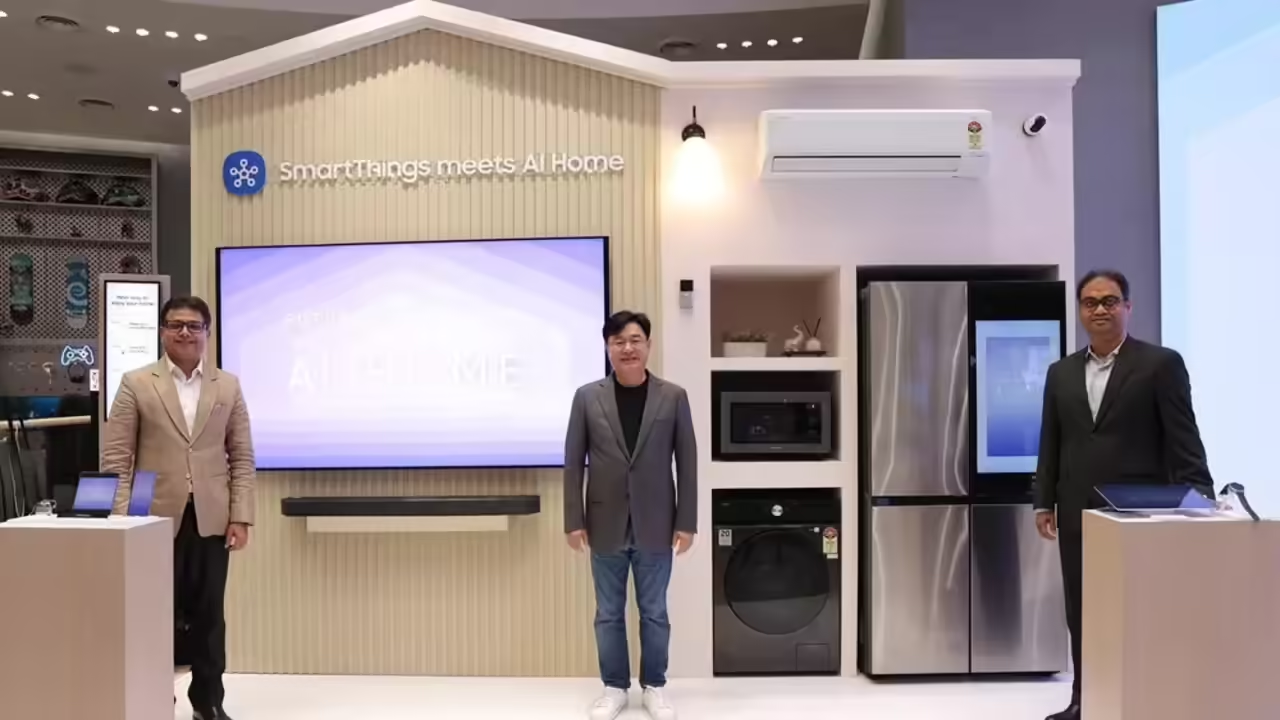
India is witnessing a technological shift as Samsung introduces AI-driven homes where everyday appliances adapt intelligently to residents’ routines. Refrigerators, ovens, air conditioners, and robot vacuums now communicate through the SmartThings platform, anticipating needs, optimising energy use, and automating household tasks. Designed for efficiency and convenience, these connected homes integrate local habits with cutting-edge AI, marking a significant step in India’s move towards smarter, more sustainable urban living that reduces friction in daily domestic life.
The transformation stems from Samsung’s decade-long evolution of SmartThings, which has grown from a simple platform for controlling lights and sensors into a comprehensive ecosystem capable of coordinating a wide range of household devices. “Our aim is not just innovation for its own sake,” said a senior Samsung executive. “We want technology that quietly assists daily life, reduces interruptions, and improves energy efficiency.” By embedding intelligence into appliances, the home itself becomes proactive, adjusting lighting, preheating ovens, and managing energy usage automatically.At Samsung’s Suwon campus in South Korea, the company demonstrates the practical application of AI in homes. Refrigerators equipped with internal cameras track contents, suggest meals, alert users to expiring items, and provide entertainment or weather updates on integrated displays. Robotic vacuums map floors, optimise battery usage, and adjust suction power based on surface type. Washing machines learn from previous loads to fine-tune detergent dispensing and energy consumption. Together, these devices transform the home into a self-regulating environment, seamlessly integrating routine tasks into residents’ lifestyles.
Sustainability remains a central focus. Samsung’s collaboration with Johns Hopkins University has advanced thin-film Peltier cooling for refrigerators, which reduces reliance on traditional refrigerants and improves energy efficiency. The SmartThings AI Energy Mode further optimises power usage, aligning with broader goals for low-carbon, resource-efficient urban living. Such innovations reflect a vision of homes that are not only convenient but environmentally responsible.Cultural localisation is another key aspect. In India, appliances like the Curd Maestro refrigerator accommodate local culinary traditions, while other markets receive region-specific solutions, such as kimchi-specialised fridges in Korea. This approach ensures that AI-driven homes resonate with daily habits rather than imposing uniform solutions.The impending expansion of 5G networks in India is expected to accelerate adoption, enabling faster, more reliable communication between devices and smoother automation. Urban experts note that AI homes could redefine modern residential living, offering enhanced convenience, improved energy management, and elevated household security.
Samsung’s AI-driven homes illustrate a broader trend in urban development: residences as adaptive, intelligent ecosystems. By automating routine tasks and integrating sustainable solutions, these homes exemplify the potential of technology to improve quality of life, reduce energy consumption, and support the creation of smarter, more responsive cities across India.