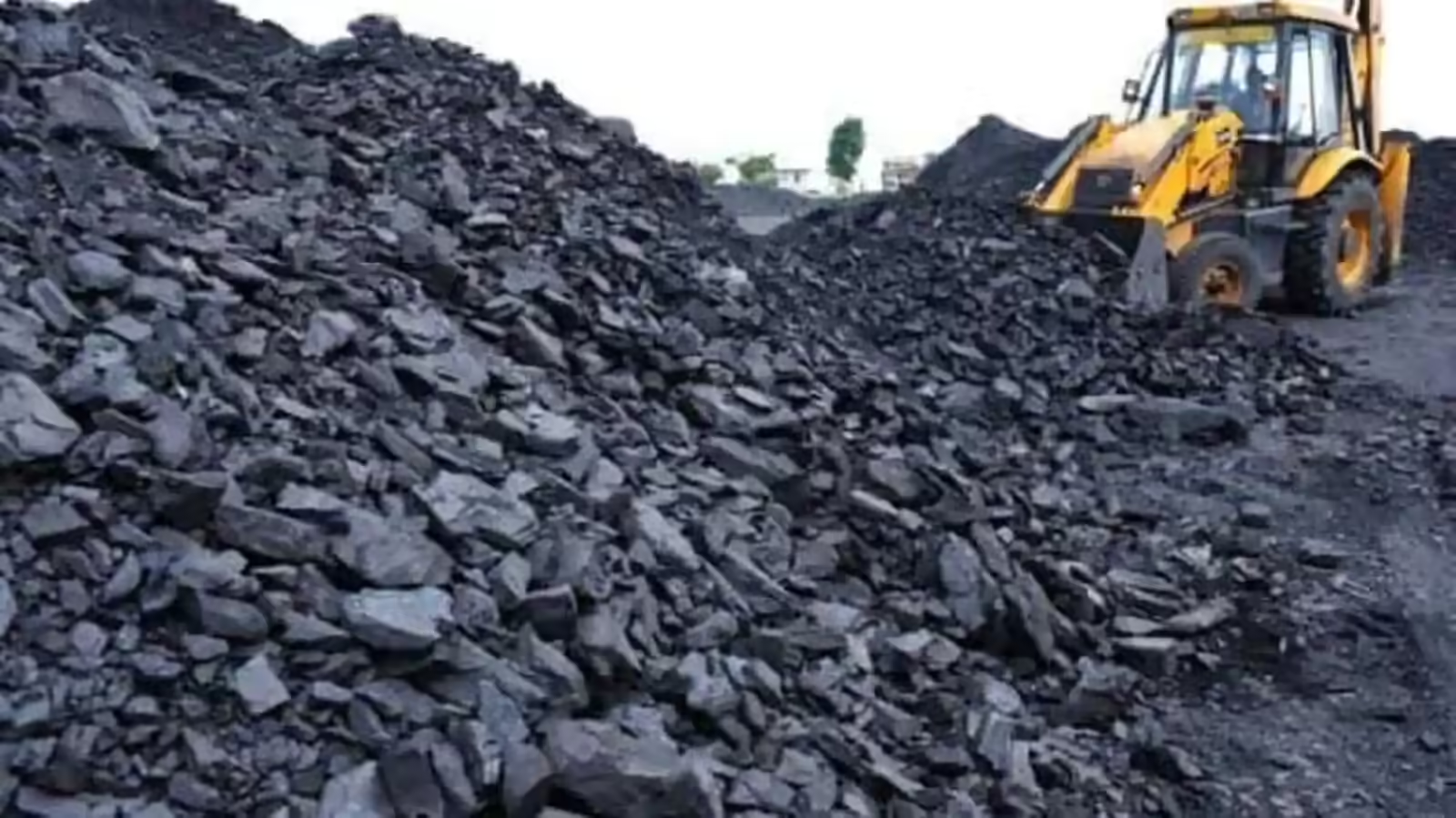
India’s coal demand surged to an unprecedented 8.85 billion tonnes in 2025, driven by regional energy needs and climate variations, according to the International Energy Agency. While strong monsoon rainfall reduced electricity demand and boosted hydropower, coal consumption in Europe rose slightly due to lower renewable output. Experts project global coal use will stabilise in the coming years before gradually declining by 2030 as renewables, nuclear power, and LNG increasingly shape the energy mix.
This year’s fluctuations illustrate how weather, fuel prices, and policy interventions continue to influence coal consumption. In India, the early and intense monsoon dampened electricity demand, resulting in one of the few declines in coal-fired power generation over the past 50 years. Meanwhile, Europe experienced a shortfall in wind and hydro output, prompting a marginal rise in coal use during the first half of 2025. Overall, EU coal consumption is expected to fall only about 2% year-on-year.Looking ahead, the IEA forecasts that global coal demand will plateau over the next few years before entering a slow decline. By 2030, coal consumption is projected to fall roughly 3% from 2025 levels, with coal-fired electricity generation potentially dipping below 2021 benchmarks. Analysts emphasise that this shift reflects the growing contribution of renewable energy, nuclear power, and the emergence of new liquefied natural gas (LNG) capacities.
Industrial coal use is anticipated to decrease by less than 1% annually until the end of the decade. However, developments such as new gasification plants, especially in China, may offset part of this decline. These trends highlight coal’s transitional role in supporting rising global electricity demand, even as cleaner energy alternatives gain traction.Policy frameworks will further shape coal’s trajectory. The European Commission has proposed expanding the EU Research Fund for Coal and Steel (RFCS) from 2027, potentially financing 70% of corporate and 100% of academic research in green technologies, up from the current 50%. If implemented, the initiative could accelerate the adoption of cleaner practices within coal-dependent industries, particularly in steel and power sectors.
As the global energy mix evolves, coal’s dominance appears increasingly constrained. Cities, industrial hubs, and policymakers must navigate this transition carefully, balancing energy security, economic activity, and sustainability targets. The gradual shift underlines the importance of planning for a future in which coal continues to play a role in energy supply, yet in harmony with net-zero ambitions and low-carbon development pathways.