India Rolls Out Luxury on Rails as Tejas Express Sets a New Benchmark in Train Travel
India has made a bold leap into the future of public transport with the launch of its first fully corporate train, the Tejas Express. Operated under a public-private partnership model by the Indian Railway Catering and Tourism Corporation (IRCTC), Tejas is changing how the country perceives rail travel. Gone are the days when long-distance journeys meant dusty seats, cold food, and unpredictable delays. With Tejas, passengers now experience airline-style service, fast travel, and high-tech amenities, all while staying on track—literally and figuratively.
Launched in 2019, the Tejas Express first hit the tracks on the Lucknow to Delhi route, and soon expanded to the Mumbai to Ahmedabad corridor. Though not operated directly by Indian Railways, it remains under government oversight through IRCTC, which handles everything from onboard services to catering, ticketing, and staff. This corporate-style structure allows the train to function with higher efficiency, better accountability, and a strong emphasis on customer satisfaction. It’s a train run like a business, not a bureaucracy.
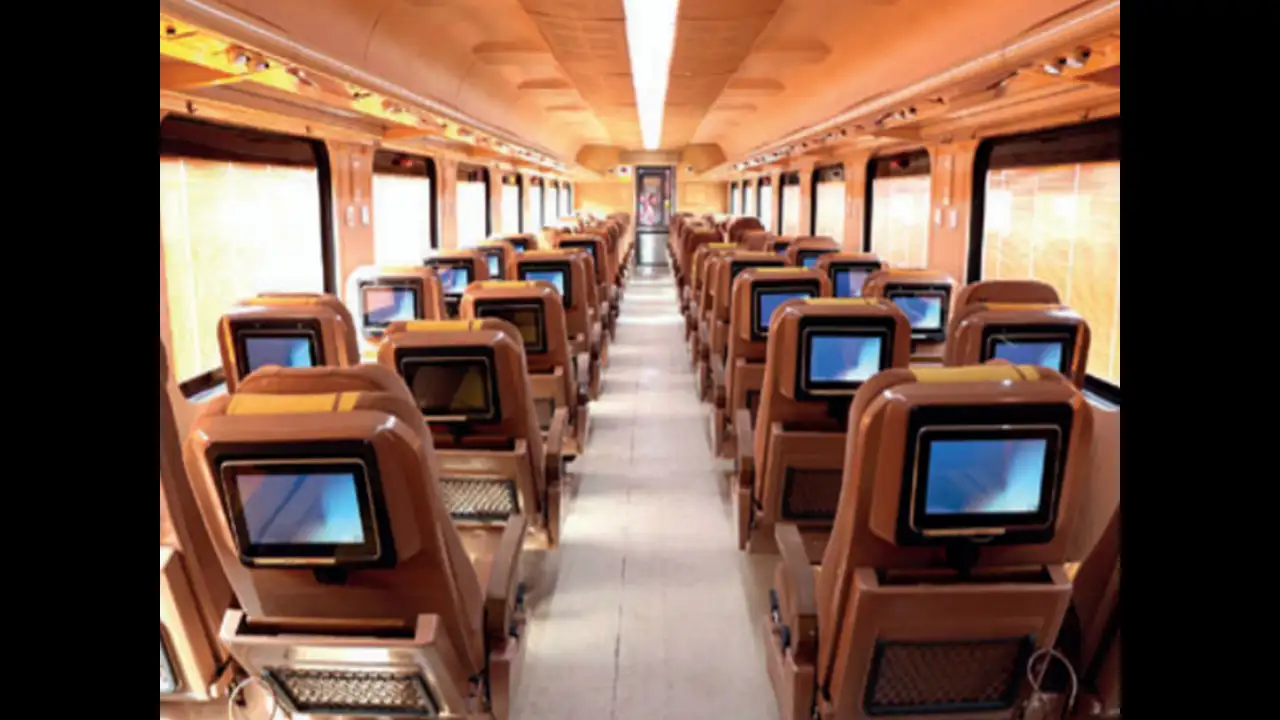
From the moment passengers board, the difference is unmistakable. The interiors resemble an aircraft more than a traditional Indian train. Spacious, reclining seats with individual entertainment screens, reading lights, USB ports, and automatic doors give a glimpse of what future rail travel could be across the country. The food served is fresh, hygienic, and included in the fare—offered with the same polish as inflight meals. LED lighting, onboard Wi-Fi, CCTV surveillance, and fire safety systems round out the features.
But it’s not just about looks or luxury. What truly sets Tejas apart is its accountability to the passenger. In a move unheard of in Indian transport, IRCTC offers a refund compensation of ₹100 if the train is delayed by over an hour, and ₹250 if it exceeds two hours. This isn’t just a policy—it’s a message. For once, passengers are not just cargo being hauled across states; they’re customers whose time is valued.
On its Lucknow to Delhi route, Tejas departs at 6:10 am and reaches the capital by 12:25 pm, with only two stops at Kanpur and Ghaziabad. The return leg starts at 3:35 pm from Delhi and reaches Lucknow at 10:05 pm. On the Mumbai to Ahmedabad route, similar time efficiency is maintained. These are strategic routes chosen for their heavy passenger traffic and business travel needs. The train provides a competitive edge over flights by cutting down the airport hassle—no check-in chaos, no long security queues, and no baggage belt stress. Just board, sit back, and roll.
Pricing, while dynamic, reflects the quality of service. Fares typically range from ₹1,280 to ₹4,325 depending on demand and seat class. While that might seem steep compared to traditional Indian trains, it’s a fair price for the comfort and convenience offered. And with growing middle-class incomes and rising expectations, passengers are willing to pay for better travel experiences. For many, Tejas is no longer a luxury splurge—it’s a practical, premium choice.
India’s experiment with corporate rail doesn’t just stop with comfort. It marks a shift in thinking about how infrastructure can be upgraded without over-reliance on state funding. By handing over operations to an efficient corporate entity under public oversight, the model leverages private agility without compromising public accountability. The Tejas Express is a test case in how the private sector can bring value to public services.
Of course, the model is not without challenges. Not every route can justify premium pricing, and large-scale privatization risks leaving rural or low-income areas underserved. Critics also caution that the success of one train on select routes shouldn’t be mistaken for a one-size-fits-all solution. But there’s no denying the success of Tejas in setting a new benchmark for customer-centric rail service.
Even in areas where it doesn’t directly operate, Tejas is already influencing expectations. Passengers on other trains are beginning to ask: if IRCTC can do this here, why not elsewhere? This ripple effect could be the start of wider reforms across the Indian railway network. It won’t happen overnight, but the wheels are in motion. As IRCTC looks to expand this model, there are talks of launching more Tejas-like services on other busy routes and even exploring overnight journeys with sleeper coaches designed on similar lines. It may also open doors to greater international collaborations, luxury tourism trains, and multimodal logistics.
India’s first corporate train is not just another service added to the schedule. It’s a vision in motion—of what rail travel can become when efficiency, technology, and customer focus take center stage. It’s not about speed alone; it’s about respect for time, space, and the modern traveller’s needs.
In a country where the railway is more than a mode of transport—where it’s an emotion, a lifeline, and a cultural symbol—Tejas Express is a bold chapter in rewriting the script. Whether you’re a business commuter, a weekend traveller, or simply someone who wants a better journey, Tejas doesn’t just get you there. It shows you how good getting there can be.