


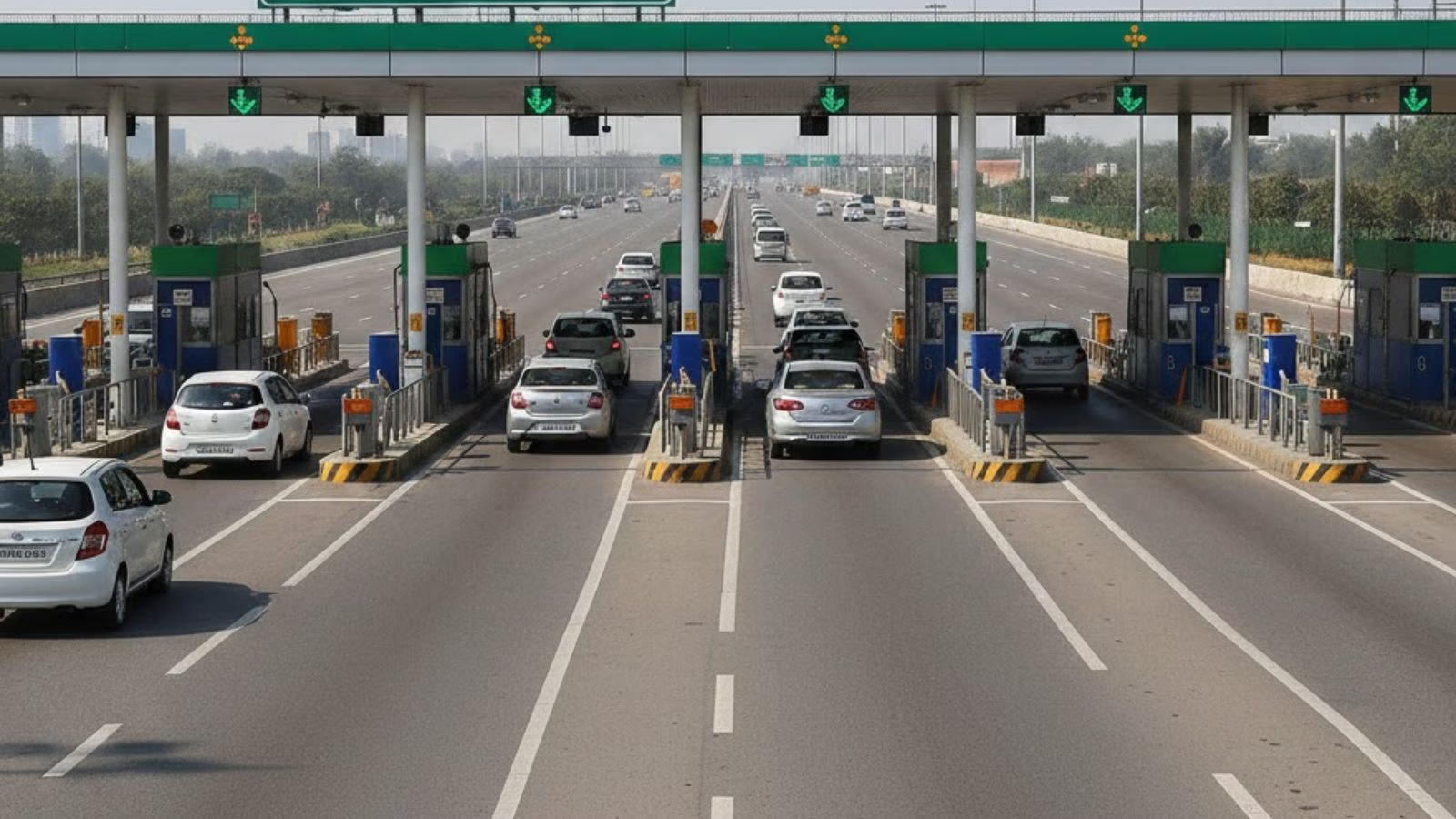
The Union government has notified amendments to the National Highways fee framework, revising provisions that govern toll collection and user charges across India’s arterial road network. The changes, issued by the Ministry of Road Transport and Highways, are expected to influence toll computation, concession agreements and revenue models tied to the country’s expanding expressway grid.
Officials indicated that the amendment to the National Highways Fee rules is aimed at refining operational clarity for concessionaires and road operators. India’s tolling regime underpins a significant portion of highway financing, particularly for projects executed through public-private partnership models overseen by agencies such as the National Highways Authority of India. Industry analysts say periodic revisions to the National Highways Fee structure are integral to maintaining investor confidence. Toll-backed assets rely on predictable revenue streams to service debt and ensure long-term maintenance. Any adjustment in fee calculation formulas, exemptions or rate indexing mechanisms can alter project cash flows and risk assessments. The amendment is understood to address specific technical aspects of toll notification and implementation, though broader policy direction remains unchanged. User fee collection continues to be based on vehicle categories and notified rates, typically revised annually in line with wholesale price index movements. Transport economists note that toll revenues fund not only construction but also operations, maintenance and safety upgrades. As India’s highway network expands into high-speed corridors and greenfield expressways, lifecycle cost recovery becomes increasingly important. Efficient fee administration can support asset quality and reduce fiscal pressure on the exchequer.
Urban planners, however, emphasise the need to balance revenue objectives with affordability. For freight operators and daily commuters, cumulative toll charges can influence logistics costs and commuting patterns. Transparent and predictable toll frameworks help businesses plan supply chains while limiting price volatility in goods movement. The National Highways Fee regime also intersects with broader sustainability goals. Well-maintained highways can reduce congestion, fuel consumption and vehicle wear, indirectly lowering emissions per kilometre. At the same time, experts argue that highway expansion must be complemented by investments in rail freight and public transport to avoid over-reliance on road-based mobility. Infrastructure investors are expected to study the amendment closely to assess its implications for existing and upcoming bids. Clarity in fee notification processes can streamline dispute resolution and improve compliance at toll plazas, particularly as electronic tolling systems gain wider adoption.
Officials suggest that the amendment is part of an ongoing effort to modernise regulatory frameworks in step with evolving traffic volumes and financing structures. As India continues to build out its highway backbone, stable and transparent toll policy will remain central to sustaining private capital participation. The coming months will reveal how the revised National Highways Fee provisions shape concession agreements and road user experience. For now, the emphasis appears to be on regulatory fine-tuning rather than structural overhaul — a move aligned with maturing infrastructure markets seeking long-term resilience.
Also Read: India Slows State Highway Conversions Plan
India Revises National Highways Fee Rules
