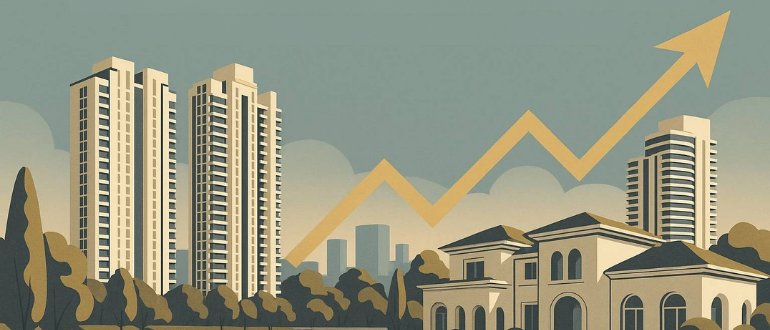
India’s residential property market is entering a phase where high-end developments are increasingly shaping pricing trends across major cities. Industry assessments indicate that average housing prices could rise by about five percent annually through 2028, a trajectory driven largely by growing demand for premium homes in metropolitan centres. While this momentum signals strong confidence among affluent buyers, it also raises concerns about long-term housing access for middle-income households in rapidly expanding urban regions.
The shift reflects a broader transformation within India luxury housing, where developers are concentrating on projects that offer higher margins and faster absorption among financially stronger buyers. In cities such as Mumbai, Delhi, Bengaluru and Chennai, premium residences often priced above ₹1 crore have become a dominant segment of new launches and sales activity over the past year. Market analysts say this strategic pivot is rooted in economic practicality. Building larger, high-value homes allows developers to offset rising land costs, construction expenses and regulatory compliance requirements. In contrast, affordable housing projects frequently face tighter profit margins and longer sales cycles, making them less attractive in the current market environment.
As a result, the composition of housing demand has changed. Premium homes now represent a significant share of residential transactions in several urban markets, even as overall housing sales have softened slightly. Meanwhile, demand in lower price brackets has declined sharply in recent quarters, signalling mounting affordability challenges among first-time buyers. Urban planners warn that this trend could deepen structural inequality in housing access. With home prices rising faster than household incomes in many metropolitan regions, younger professionals and middle-income families are increasingly postponing home ownership or turning to rental housing for longer periods. Rental markets are already reflecting this pressure. Across major cities, analysts expect urban rents to rise between six and eight percent in the coming year, outpacing consumer inflation. In certain high-demand neighbourhoods close to employment hubs and transit infrastructure, rent growth could be even higher.
The implications extend beyond individual households. A sustained tilt toward India luxury housing could reshape urban growth patterns by concentrating new residential supply in high-value districts while leaving a gap in mid-income housing stock. This imbalance can strain city planning systems, transport networks and social infrastructure as workers move farther away from employment centres in search of affordable living options. Urban development specialists argue that maintaining balanced housing ecosystems will require stronger policy support for mixed-income developments, efficient land use and faster approvals for mid-market projects. Measures that expand transit-linked housing and climate-resilient neighbourhood planning could also help cities accommodate population growth without worsening affordability pressures. For India’s rapidly urbanising economy, the challenge ahead lies in sustaining real estate investment while ensuring that expanding cities remain accessible to a broad cross-section of residents. The direction taken now will shape not only property markets but also the long-term inclusivity and resilience of India’s urban future.