


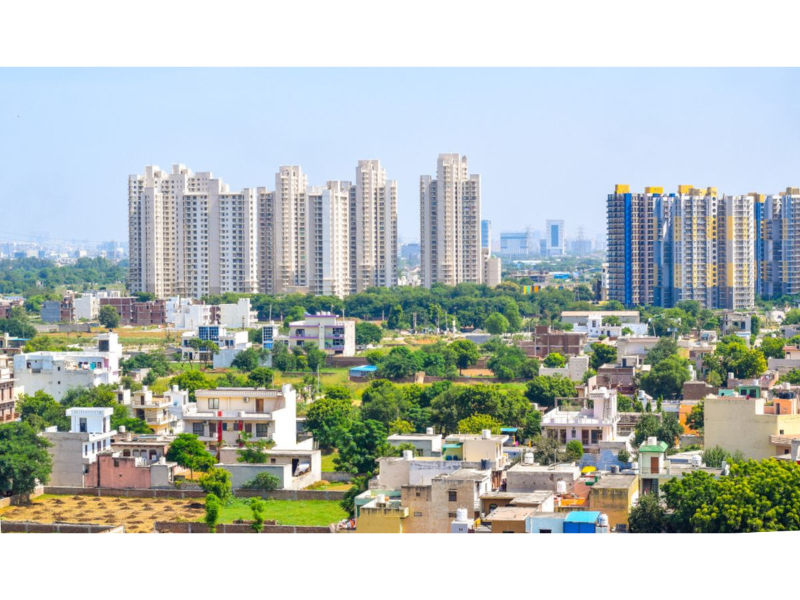
India’s property market recorded its strongest investment year on record in 2025, with capital commitments reaching an unprecedented $14.3 billion. The scale and composition of these inflows signal a structural shift in how cities are being financed, built, and expanded placing long-term urban planning, land use, and sustainability firmly at the centre of real estate decision-making.
Investment activity intensified in the final quarter of the year, reflecting sustained confidence among both domestic and overseas investors despite global economic uncertainty. Market analysts attribute this momentum to a combination of policy stability, rising urban demand, and the growing alignment between real estate development and institutional capital seeking predictable, long-horizon returns. A defining feature of 2025 was the dominance of land and development-led investments. Nearly half of total capital was directed towards development sites, underlining a preference for early-stage participation rather than fully stabilised assets. Urban planners note that this trend gives cities an opportunity if governed well to integrate climate resilience, transit-oriented development, and mixed-use planning before construction begins. Office assets remained the second-largest destination for capital, reinforcing India’s position as a global hub for services and technology-driven employment. Residential projects, often integrated within mixed-use developments, accounted for a significant share of land deployment, reflecting sustained end-user demand across major metropolitan regions.
Foreign capital continued to play a crucial role, with North American institutions leading cross-border participation. Industry observers point out that such investors are increasingly selective, favouring markets with transparent regulations, strong local partners, and scalable urban infrastructure. At the same time, domestic developers accounted for nearly half of total investments, highlighting the growing depth of homegrown capital and balance-sheet strength. The distribution of capital across cities reveals a clear urban hierarchy. Mumbai emerged as the single largest recipient, followed closely by Bengaluru and the Delhi-NCR region. These cities benefit from diversified economies, expanding transport networks, and a pipeline of redevelopment opportunities. However, experts suggest that secondary cities could attract greater flows if infrastructure delivery and environmental clearances become more predictable. Beyond traditional asset classes, 2025 saw rising interest in warehousing, data centres, and integrated commercial-residential platforms. These segments reflect changing consumption patterns, digitalisation, and the need for energy-efficient, future-ready buildings. Structured investment vehicles and joint development platforms also gained traction, signalling a move towards more disciplined, partnership-driven growth.
As India enters 2026, the challenge for policymakers and city authorities will be to channel this capital responsibly. Ensuring that new developments reduce carbon intensity, support inclusive housing, and strengthen urban resilience will determine whether record inflows translate into long-term public value rather than short-term asset appreciation.
Also Read: Mumbai Luxury Homes Draw Film Industry Buyers
India Real Estate Inflows Reshape Urban Investment Landscape
