


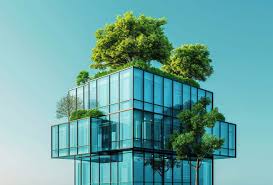
India has consolidated its position as one of the world’s leading markets for environmentally certified real estate, ranking second globally outside the United States for green-certified building space in 2025. The milestone highlights the growing integration of sustainability principles into the country’s urban development and real estate strategies, even as construction activity continues to scale across cities and industrial corridors.
Data released by global green building certification bodies shows that India added approximately 16 million gross square metres of certified sustainable building space during the year, placing it just behind China among non-US markets. The United States remains the world’s largest green building market by a significant margin. India’s rise reflects a maturing real estate sector where environmental performance is increasingly treated as a core operational metric rather than a niche differentiator. A notable shift in India’s green real estate journey is the growing emphasis on improving the performance of existing buildings. Certifications linked to operations, energy efficiency, water management, and long-term maintenance now outnumber those granted to new construction. Urban experts view this trend as particularly significant for Indian cities, where retrofitting older commercial stock offers faster carbon reductions than greenfield development alone. The broader global context underscores the scale of this transition. More than 7,500 commercial projects worldwide received sustainability certifications last year, covering over 147 million square metres of built space. Much of this growth was driven by building owners seeking lower operating costs, improved energy security, and resilience against climate-related risks such as heat stress and water scarcity.
In India, adoption of green building standards is expanding well beyond premium office districts. Warehousing and logistics hubs, manufacturing facilities, hotels, shopping centres, educational campuses, and healthcare infrastructure are increasingly integrating energy-efficient design, renewable power systems, and resource optimisation measures. This diversification mirrors the country’s evolving economic geography, where industrial and mixed-use developments are spreading into tier-II and tier-III cities. Urban planners note that the momentum around sustainable certification aligns with broader policy goals, including reduced urban emissions, improved air quality, and lower infrastructure strain. Buildings account for a significant share of urban energy consumption, making efficiency gains critical to meeting long-term climate commitments without constraining economic growth. However, challenges remain. Experts point out that while certification uptake is strong in organised real estate, smaller developers and residential projects still face cost and capacity barriers. Scaling green construction across affordable housing and informal commercial stock will be essential to ensure that sustainability benefits are equitably distributed across cities.
As India continues to urbanise, the growing stock of certified green buildings signals a shift toward more climate-resilient, resource-efficient cities. The next phase, urban analysts suggest, will depend on how effectively sustainability standards translate into everyday performance, affordability, and improved quality of life for urban residents.
Also Read: India Housing Sector Finds New Growth Equilibrium
India Real Estate Accelerates Green Certification Drive
