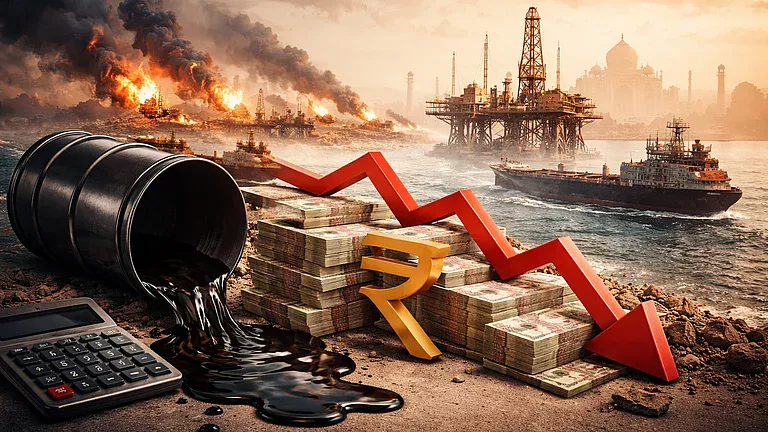
India’s monetary policy has entered a phase of heightened caution, as the Reserve Bank of India (RBI) chose to hold interest rates steady while flagging rising inflation risks linked to the escalating Iran conflict. The decision reflects growing uncertainty over global energy markets and their cascading impact on domestic prices and growth.
At its latest policy review, the central bank kept the benchmark repo rate unchanged at 5.25%, adopting a “wait-and-watch” stance amid volatile global conditions. The move comes despite earlier rate cuts, signalling a pause in monetary easing as policymakers assess the economic fallout of geopolitical disruptions. The primary concern stems from oil price volatility. With India importing nearly 90% of its crude oil, any disruption in Middle East supply chains—particularly around the Strait of Hormuz—directly feeds into domestic inflation. The ongoing conflict has already triggered fluctuations in global crude prices, creating uncertainty around fuel costs, logistics expenses, and industrial input prices. The RBI has projected inflation at around 4.6% for the upcoming financial year, but this outlook remains vulnerable to external shocks. Analysts suggest that sustained energy price increases could push inflation closer to the upper tolerance band, limiting the central bank’s ability to support growth through rate cuts.
At the same time, growth expectations have been moderated. The central bank has revised GDP projections downward, acknowledging that global instability, capital outflows, and currency volatility could weigh on economic momentum. A weaker rupee—often a by-product of geopolitical stress—can further amplify imported inflation, especially in energy and commodities. The Iran conflict has introduced multiple risk channels for India. These include potential disruptions to trade routes, increased input costs for industries, reduced foreign investment flows, and heightened financial market volatility. Together, these factors create a complex policy environment where controlling inflation must be balanced against sustaining growth. Globally, economists are warning of a broader inflationary cycle driven by energy shocks and geopolitical fragmentation. Rising oil prices, increased defence spending, and supply chain disruptions are expected to keep interest rates elevated across major economies. This global backdrop limits the policy flexibility of emerging markets like India. However, recent diplomatic developments—including a temporary ceasefire—have provided some relief to financial markets, leading to a short-term easing in oil prices and currency pressures. Still, policymakers remain cautious, as the situation remains fluid and susceptible to rapid escalation.
From an urban and economic standpoint, the implications are significant. Higher fuel costs can increase transportation and construction expenses, affecting infrastructure projects and city-level investments. Inflationary pressures also impact household consumption, particularly in urban areas where living costs are closely tied to energy and mobility. Looking ahead, the RBI’s policy trajectory will depend heavily on global developments. If energy prices stabilise, room for rate adjustments may reopen. However, prolonged geopolitical tension could force a more defensive stance, prioritising price stability over growth stimulus. The current moment underscores a structural reality: India’s economic resilience is increasingly intertwined with global energy dynamics, making external shocks a central factor in domestic policy decisions.