India Railways Bulk Cement Rail Transport Gains Momentum
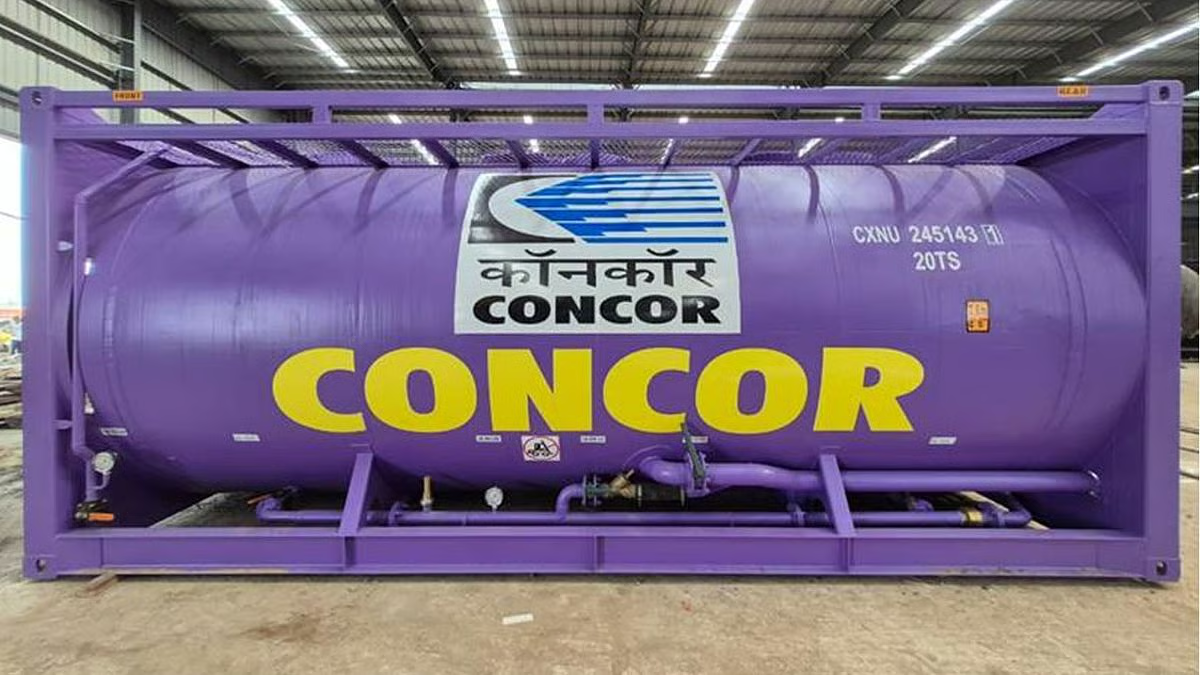
India’s national rail operator has enacted a strategic recalibration of bulk cement freight charges to catalyse a modal shift from road haulage to rail transport, a move with far-reaching implications for logistics efficiency, construction supply chains and carbon emissions in the built environment. The revised charge of ₹0.85 per gross tonne-kilometre (GTKM), down from ₹0.90, coupled with empty-return discounts, is already drawing cement companies toward rail-based transport using specialised tank containers.
Urban development and infrastructure sectors have long grappled with high logistics costs and supply inconsistencies for cement, one of the backbone materials of India’s construction economy. By re-aligning rail freight charges, Indian Railways aims to improve competitiveness versus road transport, where last-mile delivery often dominates but brings higher fuel costs, congestion and emissions. Rail’s inherent energy efficiency and lower per-tonne carbon footprint make this shift significant for climate-resilient urban growth.The Container Corporation of India (CONCOR), the rail freight logistics arm, is facilitating this transition by supporting installation of silos at key terminals to handle bulk cement more effectively. Employers in the cement sector have responded positively, signalling a potential uptick in rail loading volumes as producers evaluate total freight economy rather than just unit pricing. Faster turnaround and reduced handling losses versus bagged shipments are additional operational incentives driving interest.
Industry planners and logistics analysts note that traditional rail pricing models — based on distance slabs and per-TEU charges with diminishing empty return discounts — deterred long-distance containerised cement movement. The new GTKM structure simplifies pricing, making rail a predictable and transparent option for bulk transport. Whilst this pricing reform is modest in absolute terms, it reflects a strategic intent to enhance rail’s modal share amid growing infrastructure demand under the National Infrastructure Pipeline and affordable housing initiatives.Economic implications extend beyond freight bills. Lower logistics costs have the potential to ease pressures on construction material prices, particularly in Tier-2 and Tier-3 markets where road haulage costs heavily influence last-mile pricing. Urban planners expect this to support more balanced regional development and dampen inflationary trends in construction budgets.
Environmental advocates highlight that shifting freight from road to rail aligns with India’s broader decarbonisation goals, given rail’s superior fuel efficiency and lower greenhouse gas emissions per tonne-kilometre. As cement producers increasingly adopt rail for bulk dispatches, lifecycle emissions from logistics could decline, strengthening sustainability in the construction supply chain.Looking ahead, stakeholders emphasise the need for complementary investments — including expanded silo capacities, dedicated bulk cement terminals and better last-mile connectivity — to fully realise the benefits of the freight reforms. As urban centres expand and construction activity grows, integrated logistics reforms like this one will be pivotal in shaping cost structures and environmental outcomes for India’s built environment.