


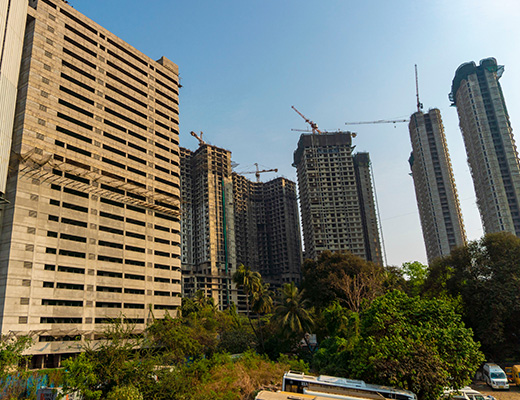
India’s real estate sector closed 2025 with its strongest investment performance on record, signalling a structural shift in how domestic and global capital views the country’s urban growth story. Total capital inflows into property assets reached approximately $14 billion during the year, underscoring renewed confidence in housing, commercial offices, logistics, and mixed-use development across major and emerging city regions.
The surge reflects more than cyclical recovery. Market analysts say investors are increasingly prioritising long-duration assets tied to India’s demographic expansion, digital economy, and infrastructure-led urbanisation. A sharp acceleration in investments during the final quarter of the year further reinforced the momentum, suggesting sustained appetite rather than a one-off spike. A defining feature of the investment pattern was the dominance of land and development-focused transactions. Nearly half of all capital deployed during the year was directed toward land parcels and development sites, highlighting investor conviction in future supply pipelines rather than only stabilised assets. More than half of these land investments were earmarked for residential and office-led projects, with mixed-use formats and urban logistics parks emerging as secondary priorities. Built office assets remained the second-largest recipient of capital, reflecting continued demand for grade-A workspaces in cities benefiting from technology services, global capability centres, and domestic enterprise expansion. Warehousing and logistics assets also saw steady inflows, supported by growth in e-commerce, manufacturing relocation, and supply chain formalisation.
Urban economists note that this investment mix points to a maturing market where capital is aligned with city-building fundamentals rather than speculative short-term returns. The preference for integrated developments combining housing, employment, and services also reflects changing urban lifestyles and the need to reduce commuting intensity, energy use, and spatial inequality. Foreign institutional investors continued to play a significant role, particularly from North America, while domestic capital deepened its presence across asset classes. The rise of structured investment platforms during the year indicates growing sophistication in how real estate capital is deployed, with partnerships increasingly designed around governance, sustainability metrics, and phased development strategies. For cities, the implications are far-reaching. Increased investment in residential and office development has the potential to expand organised housing supply, improve construction quality, and accelerate the adoption of climate-resilient design standards. However, planners caution that capital concentration must be matched with inclusive zoning, infrastructure readiness, and environmental safeguards to avoid uneven growth.
Looking ahead, industry observers expect investment momentum to remain resilient into 2026, supported by stable demand, improving transparency, and policy continuity. As India’s cities absorb record levels of real estate capital, the next challenge will be ensuring that investment translates into affordable homes, efficient workplaces, and urban environments that balance economic growth with long-term social and environmental resilience.
Also Read: Lucknow Residential Growth Adopts Intelligent Home Design
