


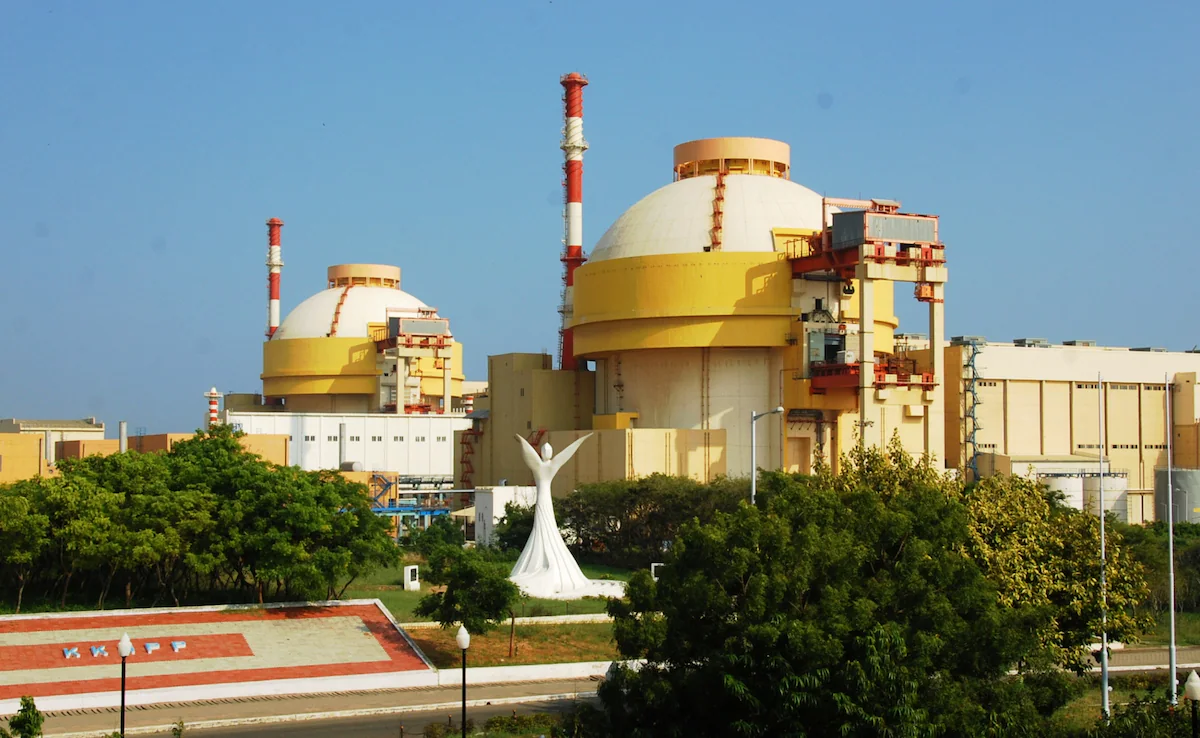
Centre is weighing a proposal to allow private sector participation in the operation of nuclear power plants. This potential move marks a departure from the longstanding model of exclusive public sector control in the country’s nuclear energy domain. According to senior officials involved in policy consultations, discussions are underway to craft a framework that would permit private firms to enter the sector under stringent eligibility conditions.
The government is currently examining amendments to the Atomic Energy Act and the Civil Liability for Nuclear Damage Act to facilitate this entry. The policy rethink is anchored in India’s long-term energy transition goals, particularly its Viksit Bharat 2047 roadmap. The plan envisions scaling nuclear power capacity from the current 8.8 GW to 100 GW by 2047, with an intermediate target of 22 GW by 2032. Nuclear energy, as a zero-carbon base-load source, is expected to play a critical role in India’s net-zero commitment. Officials noted that only companies with robust financials, a clean compliance record, and a proven track record in executing large infrastructure projects will be eligible. Criteria under consideration include consistent profits, sustained operations over multiple years, and technological expertise relevant to high-risk, high-capital sectors.
However, a key hurdle remains the liability regime. Under the current legal framework, the state-owned Nuclear Power Corporation of India Limited (NPCIL) operates all 23 active reactors. The Civil Liability for Nuclear Damage Act assigns significant post-incident responsibilities to operators—provisions that may deter private investment without substantial risk-sharing mechanisms or legal revisions. Industry experts argue that allowing private participation could accelerate capacity additions, unlock global technology partnerships, and de-risk financing. Several countries, including the United States, South Korea, and France, already permit private or mixed ownership of nuclear power assets under tightly regulated frameworks.
Energy transition specialists view the Indian government’s interest as a pragmatic step toward diversifying its clean energy mix, especially in the face of rising demand and grid stability challenges. They caution, however, that rigorous oversight, transparency, and public safety must remain non-negotiable pillars of any new regulatory regime. While the Centre has not yet finalised the legislative changes, the move signals a willingness to reimagine India’s nuclear architecture to meet ambitious growth targets. If cleared, it could mark the first major structural reform in the sector since the liberalisation of atomic fuel agreements and international collaboration in the 2000s.
The road ahead may be complex, but the message is clear: India is preparing to future-proof its energy ecosystem—and the nuclear sector could be its next frontier for sustainable and secure power generation.
Also Read: Mumbai Metro Plans Ropeway To Sanjay Gandhi Park
