


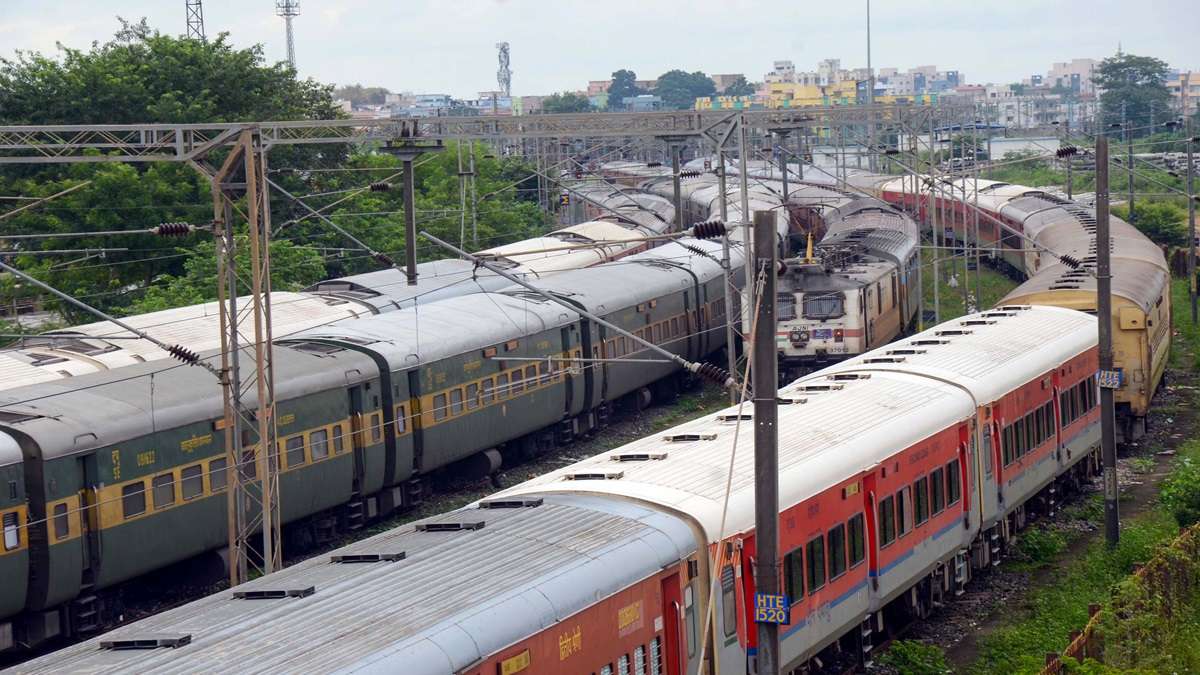
India is set to introduce approximately 2,000 additional trains daily over the next four years, in a move aimed at guaranteeing confirmed seats for every passenger and eradicating the chronic waitlisting that has long burdened travellers. This expansion, announced by Indian Railways, is a strategic response to surging demand—projected passenger numbers are expected to jump from the current 800 crore annually to 1,000 crore. The railway network currently runs close to 10,748 passenger trains daily; the 2,000 new additions will significantly ease capacity constraints and allow the phasing out of roughly 5 crore waitlisted tickets each year.
An official within the Railways’ planning division highlighted the passenger-centric focus, noting that by scaling up the train fleet, the objective is to guarantee a confirmed berth for every reservation. The initiative forms part of a broader suite of investments that intersect with sustainability goals, equitable access, and operational resilience. Central to the upgrade is the introduction of 450 Vande Bharat trains—state-of-the-art, semi-high-speed, air-conditioned units lauded for their energy efficiency and reduced carbon footprint. These will be complemented by approximately 200 push-pull trains, which can reverse direction without locomotive repositioning, enhancing route flexibility and reducing turnaround times.
The expansion also includes a ramp-up of Mail and Express services, aimed at boosting network throughput. These enhancements require parallel upgrades to track capacity, signalling systems, and station infrastructure—particularly pertinent as passenger and train numbers continue to grow. To support the additional trains and ensure smooth operation, Indian Railways is prioritising infrastructure resilience. This year’s budget earmarks the construction of 1,000 rail overbridges and underbridges designed to improve train speeds, reduce delays, and enhance urban mobility by decongesting level crossings.
Additionally, the acceleration of dedicated freight corridors is freeing up suburban and mainline tracks for passenger services—reducing delay risks and improving overall journey times. As freight volumes shift to these dedicated corridors, the passenger network stands to gain significantly in reliability and capacity. In line with the expansion, Indian Railways is implementing a new policy to limit waitlisted tickets to 25 percent of a coach’s seating capacity. Previously, sleeper-class waitlists could exceed 300 names during peak season, with more than 150 in AC classes, leading to widespread frustration. The new cap introduces transparency and better travel planning for passengers.
A senior ticketing official explained that by setting a waitlist ceiling, the system aims to reduce uncertainty and align bookings with realistic expectations. Commuters will now have clearer insights into their chances of securing a confirmed seat prior to planning their travel. The policy will be uniformly applied across all reserved categories including Sleeper, AC First, Second and Third Class, as well as Chair Car and Executive Chair Car. Railway planners emphasise that this mass expansion supports India’s broader green mobility agenda. Trains are inherently more sustainable than road or air travel. The addition of modern, energy-efficient Vande Bharat and push-pull trains aligns with India’s net-zero carbon commitments, reducing per-passenger emissions. Analysts note that diverting millions of potential waitlisted travellers into confirmed berths will reduce last-minute flight or bus bookings, alleviating road congestion and fossil fuel usage. A transit systems expert observed that scaling reliable rail access at such magnitude will make low-carbon mobility the default choice for a vast number of Indians.
The network upgrades—including new bridges and integration with freight corridors—are also expected to improve last-mile connectivity and reduce urban bottlenecks, benefitting the development of sustainable and liveable cities across India. The expansion, however, poses logistical challenges. Procuring trains, upgrading tracks, installing new signalling systems, and training human resources—all while maintaining operational continuity—will require meticulous planning and a phased approach. A railway infrastructure analyst pointed out that ensuring service continuity amid ongoing construction will be crucial, as delays in track doubling or bridge completion could offset the gains in capacity and efficiency.
Despite these challenges, the plan is underpinned by strong economic rationale. Expanded train services are expected to stimulate tourism, business travel, and regional connectivity. Enhanced door-to-door accessibility supports economic growth in smaller cities and towns, while simultaneously reducing the overdependence on major metros. On the fiscal side, the expansion will be financed through a mix of public budgetary allocations and revenue enhancements. A rise in ridership, coupled with income from ancillary services such as on-board advertising and parcel logistics, is anticipated to offset a portion of the capital investment. This initiative reflects a shift in Indian Railways’ planning approach—from piecemeal service adjustments to holistic capacity creation. It also lays critical groundwork for further enhancements, including full electrification of the network, the adoption of next-generation signalling systems like ETCS, and the digitalisation of passenger services.
Railway officials assert that long-term gains will include improved scheduling through data analytics, reduced dwell times at stations, and higher asset utilisation. The expansion reinforces railways as the backbone of India’s national mobility vision, offering a cleaner, faster, and more equitable travel option to millions. India’s plan to launch 2,000 new trains in four years is a landmark step in modernising the rail network. It promises to not only solve the problem of chronic waitlists but also move the country closer to achieving inclusive, carbon-conscious, and passenger-friendly public transport. With a sharp focus on execution, this vision could reshape the future of mobility for the next generation.
Also Read : Only 16 percent Dharavi homes pass eligibility
