


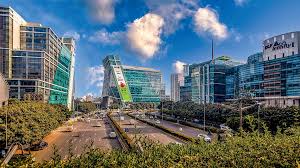
India’s commercial property cycle entered a more measured phase in 2025, as the India office real estate market recorded strong leasing activity while investors and occupiers grew more selective. Across major metros, companies consolidated portfolios, expanded in high-quality districts and prioritised sustainable campuses signalling structural confidence rather than speculative exuberance.
Industry data reviewed by Urban Acres shows that office absorption during the first nine months of 2025 reached a historic high, reflecting expansion by Global Capability Centres (GCCs), financial institutions and flexible workspace operators. GCCs alone accounted for roughly two-fifths of total leasing, reinforcing India’s role as a long-term operations hub for multinational firms seeking skilled talent and cost stability. Technology occupiers remained the largest contributors to demand, but their proportional share eased as banking, financial services and insurance firms, engineering companies and co-working platforms increased their footprint. Analysts attribute this to easing inflationary pressures and improved credit access, which supported business expansion decisions. Vacancy levels across the top seven cities softened marginally to just over 16 per cent, compared to the previous year. The Mumbai Metropolitan Region and Hyderabad recorded modest declines in vacant stock, partly due to slower new supply additions. However, Hyderabad continued to post the highest vacancy rate among major markets, followed by the National Capital Region. Rental growth remained moderate but consistent. Bengaluru led annual increases, reflecting sustained demand for Grade A tech parks. Pune, Chennai and NCR also recorded steady appreciation, while eastern markets saw slower momentum. Crucially, rental growth was concentrated in premium, well-connected micro-markets with strong public transport access underscoring the link between urban infrastructure and commercial resilience.
A defining shift in the India office real estate market was the consolidation into green-certified buildings. More than three-quarters of new leasing occurred in environmentally certified projects, many within integrated business parks. Urban planners note that occupiers are embedding energy efficiency, lower carbon footprints and employee wellbeing into real estate decisions, aligning with India’s broader climate commitments and corporate ESG targets. On the capital side, institutional participation deepened. Real Estate Investment Trust (REIT) platforms and public listings expanded the pool of investible Grade A assets, improving transparency and governance standards. Of an estimated 850 million sq ft of Grade A office stock nationwide, over 130 million sq ft is now under listed structures, widening retail and institutional investor access. For cities, the implications extend beyond balance sheets. Strong office absorption supports transit investments, mixed-use development and employment generation. Yet experts caution that future growth must remain inclusive integrating affordable mobility, gender-safe work environments and climate-resilient infrastructure into commercial planning.
As 2026 approaches, the India office real estate market appears less cyclical and more structurally anchored. The challenge ahead lies in sustaining growth while aligning expansion with environmental performance and equitable urban outcomes.
Also Read: Assam Infrastructure Projects Gain Rs 55000 Crore Push
India office real estate market sees reset
