Chandigarh Balances Concrete Expansion With Urban Ecology
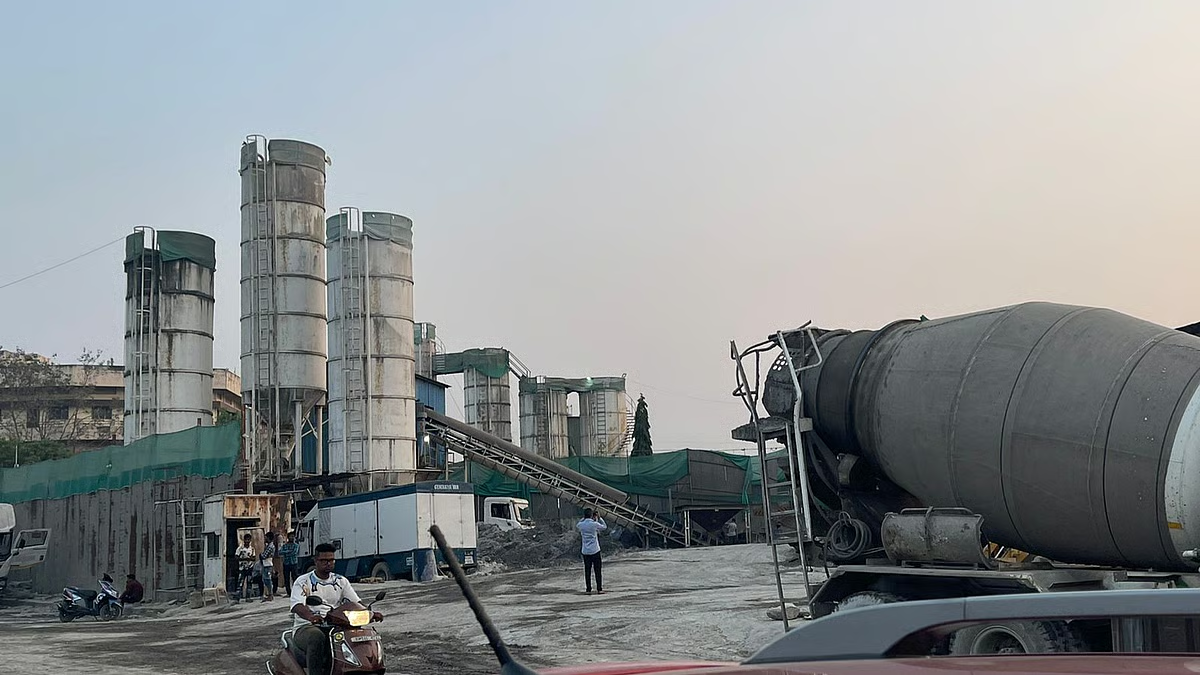
Mumbai’s push to rein in urban air pollution took a decisive regulatory turn this week as the Maharashtra Pollution Control Board (MPCB) ordered the closure of 10 ready‑mix concrete (RMC) plants across the Mumbai Metropolitan Region (MMR) and recovered approximately ₹84 lakh in penalties, underscoring renewed enforcement of environmental standards in construction‑linked sectors. The action reflects growing administrative focus on curbing dust, particulate emissions and construction‑related air quality in one of India’s largest urban corridors.
Over a two‑day enforcement drive covering industrial clusters and construction hubs such as Dombivli, Kalyan, Ambernath, Bhiwandi, Turbhe, Virar and Worli, flying squads inspected 44 RMC facilities, leading to the shutdown of 10 plants for non‑compliance with prescribed dust‑control and environmental norms. An additional 17 units were served show‑cause notices, and four received interim directives to rectify violations before resuming activity. The crackdown is part of an intensified campaign triggered by deteriorating air quality during the winter months — when meteorological conditions tend to trap pollutants closer to the ground — and follows a series of inspections launched since December 2025. Since then, MPCB teams have examined hundreds of RMC units across the region, recovering over ₹4.35 crore in penalties for environmental violations and pursuing corrective actions against recurrent offenders.
RMC plants, integral to construction supply chains in a rapidly urbanising city like Mumbai, can be significant sources of particulate matter (PM) and fugitive dust if not equipped with adequate mitigation systems such as covered mixing areas, water‑spray mechanisms and filtered exhaust systems. Experts note that unchecked emissions from such facilities contribute to ambient PM10 and PM2.5 concentrations, which are linked to respiratory and cardiovascular health risks. Enhanced enforcement aligns with National Clean Air Programme (NCAP) objectives aimed at reducing particulate pollution in India’s urban centres. For local transport and infrastructure sectors, the closures and notices carry operational and economic implications. RMC suppliers are critical to the construction ecosystem — providing concrete for road projects, buildings and transit infrastructure. Compliance demands such as dust suppression technologies, regular equipment maintenance and on‑site monitoring add to operational costs, but authorities argue these are essential investments to balance economic activity with environmental and public health responsibilities.
Urban planners underscore that episodic enforcement — while necessary — must be paired with consistent regulatory guidance and capacity‑building for smaller and medium‑scale operators, who may lack technical resources to meet evolving standards. Clear, graded compliance pathways and technical support could help reduce repeat violations and build long‑term adherence to best practices in emission management.The MPCB’s actions also reveal the interconnected role of regional authorities and civic bodies. Coordination with the Brihanmumbai Municipal Corporation and other local administrations has been pivotal in identifying pollution hotspots and targeting enforcement. Civic agencies have concurrently issued notices to construction sites for dust and emissions non‑compliance, illustrating a multi‑layered approach to urban air quality governance.
Looking ahead, sustained enforcement — paired with transparent performance data and industry engagement — could help Mumbai and its satellite towns better manage construction‑linked pollution. As cities pursue ambitious infrastructure agendas, integrating environmental compliance with project planning will be crucial to achieving cleaner air outcomes without stalling economic growth.