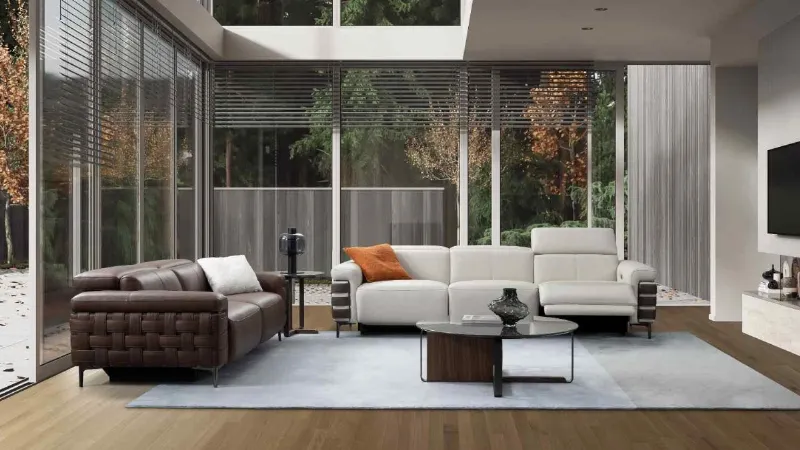
India Modern Living Trends Reflected In Domicil Edit
As Indian home interiors continue evolving beyond static aesthetics, Domicil has unveiled its curated design edit for 2026, showcasing furniture that blends comfort, adaptability and aesthetic refinement for modern living environments. The collection reflects a broader shift in how urban and suburban homes are being furnished — prioritising personalised comfort, multifunctionality and enduring style that mirror lifestyles shaped by hybrid living and evolving spatial needs.
Across compact city apartments and expansive homes alike, Domicil’s 2026 edit emphasises pieces that are as functional as they are elegant, with seating solutions designed for both relaxation and social interaction. Models like Cubo and Bilbao demonstrate flexible seating arrangements and ergonomic support tailored to everyday use, while modular options suit both intimate and larger family contexts. One standout in the line, the Bakst recliner, integrates ergonomic engineering with sculptural form, aiming to support restorative rest and alleviate postural strain — an indicator of how furniture design is increasingly connecting physical wellbeing with spatial experience. Other pieces such as Ardea and Sundown balance generous comfort with architectural refinement, suggesting that premium interiors in 2026 will increasingly blur the lines between utility and luxe.
This emphasis on adaptable comfort aligns with larger interior design currents where homes are evolving into multifunctional hubs for work, leisure and rest. Contemporary design voices note a broader trend toward living spaces that adapt to occupant needs, with interiors becoming extensions of daily routines rather than static showcases. Concepts such as layering tactile materials, combining sculptural furniture with softer textiles, and mixing finishes to create depth are gaining attention in 2026 design dialogues. Design observers also highlight that the contemporary homeowner is seeking spaces that feel personal and livedin, moving away from homogenous setups toward interiors that signal intention and comfort. This shift is mirrored in trends where warm, natural materials, organic forms and bespoke configurations are preferred over trend‑driven minimalism.
For multi‑family homes and dense urban residences, the rise of modular furniture with adaptive features and flexible layouts offers a practical means to articulate varied functions — from work corners to lounging zones — within limited footprints. As Indian cities expand and housing typologies become more diverse, such adaptability will be central to future interior planning. Yet, experts caution that thoughtful design extends beyond product selection; it encompasses spatial coherence, human comfort and environmental responsibility. Materials that age well, furniture that supports physical wellbeing, and interiors that accommodate changing life patterns are increasingly becoming benchmarks for durable and responsible design.
As India’s middle and upper segments recalibrate how they invest in homes, design narratives for 2026 are expected to lean toward intentional living spaces — where comfort, function and visual warmth coexist, and where furniture plays a central role in enhancing both daily living and emotional connection to place.