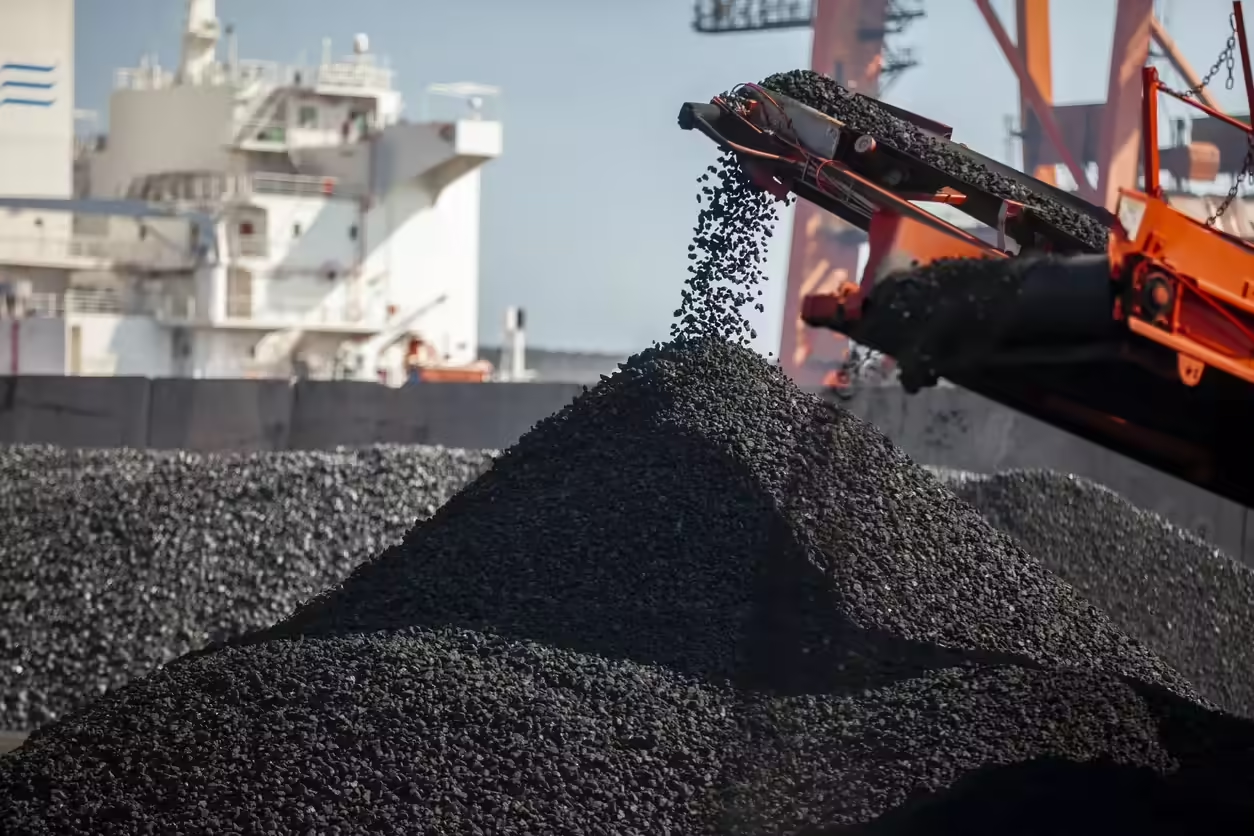
Odisha Mahanadi Coalfields Break Daily Output Record
India has formally recognised coking coal as a critical and strategic mineral, a policy shift intended to strengthen the domestic steel supply chain and reduce heavy reliance on imports for this essential raw material. The designation, enacted through an amendment to the Mines and Minerals (Development and Regulation) Act, 1957, realigns regulatory treatment for coking coal — giving it special status within national mineral policy and opening pathways for faster approvals and expanded exploration.
Coking coal — used predominantly in blast furnaces to produce metallurgical coke, which in turn feeds steelmaking — is central to India’s industrial base. Yet domestic output has historically lagged behind demand, with imports currently accounting for an estimated over 90 per cent of total requirement. This dependence has not only strained foreign exchange but also left the steel industry vulnerable to global market volatility.Under the updated regulatory framework, coking coal is now listed among critical and strategic minerals — a classification typically reserved for resources essential to national economic security and industrial competitiveness. This policy advancement is expected to streamline environmental and land-use approvals and encourage investment in mining capacity and processing technologies. It also expedites exploration of deeper and previously uneconomic deposits, particularly in states with rich coal reserves such as Jharkhand, West Bengal, Chhattisgarh and Madhya Pradesh.
Industry analysts and mining sector experts suggest that this recognition aligns with earlier recommendations made by government advisory bodies that highlighted the need to fully utilise India’s substantial reserves and reduce import dependence that had persisted despite abundant resources. Suboptimal utilisation of domestic deposits, combined with procedural bottlenecks, has historically limited upstream expansion and value realisation.The reclassification also carries broader implications for the steel sector’s economic footprint. By prioritising faster clearances and potentially easing participation constraints on private firms, the policy aims to attract capital into advanced beneficiation, modern mining technologies and more efficient production ecosystems. This could not only fortify supply-chain resilience but also stimulate job creation across mining, logistics and downstream steel manufacturing.
However, this shift is not without challenges. Observers note that simply designating a mineral as “critical” does not automatically solve structural issues such as the quality of domestically mined coal, infrastructure limitations, or the need for cleaner production pathways. Transitioning to lower-carbon steelmaking — including electric arc furnaces or hydrogen-enhanced reduction — remains a strategic long-term objective for decarbonisation and energy efficiency within the sector.For urban development and infrastructure planners, a more secure and cost-predictable steel supply could have cascading benefits, potentially lowering construction costs and improving supply reliability for mass housing, transport and industrial projects. Yet realising these gains will require continued policy focus on sustainable mining practices, technological innovation and integration of environmental safeguards.