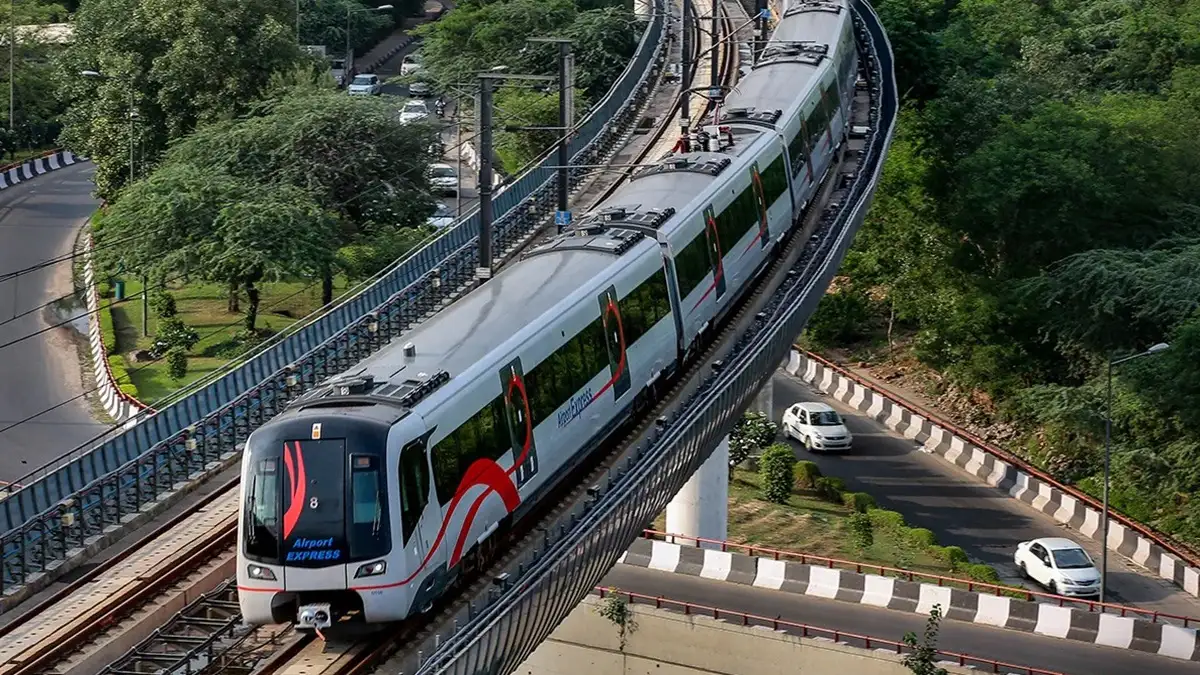
India Metro Network Growth Reaches Global Third Rank
India’s urban transit landscape has reached a significant milestone, with the India metro network now ranking as the third largest globally by operational length. Spanning over 1,100 kilometres across multiple cities, the expansion reflects a decade-long shift towards mass rapid transit as a central pillar of urban infrastructure and economic growth. Officials overseeing transport development indicate that the India metro network has scaled rapidly from limited coverage in a handful of cities to a multi-city system serving millions daily. With several hundred kilometres still under construction, the network is expected to expand further, reinforcing its role in addressing congestion, air pollution, and mobility inefficiencies in fast-growing urban centres.
The scale of the India metro network highlights a structural transition in how Indian cities approach transport planning. Historically dependent on road-based systems, urban mobility is increasingly being anchored around high-capacity rail corridors. Urban planners note that metro systems not only reduce travel time but also influence land use patterns, encouraging transit-oriented development and higher-density growth around stations. A key contributor to this transformation has been the Delhi Metro Rail Corporation, whose operations in Delhi have set benchmarks for efficiency, reliability, and commuter safety. Since its early 2000s launch, the network has demonstrated how integrated planning and institutional capacity can deliver large-scale infrastructure with consistent performance outcomes. The India metro network now supports daily ridership in the millions, positioning it as a backbone of public transport in major cities. This shift has broader economic implications, including reduced fuel consumption, improved workforce productivity, and enhanced connectivity between residential and commercial zones. Real estate markets have also responded, with properties near metro corridors often witnessing higher demand and value stability.
Policy continuity has played a critical role in this expansion. Successive infrastructure strategies have prioritised metro rail as a sustainable alternative to private vehicle usage. Experts highlight that such investments align with climate goals by lowering per capita emissions and reducing reliance on fossil fuel-based transport. However, challenges remain. High capital costs, long gestation periods, and the need for last-mile connectivity continue to affect system efficiency. Without seamless integration with buses, non-motorised transport, and urban design interventions, metro systems risk underutilisation in certain corridors. There is also a growing emphasis on financial sustainability. Farebox revenue alone is often insufficient to cover operational costs, prompting cities to explore diversified revenue streams such as property development, advertising, and station-area commercialisation. Looking ahead, the continued expansion of the India metro network will depend on balancing speed with inclusivity and environmental considerations. Ensuring equitable access, minimising displacement during construction, and integrating renewable energy into operations are emerging priorities.
As Indian cities confront rising population pressures and climate challenges, the India metro network represents a critical step towards building efficient, low-carbon, and interconnected urban systems. Its evolution will likely shape not just how people move, but how cities grow and function in the decades ahead.