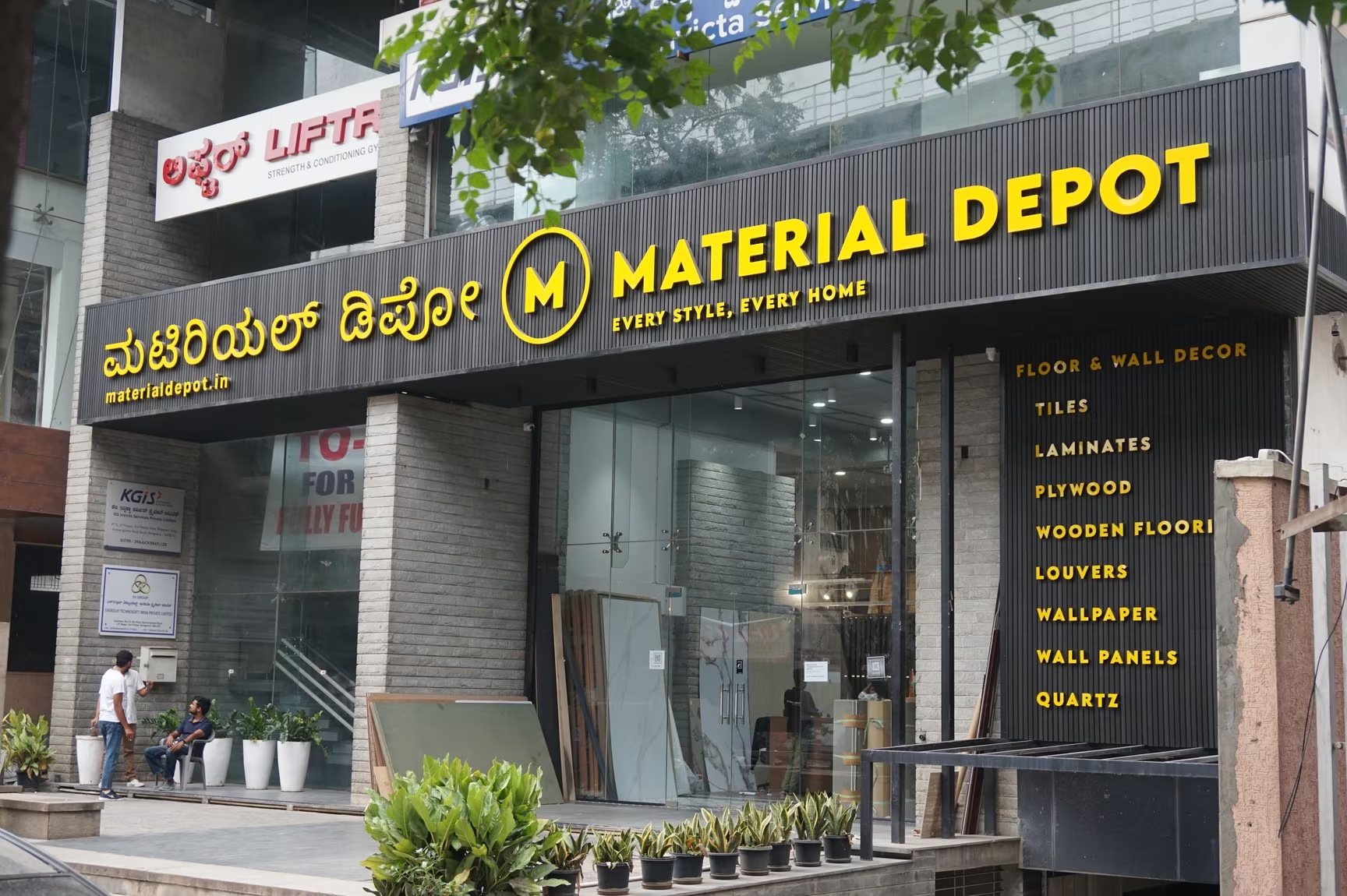
India Material Depot Boosts Urban Interiors Supply Chain
Material Depot, a Bengaluru-based home interiors materials platform, has raised $10 million in Series A funding in a round co-led by Accel and Stellaris Venture Partners, signalling growing investor confidence in digital-led modernisation of India’s construction and interiors ecosystem. The capital infusion points to opportunities — and persistent inefficiencies — in the way urban homeowners and design professionals source building finishes and décor products.
Established by co-founders in 2022, Material Depot operates a curated omnichannel marketplace aggregating tiles, laminates, wall panels, flooring and other materials frequently used in residential construction and renovation. The platform combines online discovery with physical experience centres, where customers can interact with products before purchase — an increasingly important bridge between digital inspiration and real-world build decisions.Industry investors have long pointed to stock-and-catalogue fragmentation as a drag on India’s residential and commercial interiors market. Today, millions of urban households embark on home build-outs or upgrades each year, yet face supply chains marked by inconsistent pricing, opaque quality and uneven delivery timelines. Material Depot’s model seeks to address these gaps with tighter supply chain coordination and technology that supports inventory planning and forecasting — elements that are essential to reducing construction waste and lowering embodied carbon from misordered or excess materials.
The latest funding round attracted a wide spectrum of venture capital firms and angel investors, including names from the broader interior design and property services ecosystem. These backers bring both capital and domain insights, underscoring the strategic value they see in formalising an otherwise highly fragmented materials category.Material Depot plans to deploy the fresh capital across three main pillars: deepening its technology stack for supply chain optimisation, expanding its curated product portfolio with design-led collections tailored to evolving homeowner preferences, and scaling its physical reach across multiple Indian cities. The company currently operates a handful of experience centres in Bengaluru but aims to grow its footprint significantly over the next 12-18 months to serve tens of thousands of customers.
Urban development analysts say that such platforms can enhance access to sustainable building materials if they integrate lifecycle and environmental performance data into selection tools. This could help cities reduce waste — a major contributor to construction’s carbon footprint — and support broader goals for climate-resilient building practices.For architects and interior designers, digital-first materials marketplaces can shorten project cycles and improve procurement transparency. Yet in smaller cities and peri-urban areas where showroom access and logistics remain less developed, bridging the last-mile gap between online inspiration and offline delivery will be essential to equitable growth across India’s urban hierarchy.
As India’s housing demand expands with rising incomes and urbanisation, players like Material Depot are positioning themselves at the intersection of design technology and supply chain efficiency. The scaling of such platforms, if embraced alongside sustainable sourcing and circular economy principles, could contribute meaningfully to more resilient and people-centric built environments.