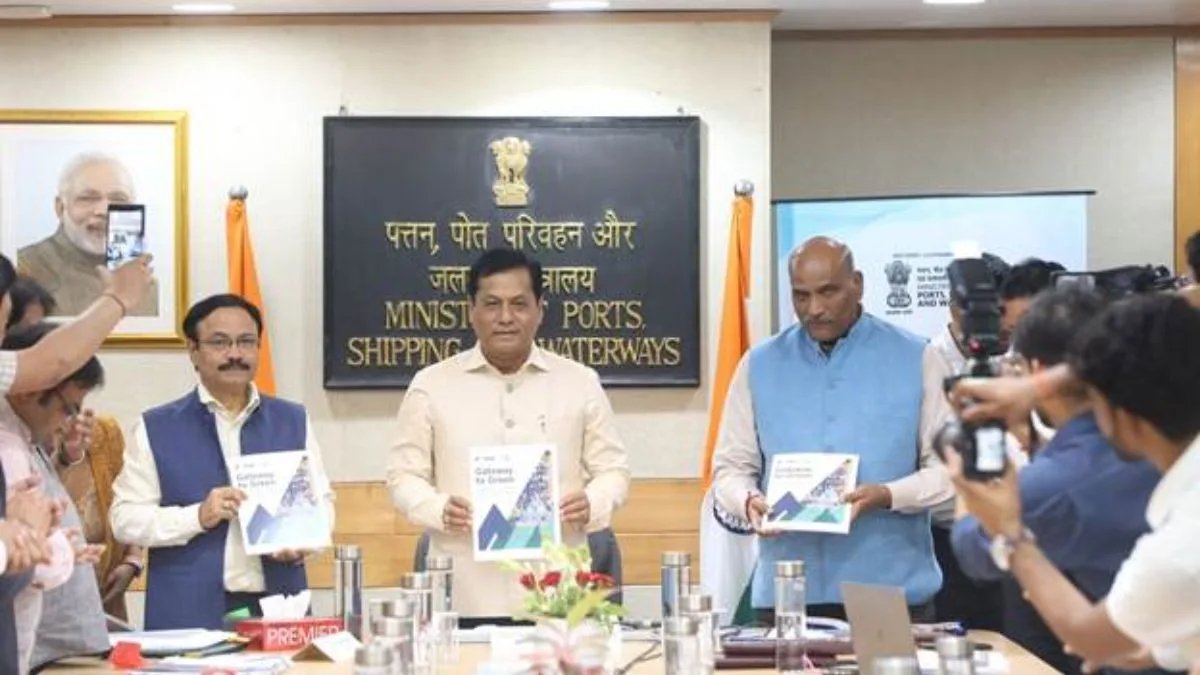
India Launches SAGAR SETU for Paperless Port Processing System
India has launched a powerful new digital initiative aimed at transforming its maritime logistics sector. With the formal inauguration of the SAGAR SETU platform on June 26, 2025, by Union Minister Sarbananda Sonowal, the country took a significant step toward paperless, efficient, and smart port operations. The platform, which connects over 80 ports and 40 key stakeholders, is now live.
SAGAR SETU will serve as a centralised interface to streamline EXIM-related services. Designed under the PM Gati Shakti National Master Plan, it aims to simplify cargo handling and cut vessel turnaround times by digitising vessel and cargo documentation processes. The end goal is a seamless logistics ecosystem that enables ease of doing business across India’s coastlines. The digital rollout was bolstered by another strategic agreement. The Ministry of Ports, Shipping & Waterways (MoPSW) signed an MoU with the Centre for Development of Advanced Computing (C-DAC) to create a Digital Centre of Excellence (DCoE). The centre will act as a tech innovation lab for India’s ports, integrating AI, IoT, and blockchain solutions to modernise maritime infrastructure.
“This is not just a launch; it’s a mission,” said Union Minister Sonowal. “With SAGAR SETU and the DCoE, we are entering an era of smart and sustainable maritime infrastructure, a critical part of Maritime India Vision 2030 and Amrit Kaal Vision 2047.” Alongside SAGAR SETU, the ministry launched DRISHTI — a centralised dashboard for tracking performance and monitoring targets. Short for Data-driven Review for Institutional System Tracking and Implementation, the DRISHTI system will report on key project metrics across the port sector. Built on four pillars — KPI Monitoring, Achievement Tracking, Organisation Oversight, and Functional Cell Management — it is intended to ensure project delivery stays accountable and transparent.
Minister of State Shantanu Thakur, who attended the launch, introduced another key reform — a standardised Scale of Rates (SOR) for all Major Ports. The SOR framework will unify how port tariffs are calculated, offering clarity to exporters, importers, and shipping lines. “We are simplifying and digitising to make Indian ports competitive and globally aligned,” he said. The uniform SOR not only removes inconsistencies in port pricing but also prepares India for seamless digital integration of services and tariffs. Ports will still be allowed to tweak certain conditions based on local operating costs, but the framework provides a common template for rate application, service definitions, and transparency in billing.
India’s maritime strategy isn’t stopping at digitisation. A parallel initiative titled “Gateway to Green” was also launched, focusing on making Indian ports central hubs for green hydrogen production, storage, and export. Developed with support from the Indian Ports Association (IPA), the strategy identifies leading ports like V.O. Chidambaranar, Cochin, Paradip, JNPT, and Deendayal as candidates for transitioning into clean energy centres. This move directly supports Prime Minister Modi’s national target of producing 5 million tonnes of green hydrogen by 2030. The roadmap suggests key interventions — including land provisioning for hydrogen plants, infrastructure development, global collaboration, and investment facilitation — to help ports pivot into hydrogen-ready logistics zones.
“The future is not just digital — it is green,” said Sonowal, reaffirming that India’s ports will evolve into climate-smart gateways. He highlighted the role of ports in enhancing energy security, cutting emissions, and reducing fossil fuel dependence through hydrogen corridor development. All initiatives launched under the event align with the government’s long-term objective of building a Viksit Bharat — a developed India with sustainable infrastructure, inclusive economic growth, and global competitiveness. These reforms also reflect India’s growing ambition to become a central logistics hub for the Indo-Pacific region.
From end-to-end documentation to smart rate calculation and hydrogen export planning, the changes aim to transform India’s ports into future-ready trade engines. As Sagarmala projects, Bharatmala corridors, and multimodal hubs continue expanding, India’s port sector will play a defining role in powering domestic and international supply chains. Officials from MoPSW, C-DAC, and the IPA have confirmed phased rollouts for each initiative. Early integration feedback has been positive, with exporters expecting faster clearance times and port authorities reporting smoother workflows. “This is what smart governance looks like — fast, focused, and forward-looking,” said an IPA official present at the launch.
The minister concluded, “With technology as our anchor, India’s maritime future is now firmly charted.”