


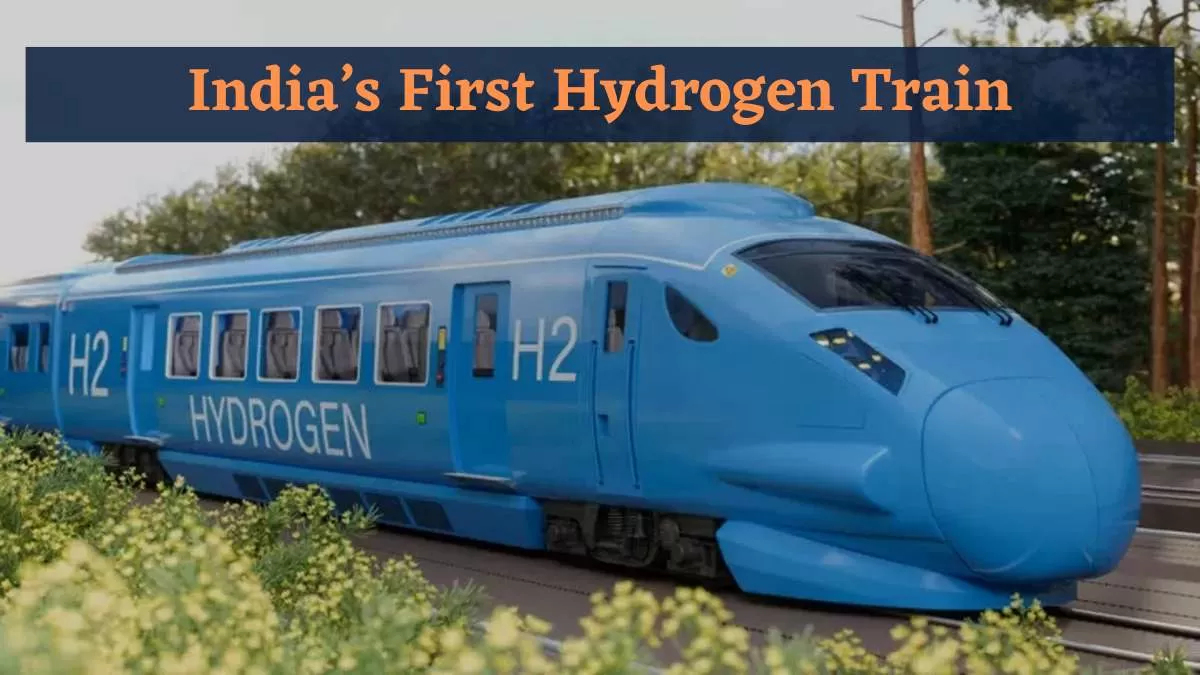
India is set to launch its first hydrogen-powered train on the 89-kilometre Jind–Sonipat route in Haryana, marking a major step towards zero-emission public transport. Touted as the world’s most powerful and longest hydrogen train, it can carry over 2,600 passengers at speeds of up to 110 km/h. This milestone aligns India with global leaders in green rail technology and signals a shift towards cleaner, future-ready transport infrastructure.
India’s railway network is on the brink of a historic transformation with the imminent launch of its first hydrogen-powered train. The 89-kilometre Jind–Sonipat route in Haryana will be the debut corridor, positioning the country as the fifth globally after Germany, France, Sweden, and China to embrace hydrogen-powered passenger rail.Manufactured at the Integral Coach Factory in Chennai, this train is touted as the world’s most powerful and longest hydrogen-powered rail unit, capable of carrying 2,638 passengers at speeds of up to 110 km/h. It is driven by a 1,200 horsepower hydrogen fuel cell engine, setting new benchmarks for clean propulsion in mass transit.The initiative falls under Indian Railways’ “Hydrogen for Heritage” programme, which envisions a fleet of 35 hydrogen trains serving both heritage and hill routes. Each train will cost approximately ₹80 crore, with an additional ₹70 crore allocated for route-specific infrastructure such as fuelling depots and safety systems.
Also Watch: An Exclusive Interview with Sanjeev Jaiswal (IAS), CEO MHADA
This landmark project is not merely a showcase of engineering capacity; it signals a shift in India’s long-term mobility strategy. Hydrogen-powered trains produce zero tailpipe emissions, releasing only water vapour, thus offering a viable solution to reducing the carbon footprint of the country’s vast rail network. Officials say that alongside environmental benefits, these trains promise quieter operations and reduced maintenance costs compared to diesel alternatives.The technology centres on converting an existing Diesel Electric Multiple Unit (DEMU) rake into a hydrogen-powered configuration. The modification includes advanced hydrogen fuel cells, storage tanks, and control systems to ensure efficiency and safety. Supporting infrastructure will be equally critical, with plans for an integrated facility to manufacture, store, and dispense hydrogen for train operations.
In addition to passenger trains, the project includes five hydrogen fuel cell-based tower cars for maintenance, each costing around ₹10 crore. This diversification aims to extend hydrogen applications across multiple railway operations.The hydrogen supply for the Haryana service will come from a 1-megawatt Polymer Electrolyte Membrane (PEM) electrolyser based in Japan. Operated by GreenH Electrolysis, the system will produce approximately 430 kilograms of hydrogen daily, ensuring uninterrupted train service.Industry experts note that the success of this venture could accelerate hydrogen adoption across India’s transport sector. However, they also caution that large-scale deployment will depend on reducing hydrogen production costs and establishing a nationwide supply chain.As the train prepares for its inaugural run, the development stands as a testament to India’s ambition to align infrastructure growth with environmental sustainability. If executed effectively, hydrogen-powered trains could redefine commuter travel in the country, offering a cleaner, quieter, and more efficient future on rails.
Also Read : Indian Railways Launches Round Trip Scheme Offering 20 Percent Discount on Tickets
India Launches First Hydrogen Train On Jind Sonipat Route Soon

