


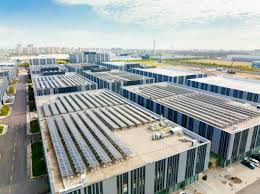
India’s commercial property hierarchy is being quietly redrawn, with India warehousing real estate emerging as the preferred destination for institutional capital. Logistics parks and industrial corridors are drawing stronger deal flow than office towers and retail malls, signalling a structural shift rather than a short-term rotation.
Global investors including Blackstone, GIC, Canada Pension Plan Investment Board and Abu Dhabi Investment Authority have expanded exposure to Indian logistics platforms. Domestic capital providers such as HDFC Capital and Kotak Investment Advisors are backing similar platform-led strategies. The focus has shifted from standalone warehouse assets to scalable portfolios designed for eventual REIT or InvIT listings. Recent industry research by Grant Thornton Bharat indicates investor interest has moved from exploratory allocations to long-term conviction. Analysts argue that warehouses are increasingly treated as core infrastructure supporting manufacturing, consumption and digital commerce. Leasing data reinforces this narrative. Industrial and warehousing absorption across the top eight cities reached nearly 37 million sq ft in 2025, reflecting double-digit annual growth. Demand has been driven primarily by third-party logistics operators, engineering firms and e-commerce companies. Micro-markets such as Bhiwandi in Mumbai, Chakan–Talegaon in Pune and Oragadam in Chennai have emerged as high-activity clusters, supported by freight connectivity and proximity to consumption centres. Unlike office real estate, which continues to recalibrate around hybrid work patterns, logistics demand is directly linked to structural economic changes. E-commerce penetration into Tier-II and Tier-III cities, GST-enabled warehouse consolidation and production-linked manufacturing initiatives have increased the need for large, compliant Grade A facilities.
Developers added more than 40 million sq ft of new Grade A supply in 2025, indicating confidence that absorption is demand-led rather than speculative. For investors, the attraction lies in longer lease tenures, diversified tenant bases and relatively predictable income streams. In an environment of macroeconomic uncertainty, such stability is highly valued. Urban economists also highlight broader implications. Efficient logistics networks reduce transport inefficiencies and emissions by shortening delivery routes and consolidating freight. Strategically located industrial parks along dedicated freight corridors can support decentralised job creation while easing pressure on city cores. However, challenges persist. Land acquisition hurdles, regulatory approvals and uneven infrastructure readiness can slow project timelines. Yield compression is also a possibility as competition intensifies.
Even so, the rise of India warehousing real estate signals a deeper transformation in how capital engages with urban land. As manufacturing scales and consumption patterns evolve, logistics infrastructure is becoming central to India’s economic geography and increasingly, to its investment map.India industrial property attracts global capital.
Also Read: Bengaluru startup reshapes real estate access