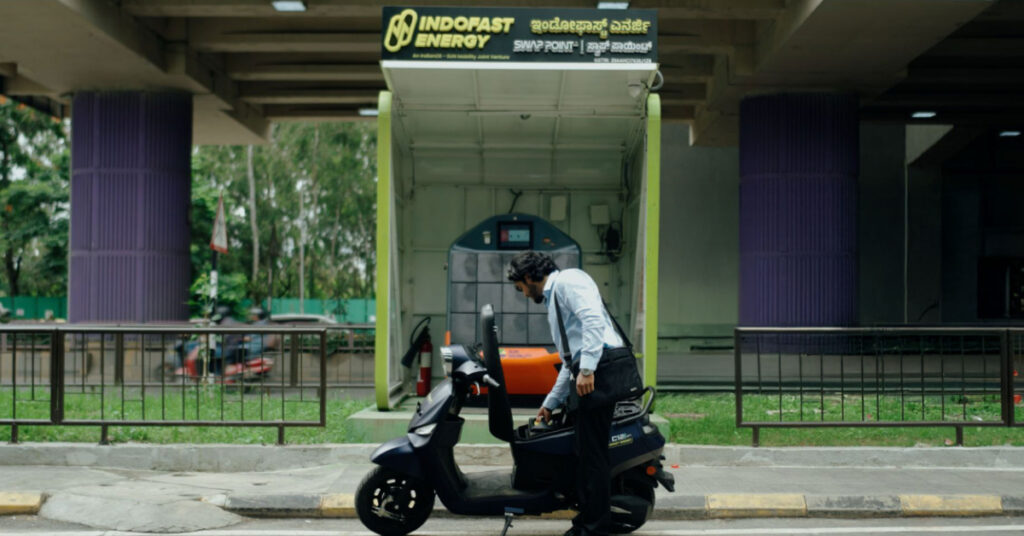
India Indofast Energy Integrates EV Mobility With Mumbai Metro
India’s ongoing transition to cleaner urban transport infrastructure received a strategic boost as Indofast Energy announced plans to integrate its battery‑swapping network with Mumbai’s metro infrastructure to support seamless last‑mile electric mobility. The initiative aligns public transport expansion with private electrification efforts, addressing a key bottleneck in large metropolitan regions where last‑mile connectivity remains a constraint on overall sustainable mobility adoption.
The collaboration sees Indofast Energy — a joint venture between IndianOil Corporation Ltd and SUN Mobilityfocused on scalable EV battery‑swapping solutions — positioning its swap stations strategically near key nodes of the Mumbai Metro system, particularly the recently operationalized underground corridors such as Metro Line 3 (Aqua Line). This situates charging and battery‑swap infrastructure where daily commuter volumes are highest, encouraging use of electric two‑ and three‑wheelers for the final segments of trips beyond rail stations. Battery swapping infrastructure has emerged as a pragmatic counterpoint to slow plug‑in charging, especially for urban and delivery fleets. The Indofast network already spans over 1,000 swap stations across more than 20 cities, and the integration with metro infrastructure expands its role from standalone EV services to a multi‑modal urban transport backbone. Placing swap points near mass transit hubs can reduce dependence on private fossil fuel‑powered vehicles for first‑ and last‑mile travel, potentially lowering congestion and emissions in dense corridors.
Urban planners and transport economists consider last‑mile connectivity a major determinant of public transit adoption. The convenience and reliability of moving circular journeys from metro terminals to residential or commercial areas are often cited as barriers when absent, limiting the appeal of rail and bus networks. By co‑locating EV support infrastructure with metro stations, Indofast is helping to address “the final kilometre” gap that frequently dissuades commuters from fully integrating public transport into daily travel. This approach also enhances the elasticity of demand for both modes by making electric vehicles more accessible and less disruptive to daily routines. Industry observers note that IndoFast’s alignment with metro infrastructure dovetails with national goals such as the Faster Adoption and Manufacturing of Electric Vehicles (FAME) programme and broader clean mobility targets under India’s climate commitments. Electric two‑ and three‑wheelers — particularly those supported by rapid battery swapping — are critical elements in reducing urban transport emissions, which remain a significant share of metropolitan air pollution burdens. Larger corridors like Mumbai’s face persistent challenges from vehicular traffic and particulate matter, making low‑emission transport options key to long‑term air quality goals.
Commerce and logistics sectors also stand to benefit. Indofast’s network supports not only private EV users but also delivery and gig‑economy fleets that are increasingly adopting electric vehicles to reduce operational costs and emissions. Earlier partnerships announced by the company aim to deploy tens of thousands of electric bikes and scooters across urban centres, amplifying the impact of charging infrastructure investment on India’s EV ecosystem. Nonetheless, experts caution that infrastructure alignment must be paired with feeder services and urban design improvements — including pedestrian access, cycle paths and low‑emission zones — to fully realise last‑mile advantages. Without supportive urban planning, EV battery swapping alone cannot bridge gaps created by fragmented public transport and traffic congestion.
Looking ahead, the integration of battery‑swap networks with major transit infrastructure may serve as a template for other Indian cities seeking to encourage sustainable mobility adoption. With robust policy frameworks and coordinated planning, last‑mile electric mobility could evolve from a fragmented service into a critical component of climate‑aligned urban transport ecosystems.