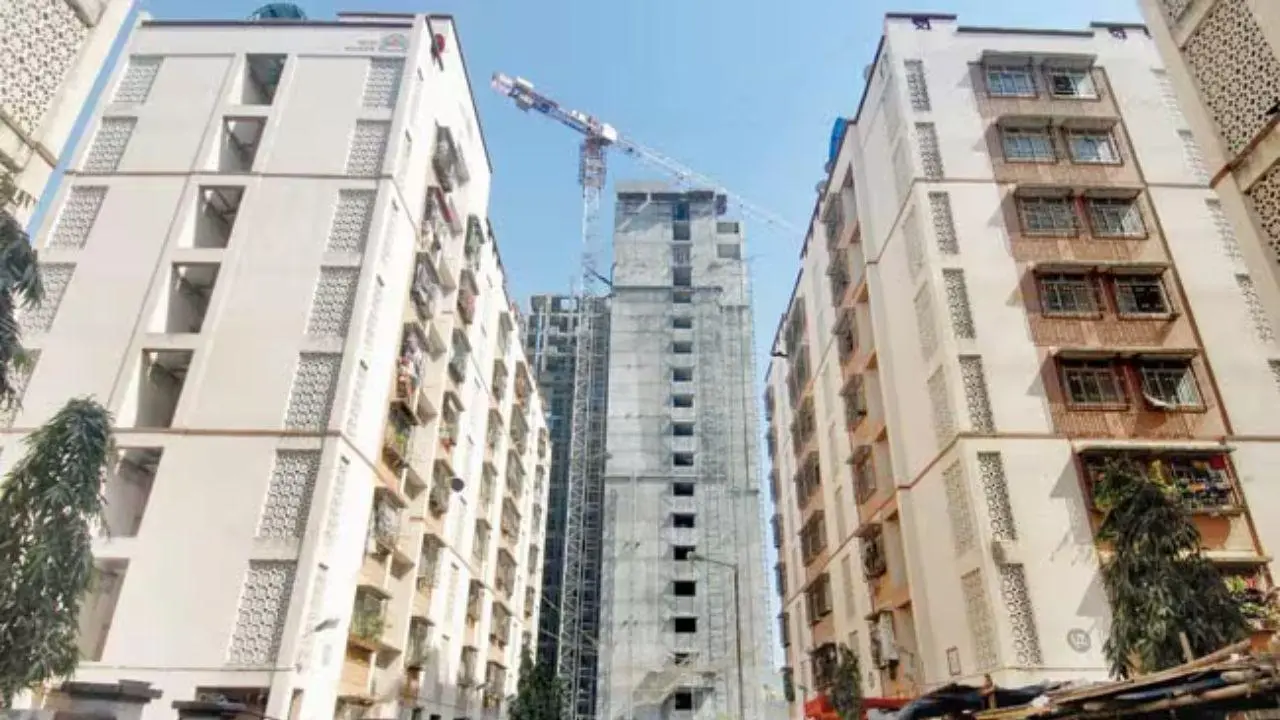
India’s housing pipeline is set for a significant expansion as two of the country’s largest listed developers scale up land acquisitions across key urban regions, signalling renewed confidence in residential demand across multiple metropolitan markets.
The combined housing pipeline, spread across cities such as Mumbai Metropolitan Region (MMR), Delhi-NCR, Pune and Bengaluru, is expected to unlock projects with an estimated revenue potential exceeding ₹1 lakh crore. This scale of planned development reflects a broader shift in how large developers are consolidating land banks in high-growth corridors to capture long-term urban demand. Industry analysts note that the housing pipeline has been driven by a sharp uptick in land transactions over the past year, with developers focusing on both outright purchases and partnership-led models. These strategies allow firms to secure strategically located parcels while managing capital exposure, particularly in cities where land prices remain elevated.
The expansion of the housing pipeline comes at a time when India’s residential sector is witnessing structural changes. Demand in mid-to-premium segments has remained resilient, supported by rising incomes, improved access to home financing, and a preference for larger homes with better amenities. At the same time, supply is increasingly being dominated by branded developers, as buyers prioritise execution certainty and regulatory compliance.
Urban planners suggest that such large-scale land aggregation could reshape city growth patterns. “When major developers invest across multiple micro-markets simultaneously, it often accelerates infrastructure alignment and formalises previously fragmented urban zones,” said a planning consultant involved in metropolitan development projects.
However, the scale of the housing pipeline also raises questions about infrastructure readiness and environmental sustainability. Expanding residential clusters require parallel investments in transport networks, water systems, and social infrastructure such as schools and healthcare facilities. Without coordinated planning, rapid development can strain already stretched urban systems. There is also growing emphasis on climate-responsive design within new projects forming part of this housing pipeline. Developers are increasingly incorporating features such as energy-efficient building materials, water conservation systems, and provisions for renewable energy integration. These measures are gradually becoming standard expectations, particularly in projects targeting urban homebuyers with long-term ownership horizons.
From a financial perspective, the aggregation of land parcels signals a forward-looking approach, as developers position themselves ahead of future demand cycles. Market participants indicate that phased development will be critical to managing supply and maintaining price stability, especially in markets with varying absorption rates.
The expansion of the housing pipeline across multiple cities also reflects the decentralisation of India’s urban growth.
While metros continue to dominate, peripheral zones and emerging suburbs are becoming key drivers of residential expansion, supported by improved connectivity and evolving work patterns. As these projects move from planning to execution, the focus will shift to delivery timelines, infrastructure integration, and sustainability outcomes. The scale of the current housing pipeline underscores both the opportunity and the responsibility facing India’s real estate sector as it shapes the next phase of urban growth.
India Housing Pipeline Expands With Major Land Deals