


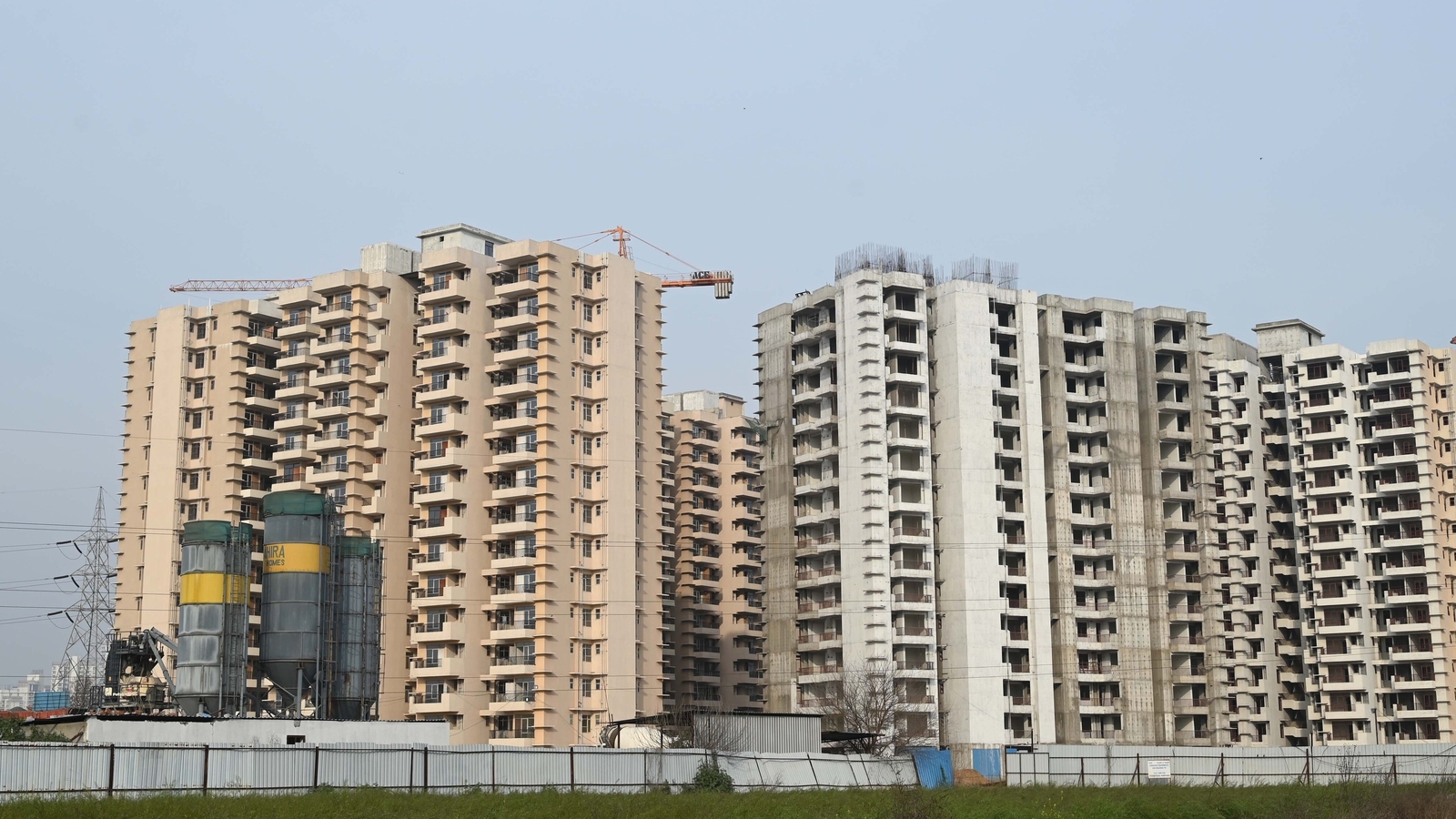
India’s residential property market closed 2025 with a growing imbalance between supply and absorption, as unsold housing inventory across the country’s seven largest cities edged higher despite steady construction activity. The build-up reflects a year in which new project launches slightly outpaced buyer uptake, signalling a phase of recalibration rather than a market slowdown.
By the end of the year, unsold homes across major urban centres stood at nearly 5.8 lakh units, marking a modest annual increase. Market analysts attribute the rise to a combination of moderated housing demand and sustained developer confidence, particularly in mid-to-premium segments where project pipelines remained active through the year. Sales momentum softened in comparison to the previous year, with transaction volumes falling into the sub-4 lakh range across the top cities. At the same time, new residential supply continued to enter the market, driven by ongoing land acquisitions, redevelopment projects, and improved regulatory clarity. This divergence between launches and sales translated into higher inventory levels in several markets. Regional performance, however, remained uneven. The Mumbai Metropolitan Region and Hyderabad emerged as exceptions, registering marginal declines in unsold stock. Industry experts link this trend to consistent end-user demand, infrastructure-led micro-market growth, and a relatively disciplined supply pipeline in both regions. In contrast, cities such as Delhi-NCR, Bengaluru, Pune, Chennai and Kolkata recorded inventory expansions of varying degrees, reflecting localised demand-supply mismatches.
Bengaluru saw one of the sharper increases, underscoring the pace at which new housing has entered the market in recent years. Urban planners note that while employment-driven demand remains intact, buyer decisions have become more selective, with greater emphasis on project quality, location efficiency, and long-term liveability. Similar dynamics played out in Chennai and Kolkata, where slower absorption coincided with continued project completions. From a policy and urban development perspective, the rising inventory highlights the importance of aligning housing supply with actual demographic and economic demand. Experts argue that an excess of unsold homes can strain urban infrastructure if not planned carefully, while also locking up capital that could otherwise be deployed in affordable or rental housing segments. The outlook for 2026 is cautiously balanced. Lower borrowing costs could revive buyer sentiment, particularly among first-time homeowners, provided price growth remains measured. At the same time, developers are expected to become more selective with new launches, focusing on completion, sustainability features, and neighbourhood-scale planning rather than sheer volume.
As Indian cities continue to expand, the challenge will lie in ensuring that housing growth remains people-centric, climate-resilient, and economically sustainable meeting real demand without creating long-term structural oversupply.
Also Read: KPI Green Energy Strengthens Captive Power Portfolio
India Housing Inventory Rises As Supply Outpaces Demand
