


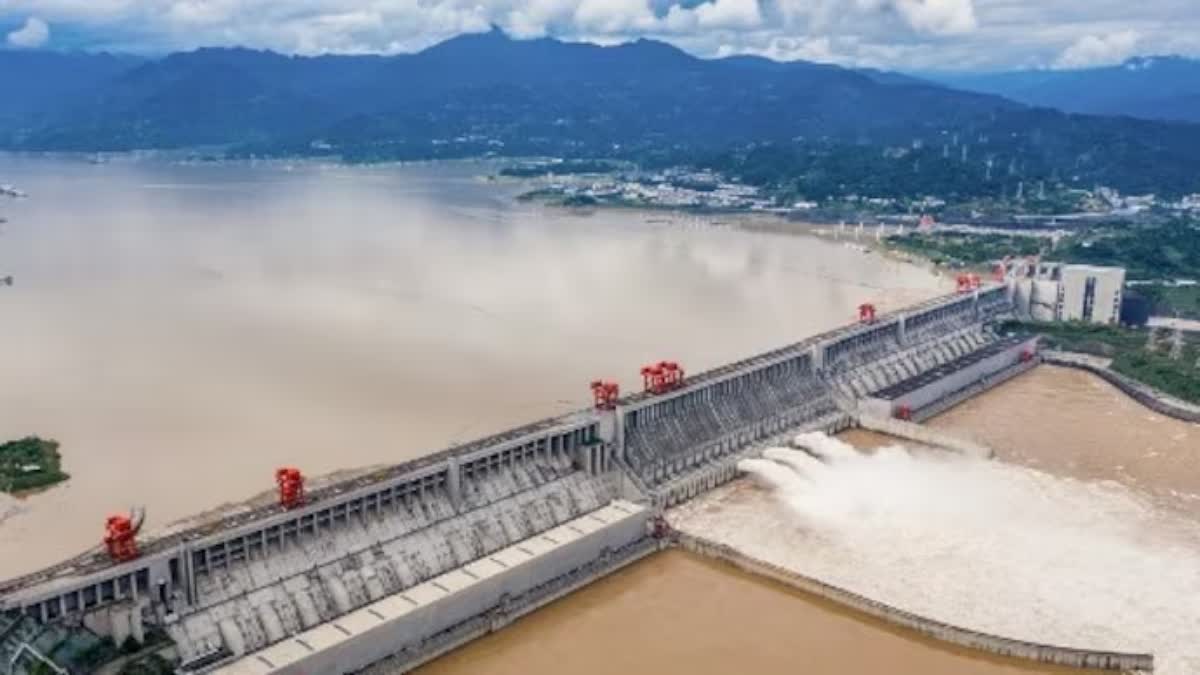
As China presses forward with its ambitious $16.7 billion mega-dam project on the Yarlung Tsangpo, known as the Brahmaputra in India, concerns have naturally arisen regarding its downstream implications for India and Bangladesh. While the proposed Medog Hydropower Project, touted to have a formidable capacity of 70 GW, has fueled anxieties about water weaponisation, a detailed analysis of the river’s unique hydrology and geographical characteristics suggests India maintains a significant advantage, ensuring its water security remains largely robust and unthreatened by upstream manipulations.
The Brahmaputra River, originating in the glacial expanse of western Tibet, undergoes a dramatic transition upon entering Arunachal Pradesh as the Siang, before swelling significantly in Assam and flowing into Bangladesh as the Jamuna. A crucial hydrological paradox defines this transboundary river: despite approximately two-thirds of its basin lying within Chinese-controlled Tibet, over 80% of the river’s actual water volume is generated within India. This phenomenon is primarily attributable to disparate rainfall patterns; Tibet receives a meagre annual rainfall of just 300 mm, contrasting sharply with Northeast India’s torrential annual precipitation exceeding 2,300 mm. Additionally, numerous Indian tributaries and snow-fed rivers substantially augment the Brahmaputra’s flow, firmly establishing India as the predominant contributor to its volume.
A key factor mitigating the perceived threat from Chinese hydropower projects is their design. Most existing and proposed dams on the Yarlung Tsangpo, including the formidable Medog project, are understood to be ‘run-of-the-river’ schemes. These designs utilise the river’s natural flow for electricity generation, precluding the necessity for extensive reservoirs or long-term water storage. Experts affirm that such dams possess limited capacity to significantly alter downstream flows over protracted periods. While momentary shifts in water release might occur during power generation cycles, these projects inherently lack the capability to seasonally withhold water or weaponise it as a sustained geopolitical instrument. This technical nuance substantially limits China’s leverage over the Brahmaputra’s flow against India.
Interestingly, political leaders in India have also offered nuanced perspectives. Some argue that any marginal reduction in the Brahmaputra’s flow from upstream might, paradoxically, aid in mitigating Assam’s perennial flood devastation, which annually inflicts immense loss of life and property. Given that much of the river’s destructive flooding is driven by localised torrential rainfall and the swelling of its Indian tributaries, a modest upstream regulation could potentially contribute to stabilising seasonal fluctuations. This perspective aligns with India’s own strategic imperative to develop indigenous storage and flood-control infrastructure to manage surplus water more effectively within its own territory. Such infrastructure initiatives are crucial for building climate-resilient cities and supporting sustainable agriculture downstream.
While continued vigilance is warranted, particularly regarding data transparency and the ecological impact of upstream construction, India’s strategic riparian position remains inherently resilient. The sheer volume of monsoonal rains, the contribution from myriad tributaries within India, and the topographical dominance of the lower basin collectively ensure that Chinese influence on the Brahmaputra’s overall flow is inherently constrained. Furthermore, international norms governing transboundary rivers and the broader regional geopolitical landscape would render overt manipulation of water flows diplomatically costly and risky for China, especially given the shared interests of Bangladesh and India in the river’s ecological health and consistent flow. This collective downstream leverage reinforces a stable hydro-geopolitical dynamic.
Also Read :Ahmedabads Rs 180 Crore Water Policy Fails as Lakes Remain Dry and Polluted
