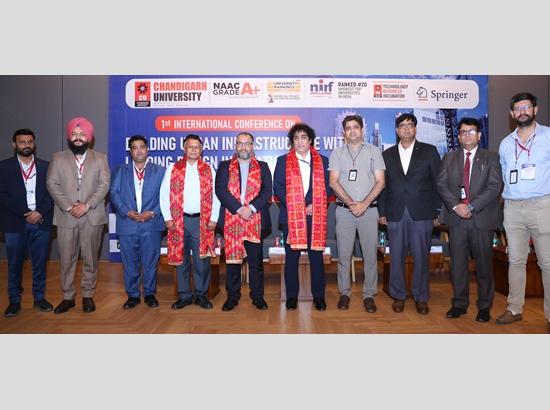
India’s road infrastructure has undergone a radical transformation in the last decade, positioning itself as a key pillar for national economic growth, according to Dr Vinod Karar, Chief Scientist at the Central Road Research Institute (CRRI), New Delhi.
Speaking at the BUILD-2025 conference at Chandigarh University, Dr Karar emphasised that world-class highways and advanced transportation systems are accelerating industry expansion across sectors. “India’s logistics ecosystem has changed dramatically. High-speed highways, even in hilly terrains, have made transportation smoother and quicker. Some stretches are built strong enough to land aircrafts. Roads now integrate bridges and metro corridors, streamlining urban mobility,” Dr Karar noted, highlighting that such infrastructure is vital for attracting foreign investment and achieving the national vision of a Viksit Bharat by 2047. Delivering insights during a session on road and transportation engineering trends, Dr Karar said India is adopting technologies such as sunlight-reflecting surfaces, driving simulators for elite forces, and using steel slag and other indigenous materials for road construction. The use of steel aggregates—already applied in 12 km of Indian roads and another 10 km in the US—has been praised by the Prime Minister. The innovation allows heavy-load durability while reducing reliance on natural resources.
Highlighting sustainability, Dr Karar shared that biomaterials are now replacing up to 40% of bitumen in road construction. Recycled concrete and construction waste are also being rejuvenated for new projects, speeding up timelines while cutting costs. The conference drew over 150 selected research papers from Indian and international institutions, with discussions on climate-resilient infrastructure, green building materials, and sustainable construction techniques. Dr Chandni Thakur from the University of Birmingham cautioned about El Niño-related hydroclimatic variability. “There’s an urgent need to build infrastructure resilient to extreme weather. Civil engineers must factor in future climate risks to avoid catastrophic failures,” she said. Urban planning expert Dr Aurobindo Ogra from the University of Johannesburg stressed that India’s infrastructure growth has global relevance. “India’s development is now visible not just nationally but internationally. With cities becoming economic hubs, the synergy between technology and infrastructure is vital for long-term sustainability,” he added.
As India prepares for its future, experts agreed that integrated, sustainable, and resilient infrastructure is not just a developmental need—but a national imperative.