


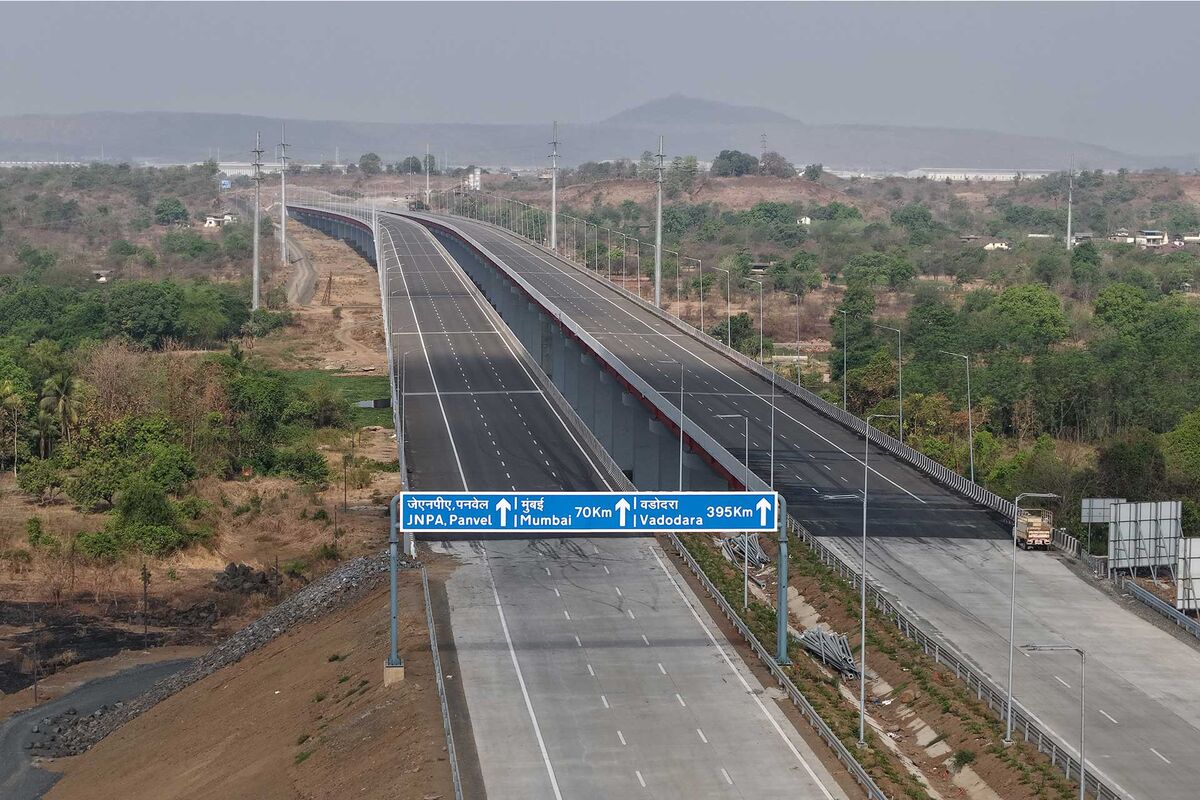
India’s highway monetisation programme has crossed a significant milestone with a public infrastructure investment trust securing operational control of five national highway stretches spanning nearly 260 kilometres across four states. The transaction, valued at approximately ₹9,500 crore, reflects growing investor appetite for revenue-generating transport infrastructure and signals a structural shift in how road assets are financed and managed in the country.
The highway sections involved are fully operational corridors located in eastern, southern and central India, covering parts of Jharkhand, Andhra Pradesh, Tamil Nadu and Karnataka. These assets were developed under earlier public investment cycles and are now being transitioned into a trust-based ownership structure designed to unlock capital without compromising public access or regulatory oversight.Infrastructure experts view this model as a pragmatic response to the fiscal pressure of expanding India’s road network while maintaining asset quality. By monetising mature highways, authorities are able to recycle capital into new construction, safety upgrades and climate-resilient design features, rather than relying solely on fresh budgetary allocations.
The public InvIT structure allows both institutional and retail investors to participate in infrastructure returns linked to toll revenues and long-term concession rights. Unlike traditional privatisation, ownership of the underlying asset remains with the public authority, while operational responsibilities and revenue collection are governed through transparent concession agreements. Urban economists note that this approach balances fiscal discipline with accountability, particularly for assets embedded within densely populated regions.From a regional development perspective, the selected highway stretches play a critical role in freight movement, commuter travel and inter-city connectivity. Corridors near Chennai and Vijayawada support industrial supply chains and port-linked logistics, while stretches in Karnataka and Jharkhand improve access to manufacturing clusters and resource belts. Stable maintenance under long-term concession frameworks is expected to reduce travel time volatility and improve road safety outcomes for daily users.
The transaction also aligns with the broader National Monetisation Pipeline, which aims to attract private capital into operational infrastructure rather than greenfield risk-heavy projects. Analysts highlight that this reduces execution uncertainty for investors while enabling public agencies to focus on planning, regulation and climate adaptation.Importantly, highway monetisation is increasingly being evaluated through a sustainability lens. Longer concession tenures incentivise operators to invest in durable pavements, efficient lighting, digital traffic monitoring and reduced lifecycle emissions. Centralised asset management under InvITs can also support data-driven maintenance, lowering resource consumption over time.
Authorities have indicated that additional highway assets, potentially extending over 1,500 kilometres, may be transferred to similar trust structures in the coming years. For cities and regions connected by these corridors, the focus will be on ensuring that monetisation translates into better service quality, transparent tolling and reinvestment into safer, more resilient transport networks.
Also Read:MahaMetro Advances Thane Ring Metro With New Station Tenders
India Highway Assets Move Into Public Investment Trust
