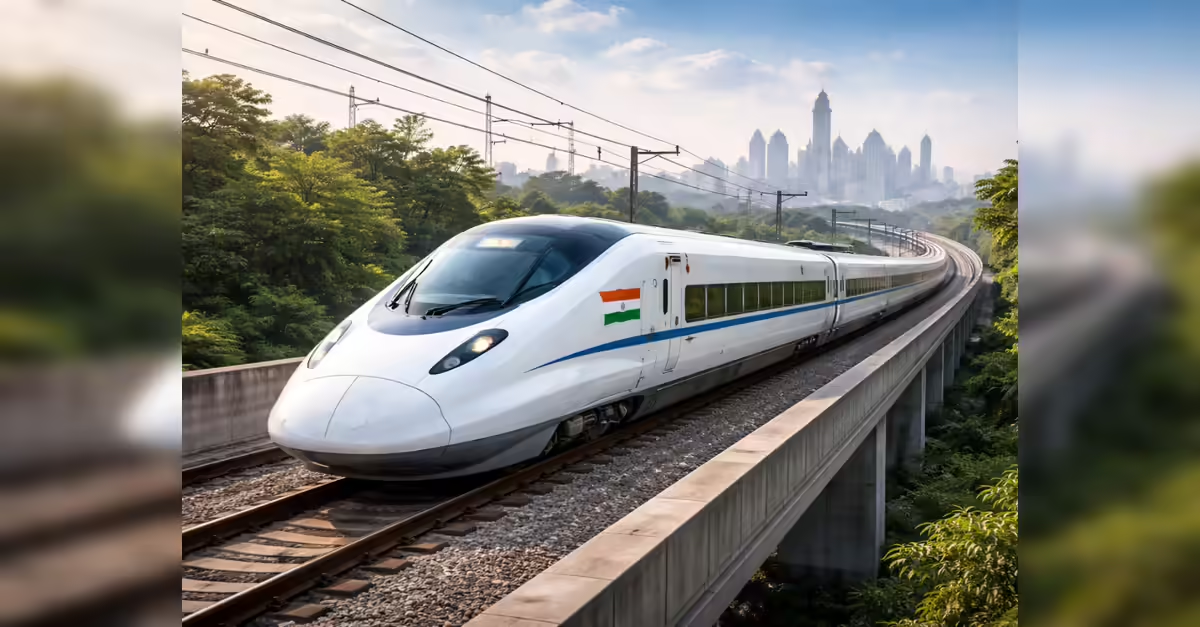
India’s long-anticipated entry into high-speed rail is set to cross a symbolic threshold next year, with the country expected to receive its first bullet trainset by mid-2027. The development signals a shift from heavy construction to system readiness on the Mumbai–Ahmedabad High-Speed Rail corridor, positioning India among a small group of nations operating next-generation intercity rail.
Senior officials from the railways ministry indicated that the arrival of the first trainset will coincide with the final stages of track commissioning and systems integration. While commercial operations will follow phased testing, the milestone marks tangible progress on a project that has redefined how large transport infrastructure is executed in India. The Mumbai–Ahmedabad corridor spans 508 kilometres, cutting across Gujarat, Dadra and Nagar Haveli, and Maharashtra. Once operational, the corridor is designed to reduce travel time between the two financial hubs to under two hours, reshaping business travel, labour mobility, and regional economic integration. Urban planners view the project as a catalyst for compact, transit-oriented growth along station zones rather than car-dependent sprawl.
Construction data released by the implementing agency shows that more than four-fifths of the alignment is elevated, limiting land fragmentation and reducing long-term ecological disruption. Viaduct construction has crossed 460 kilometres, while complex elements such as tunnels and stations are progressing in parallel. Industry experts note that elevated alignments, though capital-intensive, allow faster execution and lower lifecycle maintenance when compared to mixed-grade corridors. Stations along the route are being designed as multimodal urban nodes rather than standalone rail assets. The Surat terminal, for instance, integrates parking, passenger services, and platform access across multiple levels, allowing smoother pedestrian flows and better land-use efficiency. Real estate analysts expect commercial and mixed-use development to intensify around such hubs, provided local planning frameworks manage density responsibly.
The bullet train project is also influencing India’s broader rail modernisation strategy. Officials point to the growing acceptance of semi-high-speed services as evidence that passenger expectations have evolved towards higher comfort, safety, and punctuality standards. This has informed parallel investments in faster daytime and overnight train categories, expanding choice without relying solely on air travel. From a climate perspective, high-speed electric rail is increasingly seen as a strategic alternative to short-haul flights on dense corridors. Transport economists estimate that once demand matures, modal shift from aviation and private vehicles could significantly lower per-capita emissions on the Mumbai–Ahmedabad axis, provided fares remain accessible and last-mile connectivity is strengthened.
Challenges remain. System integration, operational training, and fare structuring will determine whether the service reaches beyond premium users. Safety certification and phased trials are expected to dominate the coming year, with regulators closely monitoring readiness benchmarks. As India prepares to place its first bullet train on tracks, the focus is shifting from construction spectacle to everyday utility. The success of the corridor will ultimately be measured not by speed alone, but by how effectively it connects cities, reduces carbon intensity, and supports inclusive, people-first urban mobility at scale.
India high speed rail milestone set for 2027