


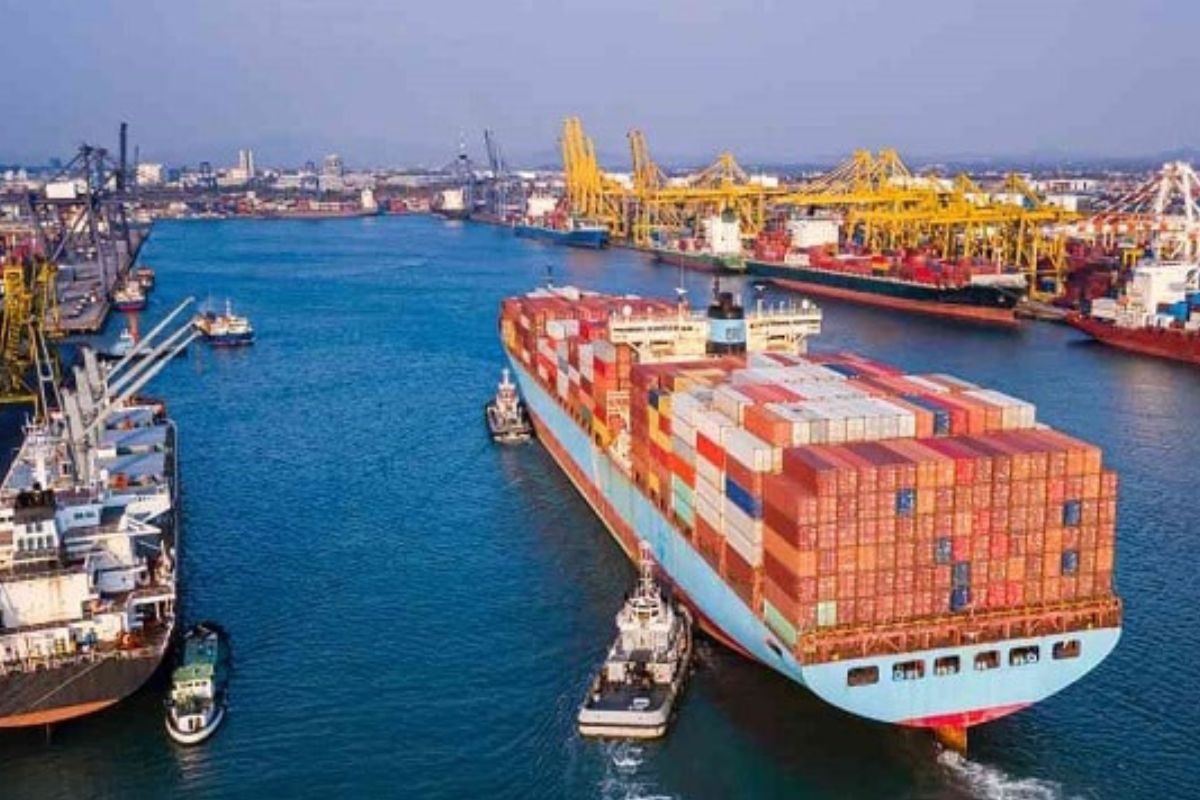
India’s aspirations to become one of the world’s top five maritime nations by 2047 are gaining steam, following a key policy shift aimed at revamping the shipbuilding sector.
Union Minister of Ports, Shipping, and Waterways, Sarbananda Sonowal, recently highlighted how the granting of infrastructure status to large ships will bolster the industry’s growth and reduce India’s dependency on foreign-built vessels. This move, alongside the Revamped Shipbuilding Financial Assistance Policy 2.0, is expected to pave the way for the country to develop a thriving maritime economy, with a vision to contribute significantly to India’s ambition of becoming a $30 trillion economy by 2047.
The newly conferred infrastructure status on shipbuilding will not only stimulate the domestic shipbuilding industry but also enhance Indian ship ownership. Shipping companies will now be able to secure loans with more favourable terms—lower interest rates, extended repayment periods, and easier financial conditions—from commercial banks. This development is expected to boost the purchase of ships from Indian shipyards, while also helping India’s shipping industry scale up its fleet and infrastructure, reducing the nation’s reliance on foreign shipping entities.
A cornerstone of this initiative is the Revamped Shipbuilding Financial Assistance Policy 2.0, which aims to provide direct financial subsidies to Indian shipyards. This policy, designed to strengthen domestic shipbuilding capabilities, marks a clear shift towards decreasing India’s dependence on imports. In addition to supporting the shipbuilding sector, the policy includes a component for promoting the circular economy. By incentivising ship-breaking in domestic yards, India hopes to recycle materials and reduce waste, thus enhancing its environmental sustainability efforts.
Sonowal further emphasised that the establishment of shipbuilding clusters, each with a capacity of 1 to 1.2 million gross tonnages, would be integral to realising India’s maritime goals. These clusters will not only ramp up ship production capacity but also provide a platform for advancing the shipbuilding ecosystem with improved infrastructure, scaling technologies, and enhanced capabilities. The policy aims to foster a highly competitive maritime sector that can contribute significantly to India’s global trade ambitions.
A major pillar of this maritime vision is the proposed Maritime Development Fund, which will be endowed with a ₹25,000 crore corpus for equity and debt financing. This fund is expected to stimulate large-scale investment in ship acquisition, port development, and other maritime infrastructure. With the potential to generate an estimated ₹1.5 lakh crore in investments by 2030, this initiative will play a key role in job creation, boosting private sector participation, and enhancing national maritime security.
In addition to these transformative measures for shipbuilding, Sonowal also unveiled a series of maritime education initiatives. The Minister virtually inaugurated infrastructure development projects at six campuses of the Indian Maritime University (IMU), with a combined investment of ₹67.77 crore. These projects, aimed at upgrading maritime education and infrastructure across campuses in Chennai, Kolkata, Navi Mumbai, Mumbai Port, Visakhapatnam, and Kochi, signal the government’s commitment to providing world-class education and training in maritime fields.
With modern infrastructure and state-of-the-art facilities, IMU is poised to enhance its reputation as a hub of excellence in maritime education, enabling students to meet global standards. This strategic investment in human capital is a crucial part of India’s broader maritime vision, ensuring that the country has the skilled workforce necessary to support its growing maritime sector.
Sonowal’s initiatives are not just about boosting shipbuilding and port infrastructure but also about ensuring India becomes a formidable force in global maritime affairs. As the country sets its sights on a future as a maritime powerhouse, the steps taken today are critical to reducing dependency on foreign sources, creating jobs, and contributing to India’s broader economic growth. If successfully implemented, these policies could put India on track to realise its maritime ambitions by 2047.
India Eyes Top Maritime Spot by 2047 with New Plans
