


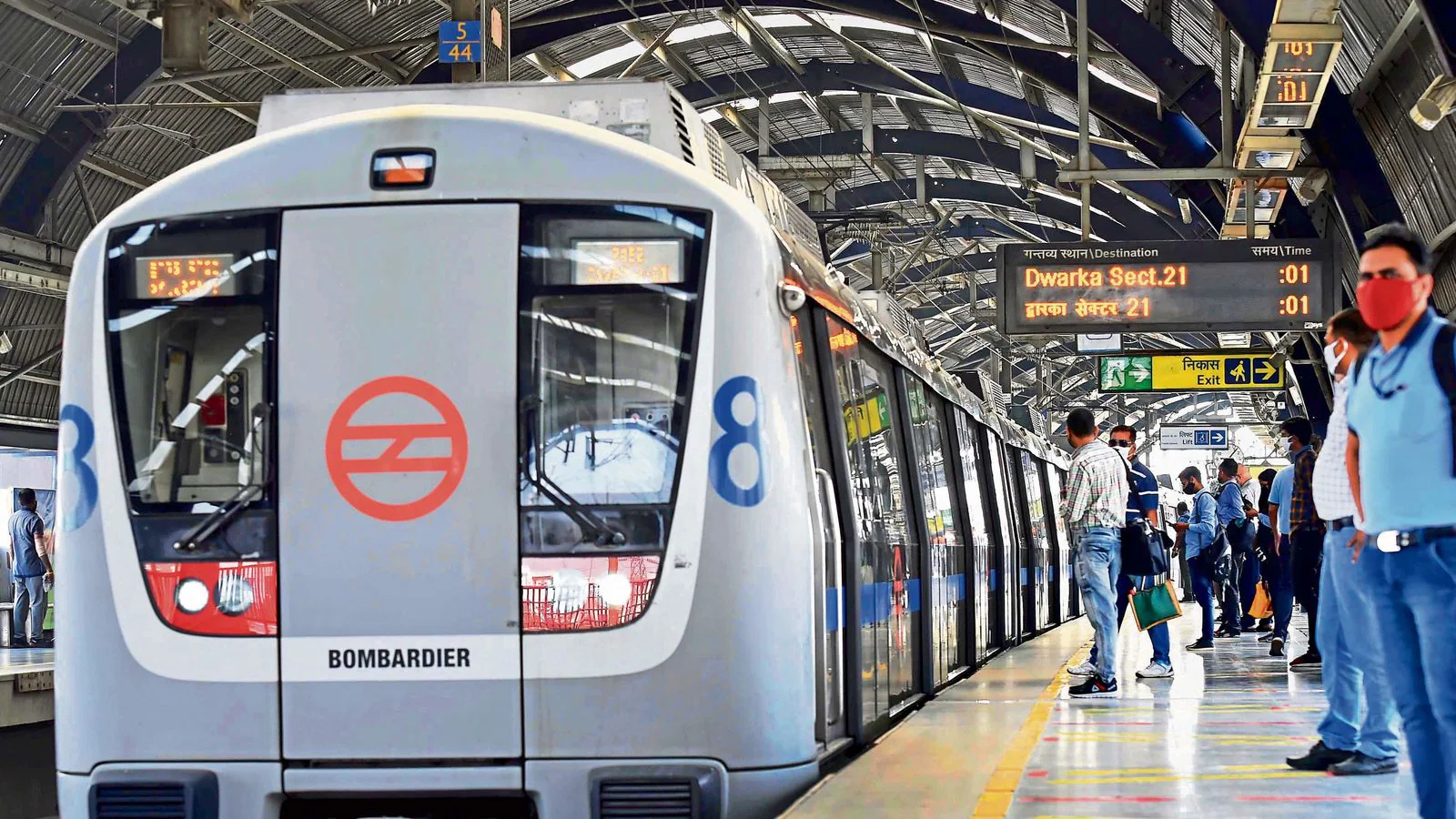
The expansion of India’s urban transit infrastructure and make metro systems more commuter-friendly, the Union government is considering a sweeping overhaul of policies governing land acquisition, parking infrastructure, and non-fare revenue streams.
This move comes amid a growing need to make urban public transport more efficient, accessible, and financially sustainable, particularly in the wake of low ridership trends in several cities.As of January 2025, India boasts a functional metro network of approximately 1,000 km spread across 23 cities, with another 1,000 km currently under construction. This places India among the top three nations globally in terms of metro rail network length. However, key administrative and legislative bottlenecks have slowed the pace of new projects and undermined the long-term viability of existing corridors.
In a high-level policy dialogue hosted in Gandhinagar on March 31 and April 1, senior officials from the Ministry of Housing and Urban Affairs (MoHUA) and managing directors of metro corporations converged to chart out a strategy aimed at unblocking these systemic challenges. One of the central issues raised was the cumbersome process of land acquisition under the Right to Fair Compensation and Transparency in Land Acquisition, Rehabilitation and Resettlement Act, 2013. The requirement for a Social Impact Assessment (SIA) under this Act has delayed numerous metro projects across the country.
States like Gujarat and Maharashtra have already taken the lead by exempting metro projects from the SIA process, and the conference saw consensus around the idea of encouraging other states to follow suit. In tandem, amendments to the Metro Railways (Construction of Works) Act, 1978 are also on the table. Currently, the Act empowers only the Union government to acquire land, a restriction that officials believe should be relaxed to allow metro administrations or state governments to take the lead on land procurement.
Parallel to legal reforms, the meeting also explored mechanisms to enhance the financial sustainability of metro networks through non-fare box revenues. Officials proposed leveraging transit-oriented development by permitting residential and commercial development along metro corridors, offering long-term leases, and incentivising higher floor area ratios (FARs). The proposal to allow cargo movement during non-peak hours was also floated as a way to monetise metro assets without disrupting regular commuter flow.
Commuter convenience also featured prominently on the agenda. Recognising that inadequate parking facilities near metro stations significantly deter ridership, the stakeholders proposed drafting a comprehensive parking policy. Multi-level and basement parking solutions, particularly in dense urban areas and near underground stations, were identified as urgent necessities. A dedicated committee is being formed to formalise the framework for this policy, ensuring integration with broader urban mobility plans.
The renewed focus on commuter-centric planning is in response to critical observations made by the Parliamentary Standing Committee on Housing and Urban Affairs in 2022. The committee highlighted that except for Delhi and Mumbai’s Line 1, metro systems in cities such as Bengaluru, Hyderabad, Chennai, Lucknow, Kochi, and Kolkata are struggling to attract sufficient ridership to meet break-even levels, even after years of operation. It attributed this to poor first-and-last mile connectivity, lack of parking, and overestimated catchment areas in Detailed Project Reports (DPRs).
India’s metro systems, seen as a cornerstone of sustainable urban development, now face a crossroads. While their potential to reduce vehicular congestion and lower carbon emissions remains undoubted, their success hinges on swift legal reforms and holistic planning. If the proposed amendments are carried forward with urgency, they could unlock a new era of transit-oriented, climate-resilient growth for Indian cities.
Also Read : Pune Metro Sees RS 21.6 Crore Revenue in 3 Months
