


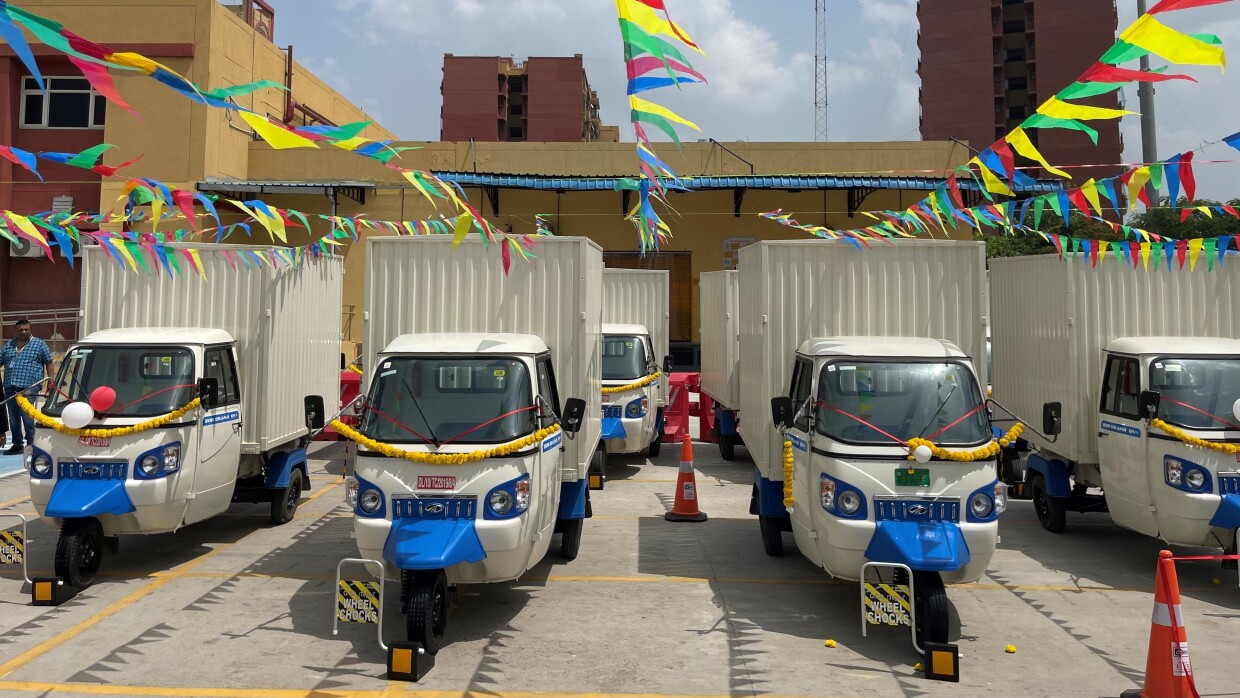
India’s rapidly urbanising landscape is witnessing a transformative shift in its transportation paradigm, with the electrification of last-mile logistics emerging as a pivotal strategy for sustainable development. This transition, focusing on the deployment of electric vehicles (EVs) for urban freight, offers a compelling solution to combat pervasive environmental challenges such as air pollution, noise, and greenhouse gas emissions. It represents a critical stride towards fostering eco-friendly, resilient, and equitable cities across the nation.
Last-mile delivery, encompassing everything from e-commerce parcels to food distribution and local logistics, accounts for a significant proportion—upwards of 70%—of urban freight traffic. Historically dominated by internal combustion engine (ICE) vehicles, this segment has been a major contributor to urban environmental degradation. The shift to electric vehicles in this crucial sector provides a direct pathway to eliminate tailpipe emissions, including harmful nitrogen oxides (NOx), carbon monoxide, and particulate matter. Reports from the Central Pollution Control Board (CPCB) indicate that vehicle emissions contribute approximately 30% of PM2.5 concentrations in major Indian cities, underscoring the profound impact of this electrification. Studies from the Council on Energy, Environment and Water (CEEW) confirm that replacing a mere 100,000 ICE delivery two-wheelers with EVs could reduce annual PM2.5 emissions by 5,500 tonnes in major urban centres, a tangible improvement in air quality that residents can both see and feel.
Beyond immediate air quality improvements, last-mile electrification plays a crucial role in mitigating rising greenhouse gas (GHG) emissions from urban freight. A report by the Rocky Mountain Institute (RMI) and NITI Aayog projects that the electrification of urban freight could lead to a substantial decrease of around 9.5 million tonnes of CO₂ emissions annually by 2030. This directly contributes to India’s ambitious Net Zero goal by 2070, as outlined in its Nationally Determined Contributions (NDCs). When combined with charging infrastructure powered by renewable energy sources, the carbon footprint of EV logistics can plummet by up to 70% over the vehicle lifecycle, marking a significant step towards a zero net carbon economy.
The benefits extend to the often-overlooked aspect of urban noise pollution. ICE vehicles, particularly delivery fleets operating during early mornings and late evenings, are significant contributors to the cacophony of densely populated urban centres. EVs, by contrast, operate silently, drastically reducing urban noise levels. According to a World Health Organization (WHO) report, a reduction in noise pollution can lead to improved mental health and sleep patterns in urban populations, offering a valuable secondary environmental benefit that enhances overall urban liveability.
This aligns with the Ministry of Housing and Urban Affairs’ (MoHUA) Smart Cities Mission, which aims to create cleaner, healthier cities, with pilot zones in Bengaluru and Pune already demonstrating a 7–10% increase in air quality index (AQI) scores post-EV integration. Furthermore, EVs are inherently more energy-efficient than their ICE counterparts. The Bureau of Energy Efficiency (BEE) highlights that EVs convert over 85–90% of electrical energy into movement, a stark contrast to the 20–30% efficiency of ICE vehicles. This superior energy conversion translates to less fossil fuel extraction and lower emissions over time, optimising energy use, especially when paired with smart routing and AI-driven fleet management systems. The transition also reduces India’s reliance on crude oil imports, a significant portion of which powers road transport, thereby bolstering energy security and aligning with India’s National Electric Mobility Mission Plan (NEMMP).
Last-mile electrification also paves the way for innovative circular economy models through battery reuse and recycling. Organisations like the Indian Battery Recycling Alliance (IBRA) are actively promoting second-life battery applications, which significantly reduce resource extraction and waste. Reusing spent batteries from electric two-wheelers and three-wheelers in stationary storage solutions can further cut the environmental impact of urban logistics fleets. This holistic approach supports a more sustainable resource management system. Moreover, by eliminating engine combustion and exhaust gases, EVs help mitigate the Urban Heat Island (UHI) effect in cities like Ahmedabad and Hyderabad, where even a small reduction in ambient temperatures can make a measurable difference. The National Institute of Urban Affairs (NIUA) suggests widespread EV adoption could lower ambient city temperatures by 0.5–1°C in congested areas.
The shift towards last-mile electrification also integrates seamlessly with a cleaner energy grid. Battery swapping and scheduled charging can be aligned with off-peak hours, improving grid efficiency and enabling greater utilisation of renewable energy sources. The India Smart Grid Forum (ISGF) emphasises that managed EV charging can stabilise demand curves and reduce the need for polluting peaker plants, further greening the energy ecosystem. This transition is also a catalyst for green innovation and eco-friendly design, encouraging manufacturers and startups to prioritise recyclable materials and green-certified manufacturing units, with government programs under the Ministry of Micro, Small, and Medium Enterprises (MSME) supporting EV-related clean tech innovations.
Despite these compelling environmental advantages, last-mile electrification faces barriers such as high upfront costs, limited charging infrastructure, battery performance degradation, and range limitations for larger cargo loads. However, the Indian government is proactively addressing these challenges through various schemes like the PM-eBus Sewa, Electric Mobility Promotion Scheme (EMPS) 2024, and the anticipated FAME-III scheme in the July 2025 Union Budget. Additionally, city-level EV cell initiatives under MoHUA are pushing for better integration of last-mile EVs with local logistics networks. The policy landscape, including state EV policies offering incentives, a reduced 5% GST for EVs, Production Linked Incentive (PLI) schemes for domestic manufacturing, and a scrappage policy for old polluting vehicles, collectively reduces entry barriers and makes these environmental gains achievable at scale.
Last-mile electrification is no longer a futuristic concept; it is an urgent necessity for India’s sustainable urban growth. With significant reductions in air pollution, greenhouse gas emissions, and noise levels, EV-based delivery fleets present a viable, scalable solution. The convergence of supportive government policies, active private sector participation, and continuous technological innovation is making this transition not just possible, but inevitable. As cities continue to expand and e-commerce demand surges, the environmental benefits of last-mile electrification become too substantial to ignore, holding the key to making India’s urban logistics not just faster and smarter, but profoundly cleaner and more sustainable for all.
Also Read :Odisha Coal PSU Plans ₹649 Billion Diversification into Power and Green Energy
