India Deploys 3D Concrete Printing To Rapidly Strengthen Forward Military Positions Efficiently
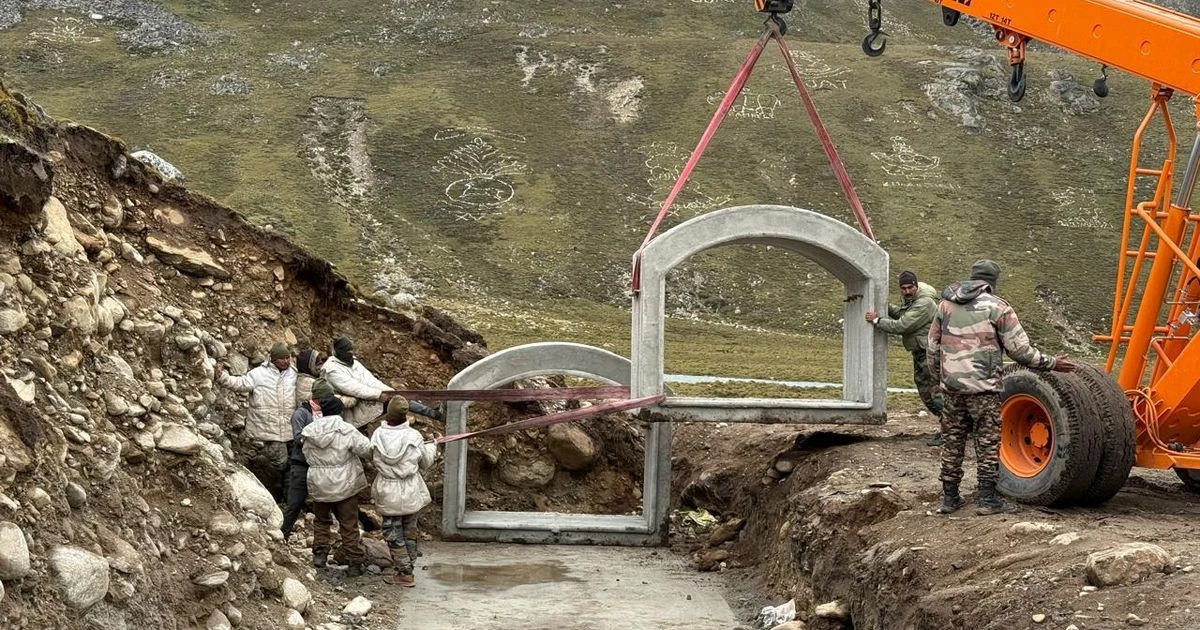
India has deployed advanced 3D concrete printing technology to accelerate the construction and reinforcement of forward military positions along its northern borders. The vehicle-mounted system enables rapid building of bunkers, sentry posts, and defensive structures in challenging terrains, significantly reducing manpower and construction time. Officials say the initiative not only strengthens border security but also demonstrates the country’s growing capability in innovative, efficient, and sustainable defence infrastructure solutions.
The Trishakti Corps’ 3D printer is equipped with a robotic arm, piston pump, circular mixer, and on-board generator, allowing it to operate continuously in remote, mountainous areas. Traditional construction in these regions often requires weeks of labour and extensive logistical support, but the new system can complete complex structures within hours, freeing troops to focus on operational duties rather than manual construction.Military analysts point out that the adoption of 3D printing for forward positions reflects a broader trend towards modernising defence engineering. “This technology not only accelerates construction but also ensures structural precision and durability under harsh conditions,” said a defence expert. The ability to use locally sourced materials further reduces supply chain dependence, which is critical for maintaining operational readiness in remote regions.
Beyond immediate military applications, the technology aligns with sustainable and resilient infrastructure practices. Rapid, modular construction minimises material waste and reduces the carbon footprint associated with transporting heavy construction materials over rugged terrain. Officials note that these techniques could be adapted for civilian purposes, including emergency shelters, disaster-response infrastructure, or high-altitude housing projects where conventional construction is logistically challenging.The initiative also highlights India’s growing domestic capabilities in additive manufacturing. While 3D printing has seen experimental applications in Europe and North America for both defence and urban infrastructure, India’s indigenous development demonstrates the country’s expertise in integrating advanced construction technology with operational efficiency. “Investing in local innovation strengthens national security and positions India as a leader in smart, adaptable construction solutions,” said a senior official.
As 3D concrete printing becomes a strategic tool for rapid fortification, it illustrates the convergence of technology, sustainability, and operational planning. Experts suggest that lessons from these military applications may influence future urban and rural development strategies, promoting modular, resilient, and eco-conscious construction in difficult terrains across the country.By combining innovation with practicality, India’s deployment of 3D printing in defence underscores how advanced technology can enhance efficiency, sustainability, and resilience—principles increasingly vital for both national security and urban infrastructure planning.