


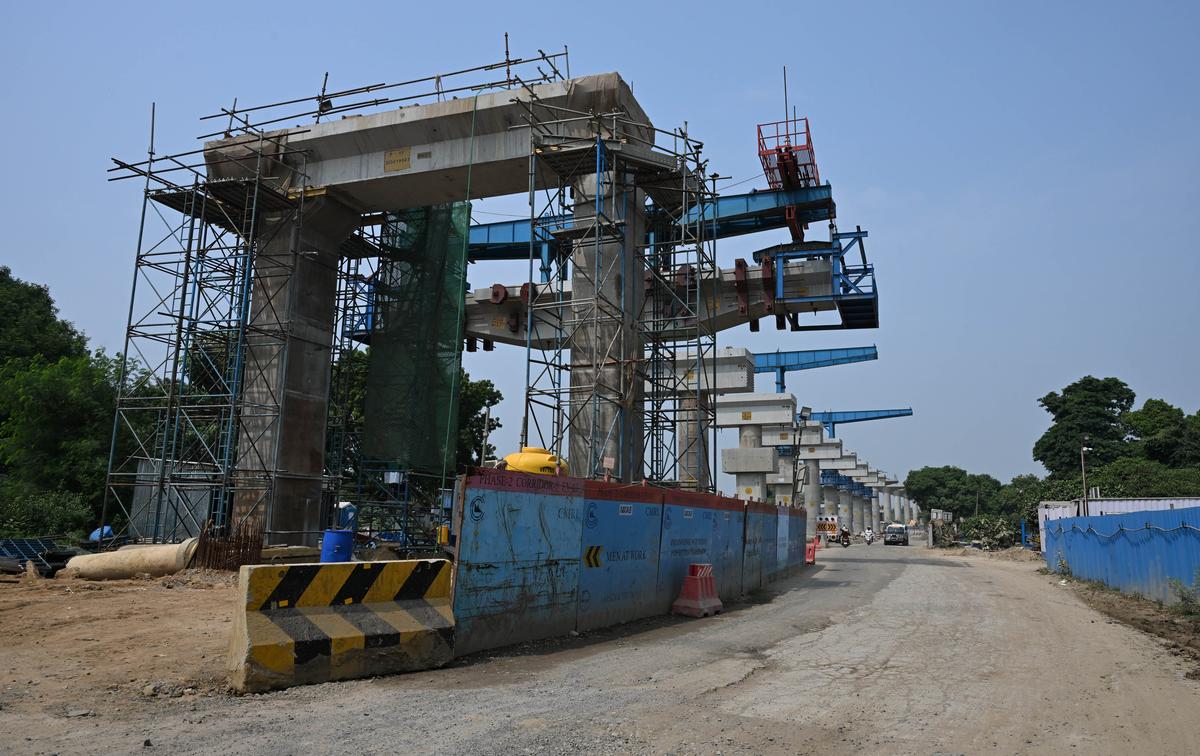
Construction activity across India is facing renewed strain as rising input costs—linked to ongoing global tensions—begin to disrupt project timelines and financial planning. The escalation is affecting both private developers and public infrastructure projects, with implications for housing affordability and the pace of urban expansion nationwide. Industry estimates suggest that India construction costs have increased significantly in recent months, driven primarily by volatility in key materials such as steel, cement, and fuel. Steel prices have seen sharp upward movement in several regions, while cement producers are contending with higher energy and logistics expenses due to elevated coal and petcoke prices. These cost pressures are filtering directly into project budgets, forcing developers to reassess financial viability.
For contractors and builders, the impact is immediate and uneven. Fixed-price contracts, common across residential and infrastructure projects, are becoming increasingly difficult to sustain as material costs rise mid-cycle. Smaller firms are particularly vulnerable, often lacking the financial flexibility to absorb sudden increases. As a result, delays, renegotiations, and in some cases project slowdowns are becoming more frequent. The India construction costs surge is also closely tied to global supply chain disruptions. Fluctuations in crude oil prices have increased transportation and manufacturing costs, affecting the entire construction value chain. Materials like bitumen, essential for road construction, have become more expensive, placing additional pressure on public infrastructure budgets. Urban development experts warn that the consequences extend beyond project execution. Rising construction costs are likely to be passed on to end-users, leading to higher property prices in urban and peri-urban areas. This trend could further widen the affordability gap for middle-income households, particularly in cities already grappling with housing shortages. Infrastructure delivery is also at risk. Government-funded projects, often operating within fixed allocations, may face delays or require scope adjustments if cost escalation continues. This could impact critical urban systems such as transport networks, water supply, and sanitation infrastructure—key components of India’s long-term development agenda. At the same time, the situation is prompting a re-evaluation of construction practices. Industry experts point to the growing need for alternative materials, improved procurement strategies, and adoption of cost-efficient technologies to mitigate volatility. There is also increasing emphasis on local sourcing and supply chain diversification to reduce dependence on global price movements. Despite current challenges, demand fundamentals remain strong. India’s ongoing urbanisation, coupled with sustained public investment in infrastructure, continues to drive long-term growth in the construction sector. However, the trajectory of India construction costs will play a crucial role in determining how efficiently and inclusively this growth unfolds.
Looking ahead, balancing cost pressures with development goals will require coordinated action from policymakers, industry stakeholders, and urban planners. As cities expand and infrastructure needs intensify, managing construction costs sustainably will be key to ensuring resilient and equitable urban growth.
ALSO READ – JK Lakshmi Cement Regulatory Filing Signals Process Strength
India Construction Costs Surge Amid Global Tensions
