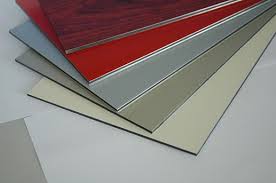
India Composite Sheets Industry Gains Infrastructure Momentum
India’s manufacturing ecosystem is undergoing a material transition as composite sheets gain prominence across construction, transport and infrastructure industries. Once considered niche materials, these engineered sheets—made by combining fibres and polymers—are increasingly replacing traditional materials such as metal, wood and conventional plastics in several industrial applications.
The shift is being driven by a growing need for materials that are lightweight, durable and resistant to corrosion, particularly in sectors connected to India’s expanding built environment. Composite sheets are widely used in roofing panels, facades, transport interiors, industrial enclosures and modular construction systems. Their strength-to-weight ratio and design flexibility allow manufacturers to create products that perform well under demanding environmental conditions while reducing structural load.Industry analysts note that India’s broader composites sector is already gaining scale. The domestic composite materials market was estimated at about $1.8 billion in 2024 and is projected to reach $2.8 billion by 2030, reflecting steady adoption across manufacturing and infrastructure segments.
A significant share of this demand originates from the construction and infrastructure sector, which accounts for roughly one-third of composite material usage in India. These materials are increasingly deployed in building facades, pedestrian bridges, structural profiles and urban infrastructure components due to their corrosion resistance and lower maintenance requirements. Composite sheets are particularly attractive for India’s rapidly expanding urban infrastructure. Traditional materials often degrade faster in coastal or high-humidity environments, leading to higher maintenance costs. Fibre-reinforced composite panels, by contrast, offer greater durability while remaining lighter and easier to install. This combination makes them suitable for applications ranging from industrial buildings and logistics parks to public infrastructure such as transport terminals.
Manufacturing specialists say the growing popularity of composite sheets also reflects evolving production technologies. Techniques such as pultrusion, compression moulding and resin infusion allow manufacturers to produce complex shapes with consistent mechanical strength. These processes enable large-scale fabrication of composite panels and profiles that can be customised for different structural uses.Beyond construction, transportation industries are also driving demand. Composite sheets are used in automotive body panels, rail coach interiors and electric vehicle components, where reducing weight improves energy efficiency and performance. The material’s electrical insulation and heat resistance properties also make it useful in electronics and industrial equipment manufacturing.
Another important factor supporting the sector is India’s push to strengthen domestic manufacturing capabilities. Initiatives aimed at boosting industrial production and infrastructure development are increasing demand for advanced materials that can improve durability while lowering lifecycle costs.Despite this momentum, industry observers point out that India’s per-capita consumption of composite materials remains significantly lower than that of developed economies, suggesting considerable room for expansion as the country modernises its manufacturing base.
As infrastructure projects, transportation systems and modern building designs continue to evolve, the growing adoption of composite sheets is likely to play a pivotal role in shaping the next phase of India’s manufacturing transformation.