


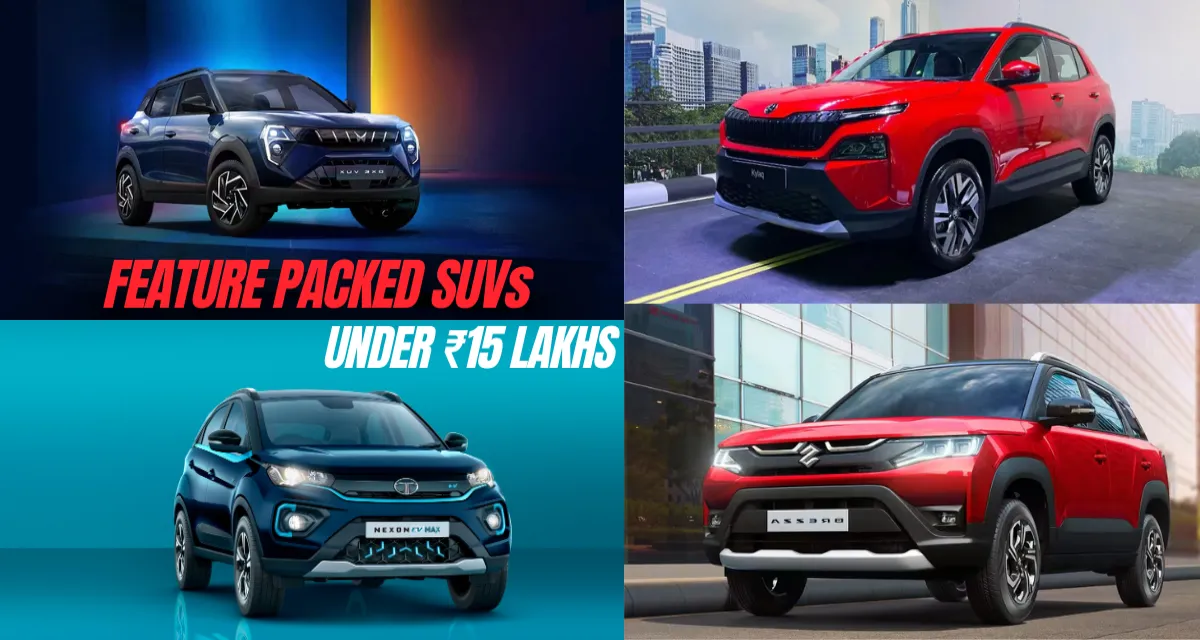
In India’s fast-evolving compact SUV market, purchase decisions are increasingly shaped by daily driving realities rather than brochure specifications. Models such as the Kia Sonet and Mahindra XUV 3XO may compete within the same segment, but buyer preference often hinges on usage patterns — from dense urban commutes to intercity highway runs and mixed-terrain travel.
For city-based motorists navigating congestion and limited parking, compact dimensions and transmission convenience play a defining role. The Sonet offers multiple gearbox options, including intelligent manual and dual-clutch automatic configurations, which can reduce fatigue during stop-start traffic. Comfort-oriented features such as ventilated seats also appeal to commuters in warmer climates.The XUV 3XO, meanwhile, focuses on performance-oriented urban driving through its turbocharged petrol engine delivering higher torque output. In practical terms, this may translate into quicker acceleration for overtaking and merging, attributes valued by drivers operating in fast-moving arterial corridors.
Highway usage introduces a different decision matrix. Stability, advanced driver assistance systems and fuel efficiency become critical for long-distance travellers. The Sonet integrates Level 1 ADAS features such as lane-keeping and forward collision alerts. The XUV 3XO goes a step further with Level 2 driver assistance capabilities and a 360-degree camera system, tools that can reduce fatigue during extended journeys.Safety credentials are another pivot point for family buyers. The XUV 3XO’s five-star Bharat NCAP rating may reassure households prioritising crash protection. The Sonet, offering six airbags as standard in updated variants, combines safety with interior refinement, including premium infotainment systems that enhance in-cabin experience for multi-passenger travel.
In semi-urban and mixed-road environments, structural robustness and ground clearance come into sharper focus. With over 200 mm clearance, the XUV 3XO may offer additional confidence over uneven stretches. The Sonet’s suspension tuning, however, is often cited for predictable ride quality across varied urban surfaces.Technology adoption is also reshaping purchase behaviour. Digital clusters, connected car ecosystems and smartphone integration are increasingly non-negotiable for younger buyers. While the Sonet emphasises interface clarity through its large infotainment screen, the XUV 3XO’s connected platform integrates voice-enabled and app-linked services.
Ultimately, cost sensitivity remains central in the compact SUV bracket. Both models offer petrol and diesel options, allowing buyers to align fuel choice with commuting distance and ownership horizon. Diesel variants typically appeal to high-mileage users, while turbo petrol configurations attract performance-focused drivers.As India’s mobility ecosystem transitions toward smarter and more sustainable transport planning, compact SUVs occupy a unique middle ground between affordability and feature depth. For prospective buyers, the decisive factor is less about segment rivalry and more about aligning vehicle capability with real-world usage — ensuring the choice remains relevant well beyond the showroom floor.
India Compact SUV Buyers Compare Usage Needs
