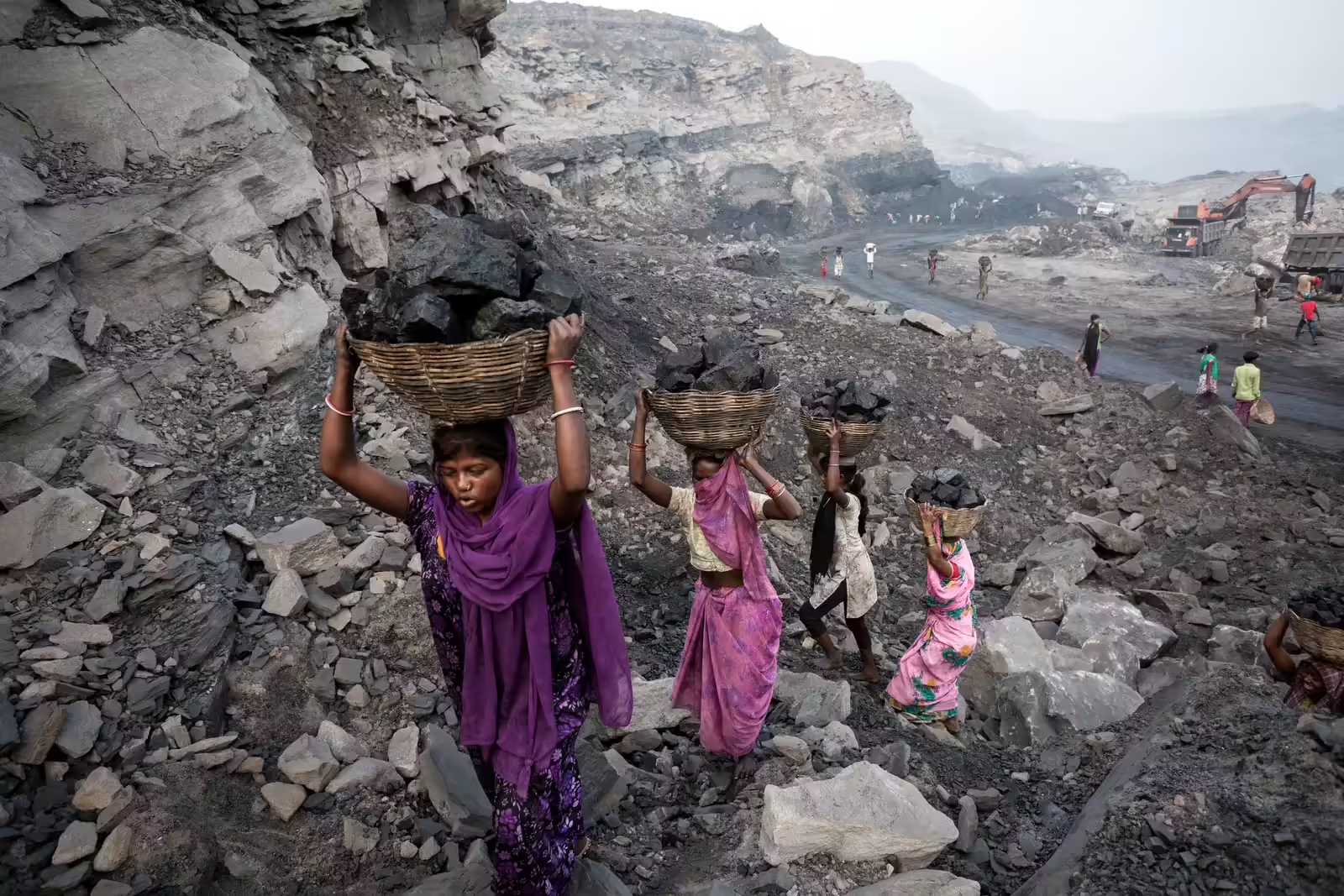
Women are emerging as structural agents of change across India’s coal mining sector, reshaping workforce norms and expanding their presence in roles once considered beyond reach in one of the country’s most entrenched heavy-industry environments. In 2026, multiple operational, technical and leadership posts in state-run coal companies are being stewarded or significantly influenced by women, reflecting broader policy shifts towards inclusive industrial growth and skills diversification.
Historically dominated by male labour in both surface and underground operations, India’s coal industry is undergoing a cultural and operational recalibration. Coal India Limited (CIL) and its subsidiaries have recently inaugurated all-women units — from healthcare dispensaries in Bilaspur to an all-women-operated central stores logistics hub in Korba — signalling a rare break with traditional workforce patterns and illustrating the sector’s expanding role in national gender-inclusion strategies.The Korba facility, now fully managed by a team of women professionals using advanced digital inventory systems, is one of several concrete examples where gender barriers are being dismantled within core operational functions, not merely in peripheral support roles. A senior industry official notes that such shifts are “culturally significant” in an extractive industry where women’s presence was limited by regulatory, safety and societal norms for decades.
Government and industry stakeholders have supported this transformation through targeted initiatives and campaigns that align with national inclusion goals. These efforts include skills and safety training tailored for women; regulatory reforms under the Mines Act that open new roles for women in supervisory and technical positions; and inclusion programmes that celebrate women’s contributions across mines, planning units and support services.For urban planners and economic strategists, these workforce shifts in mining have broader resonance. Coal remains central to India’s energy and industrial fabric — fuelling power generation, steelmaking and other hard-infrastructure sectors. Greater inclusion of women expands the available talent pool at a time when mining must also modernise with digital systems, environmental safeguards and safety-centric operations.
Nevertheless, experts caution that inclusion gains must be supported by systemic reforms in safety protocols, workplace amenities and career-path development. Technical training and leadership pipelines are essential if women’s entrance into heavy-industry roles is to be sustained beyond symbolic milestones. Observers also highlight that increasing female participation could help mining entities integrate into emerging sectors — such as critical minerals and low-carbon technologies — where diverse perspectives spur innovation.As India’s coal sector grapples with its environmental footprint and the broader transition to cleaner energy sources, empowering women across its value chain offers an unexpected lever for social equity and organisational resilience. The next phase of this transformation will test whether these early inclusivity measures can translate into enduring, structural participation across technical, operational and executive spheres — reshaping a historically male-dominated industry for an era that demands both economic and social sustainability.