India Coal India Backed IIT Bombay Pilot Scores Breakthrough
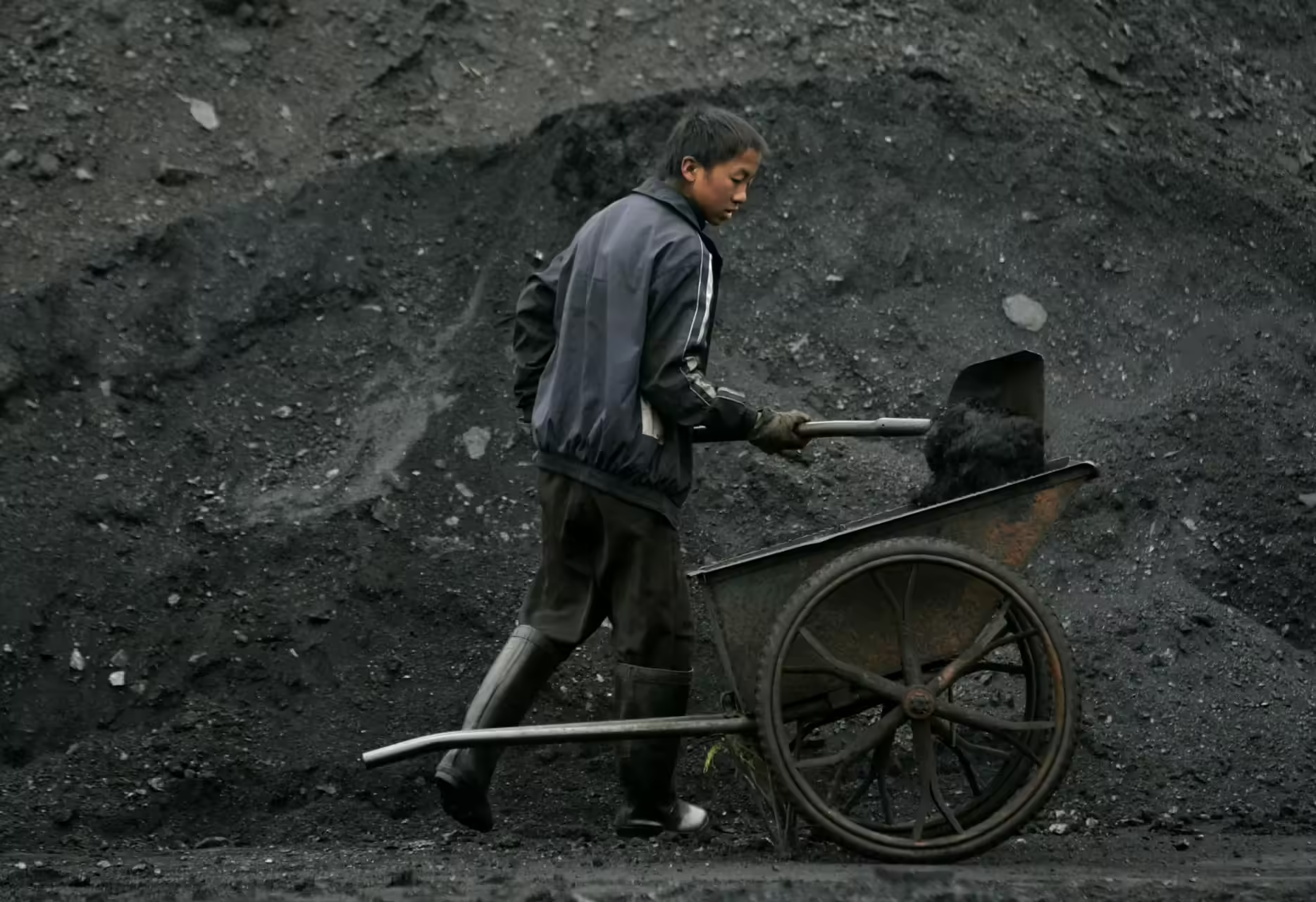
India’s coal industry, long viewed as the backbone of the nation’s energy supply, is repositioning itself amid a rapidly evolving energy landscape, with senior government voices describing it as a “next-generation fuel” in the country’s transition towards a more resilient and decarbonised energy system. This reframing comes as production hits record levels and policymakers seek to align traditional resources with climate goals and economic needs.
In the latest public remarks, the head of government underscored how reforms and technological shifts over more than a decade have expanded the sector’s role beyond traditional electricity generation, signalling an ongoing pivot toward cleaner utilisation pathways. The statement coincides with data showing India achieved its highest-ever domestic coal production in FY24–25, surpassing 1,047 million tonnes, while maintaining robust supply chains for power generation. Urban planners and energy economists note this narrative reflects a dual imperative for India’s cities and industries: securing reliable energy for growth while cushioning the impact of energy transitions on communities and workers tied to coal regions. Coal continues to account for a significant share of India’s energy mix, underpinning baseload power and supporting steel and industrial sectors that are central to urban development and infrastructure expansion.
However, the notion of “next-generation fuel” also encapsulates emerging technological approaches such as coal gasification, carbon capture and utilisation platforms, and biomass co-firing at thermal plants. These innovations aim to reduce emissions intensity while leveraging existing coal assets. Government documents indicate that incentive schemes are funding pilot projects and collaborative ventures to integrate cleaner technologies into traditional coal operations, exemplifying how legacy infrastructure is being repurposed rather than discarded. From a climate resilience perspective, India’s reliance on coal remains a complex challenge. While coal-fired generation provides stability to urban power grids — crucial for industrial corridors and rapidly growing metropolitan regions — its continued dominance runs counter to the nation’s stated goals of achieving net-zero emissions by mid-century and boosting renewable capacity. Analysts suggest that coal’s share in the energy mix will shrink progressively as renewable penetration increases and storage technologies mature.
The interplay between energy security and decarbonisation is particularly palpable in regions like Jharkhand, Chhattisgarh, and Odisha, where mining activity is deeply entwined with local economies. Balancing job retention, land rehabilitation, and sustainable economic diversification is now a priority in urban planning and state policy circles. Strategies under discussion include reskilling workforces and investing in clean energy manufacturing hubs. For investors and municipal authorities, the sector’s transformation implies both risk and opportunity. Legacy coal infrastructure will need substantial capital to meet evolving emissions norms, while ancillary markets such as carbon capture, grid storage, and hydrogen production may attract new investment flows. Cities reliant on coal-linked industries must therefore broaden economic bases to sustain equitable growth.
As India navigates its energy transition, the trajectory of the coal sector will remain a barometer of broader structural change in the urban economy, with implications for climate resilience, employment, and long-term infrastructure planning.