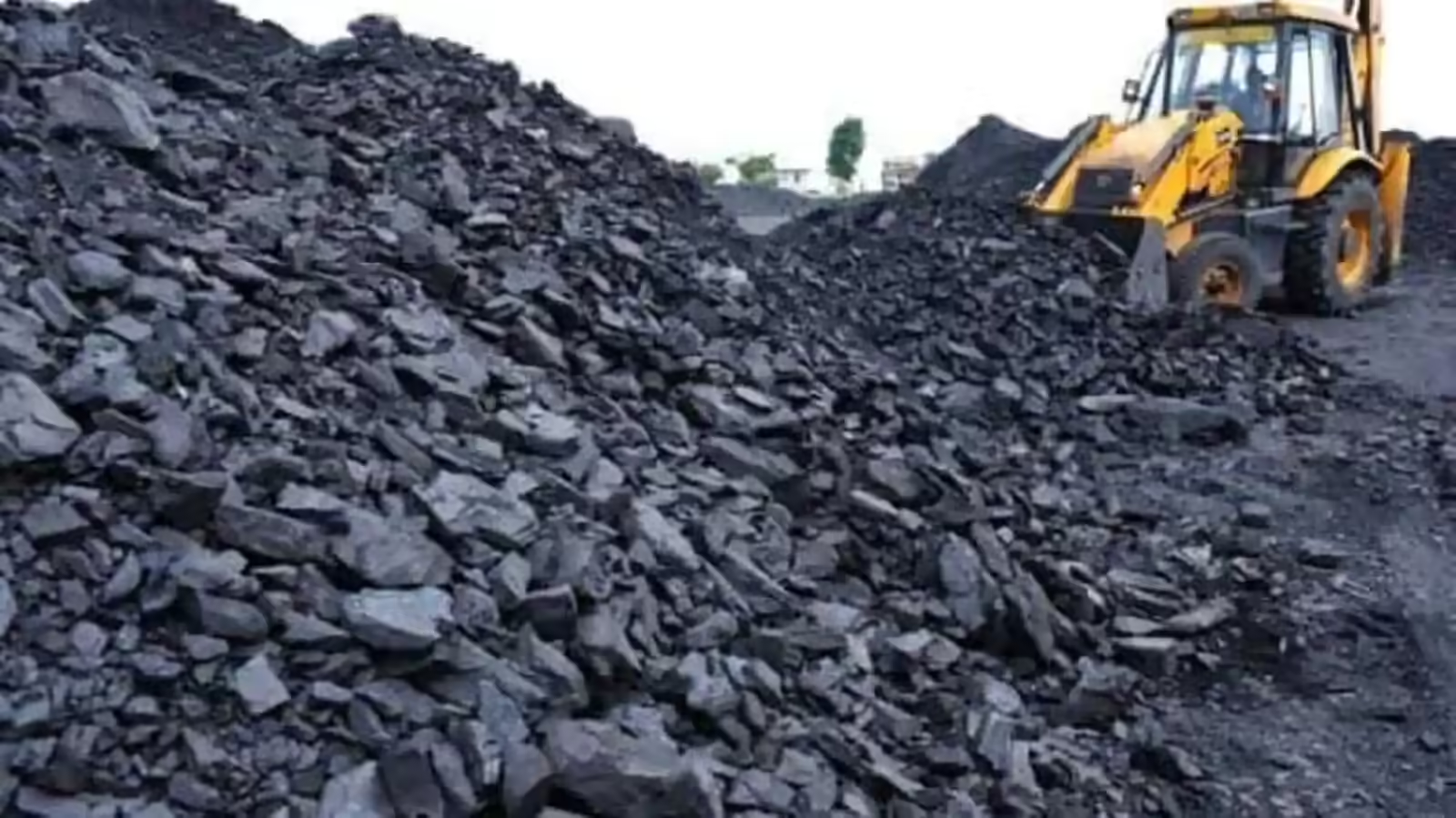
India’s coal industry is undergoing a structural repositioning as policymakers and producers seek to align the country’s largest energy source with emerging climate, industrial and infrastructure priorities. Recent public commentary by senior government leaders has brought renewed attention to how coal is being reframed—not as a sunset resource, but as a transitional pillar supporting India’s urbanisation, manufacturing expansion and energy security ambitions.
Coal remains the backbone of India’s electricity system, supplying a substantial share of baseload power required for cities, transport networks and industrial corridors. However, sectoral reforms over the past decade have altered how coal is produced, allocated and integrated into the broader energy economy. Industry analysts point to governance changes, transparent auction mechanisms and the opening of commercial mining as key inflection points that have reshaped investment confidence and operational efficiency.India’s coal output has crossed the one-billion-tonne threshold in the current fiscal cycle, placing the country among the world’s largest producers. While capacity expansion continues, planners increasingly emphasise quality, logistics optimisation and environmental performance rather than volume alone. This shift is particularly relevant for infrastructure-intensive sectors such as cement, steel and construction materials, where stable energy supply remains critical to cost control and project delivery.
From an urban development perspective, coal’s evolution is being driven by mounting sustainability pressures. Public sector coal enterprises are scaling investments in renewable energy assets, coal washing, digital mine monitoring and pilot projects for carbon capture and utilisation. Biomass co-firing and coal gasification initiatives are also gaining momentum, aimed at lowering emissions intensity while extending the usability of existing thermal infrastructure.Urban economists note that this recalibration reflects India’s dual challenge: expanding cities and manufacturing output while reducing the carbon footprint of growth. Coal-linked supply chains support millions of jobs across mining regions, rail logistics and heavy industry, making a sudden exit economically disruptive. Instead, gradual integration with cleaner technologies is being positioned as a risk-management strategy for both labour markets and power reliability.
The sector’s transformation has direct implications for real estate and infrastructure markets. Affordable housing programmes, metro rail projects and industrial parks rely on uninterrupted power and predictable material costs. Improved coal logistics and governance can help stabilise construction inputs, even as renewable capacity scales up across states.Looking ahead, energy transition specialists caution that coal’s long-term relevance will depend on measurable progress in emissions reduction, land rehabilitation and community outcomes in mining regions. Greater transparency around environmental performance and investment in low-carbon innovation will be essential if coal is to coexist with India’s climate commitments.
For India’s cities, the outcome will shape how energy security, industrial competitiveness and sustainability are balanced in the coming decades—particularly as demand rises alongside population growth and urban expansion.