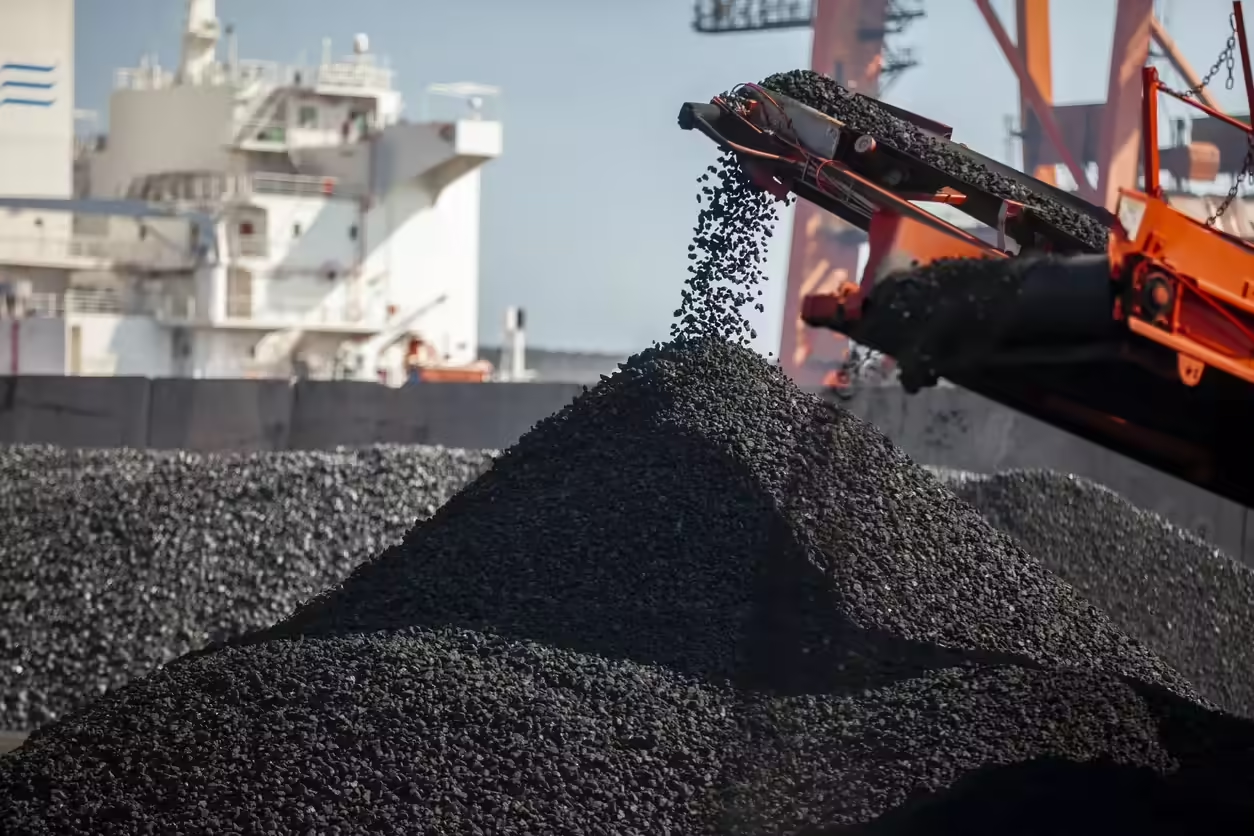
Odisha Mahanadi Coalfields Break Daily Output Record
Coal India Ltd, India’s state-owned mining major, is advancing an expansive strategy to secure rare earth elements (REE) through global partnerships and domestic collaborations — a significant shift from its traditional coal-focused operations that could influence India’s strategic supply chains for critical minerals. This initiative seeks to reduce dependency on China-dominated rare earth markets and align with India’s broader industrial and clean-technology ambitions.
Rare earth elements — a group of 17 metallic elements essential for electric vehicles (EVs), wind turbines, high-end electronics and defence systems — have become a geopolitical priority as China’s share of global production and processing remains dominant. In late 2025, Beijing expanded export curbs on certain REE, underscoring India’s vulnerability to supply disruptions. At the centre of Coal India’s pivot is its coking-coal subsidiary, Bharat Coking Coal Ltd (BCCL), which has begun exploring partnership opportunities across Australia, Russia, Argentina, Chile and several African nations. These discussions are at an early stage, according to senior leadership, but signal a proactive effort to diversify sources of rare earth deposits and associated technologies.
The funding for overseas ventures will largely come from BCCL’s recent initial public offering, which garnered strong investor interest — oversubscribed nearly 147 times — reflecting confidence in the company’s strategic direction beyond traditional coal mining. Coal India is not only targeting overseas mining partnerships but also intends to bolster domestic collaborations with public sector mineral entities such as Indian Rare Earths Limited (IREL), Khanij Bidesh India Ltd and Hindustan Copper. These partnerships aim to integrate international access with India’s existing capacities in rare earth refining and critical mineral processing, even as the domestic industry works to scale up research and extraction technologies. Analysts say this dual approach is a strategic response to the structural challenges facing critical mineral supply chains. China’s dominance in rare earth refining has made other economies highly dependent on imported materials, exposing sectors such as EV and renewable energy manufacturing to pricing volatility and geopolitical risk. Securing alternative sources — both abroad and at home — can enhance supply chain resilience and support India’s broader energy transition goals.
However, the shift also presents challenges. Rare earth mining and processing require advanced technology and capital-intensive infrastructure, including hydrometallurgical separation facilities that are currently limited in India. Without these capabilities, raw ore imports will still depend on external processing partners, potentially reducing the immediate impact of mining partnerships on domestic industry autonomy. Environmental and regulatory considerations also play a crucial role. Mining activities abroad must navigate varied ecological safeguards and indigenous land rights regimes, while domestic extraction proposals require careful alignment with sustainable resource use standards. Industry planners note that managing these dynamics is critical if Coal India’s rare earth ambitions are to yield meaningful economic and strategic dividends.
Beyond geopolitical diversification, Coal India’s rare earth strategy reflects India’s broader policy emphasis on critical minerals — part of initiatives like the National Critical Mineral Mission and burgeoning partnerships with global allies. Success in this arena could reduce import dependence, support local manufacturing ecosystems for clean technologies and contribute to equitable growth across industrial supply chains.