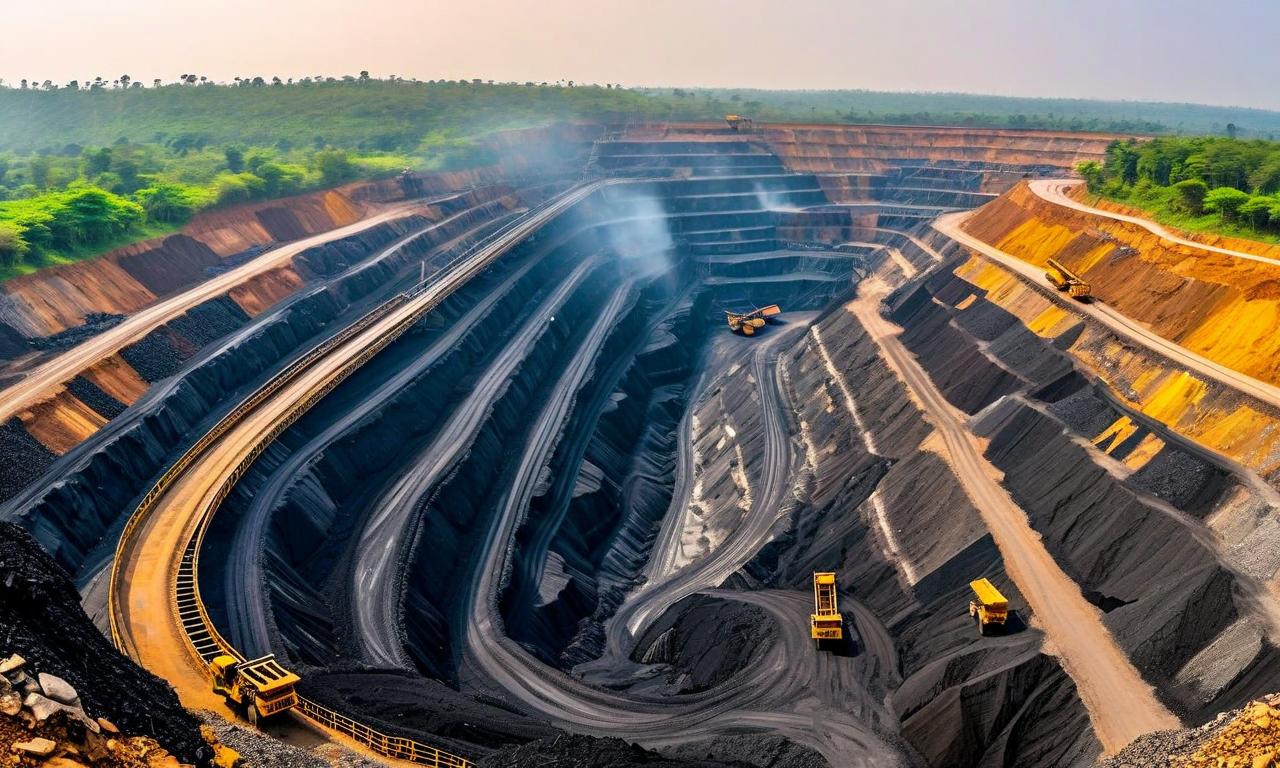
Odisha Coal Mining Economy Drives India Resource Growth
India’s largest state-owned coal producer is broadening its strategic footprint into critical minerals, signalling a potential shift in how traditional energy sectors align with long-term industrial and climate imperatives. Bharat Coking Coal Ltd (BCCL), a core subsidiary of Coal India, is exploring overseas partnerships and supply chain diversification for rare earth elements across Australia, Russia and multiple African jurisdictions — a bid to reduce reliance on concentrated markets and reinforce supply resilience for key manufacturing sectors.
Rare earth elements — a group of 17 metals essential to technologies from electric vehicles and wind turbines to advanced electronics and defence systems — have long been dominated by China’s mining and processing capacity. Recent export restrictions from Beijing have heightened global interest in alternative suppliers, and India’s push into this space reflects both economic and geopolitical calculations. Coal India’s planned move into rare earths is noteworthy for urban economies and infrastructure planners. As cities wrestle with the demand for clean energy technologies and digital infrastructure, access to critical minerals becomes a backbone for sustainable growth. Partnerships under consideration would involve both overseas engagements and domestic collaborations with state entities specialising in mineral exploration and refinement.
Financing for these ventures is set to stem partly from proceeds of a recently oversubscribed initial public offering (IPO) of BCCL shares, underscoring strong investor confidence in the unit’s diversified growth strategy. The IPO, which did not issue new shares but saw heavy subscription from institutional and retail investors alike, is expected to provide capital for both rare earth initiatives and expansion of coking coal capacity — critical for steelmaking. Urban economies are closely tied to steel production, and with India pursuing ambitious infrastructure and housing programmes, stable coking coal supplies remain vital. BCCL aims to grow its coking coal output from around 40.5 million tonnes per year to 56 million tonnes by 2030, a target that aligns with broader industrial mandates but also raises questions about balancing fossil fuel production with decarbonisation goals.
Diversifying into rare earths dovetails with national objectives to reduce import dependency for critical minerals. India’s own geological surveys estimate domestic reserves of rare earth elements across several states, while bilateral and multilateral efforts have broadened cooperation with resource-rich nations for minerals essential to renewable energy and next-generation technologies. Analysts suggest that Coal India’s engagement with critical minerals reflects a broader recognition that energy and materials security will be central to urban competitiveness in the coming decades. Urban centres reliant on advanced manufacturing, digital services and clean energy deployment will need secure access to these strategic inputs.
However, challenges remain. Rare earth extraction and processing carry environmental and regulatory complexities, including radioactive by-products and stringent national controls. Effective governance frameworks and community engagement will be critical to ensure environmentally responsible development and equitable benefits for local populations.
If realised, Coal India’s strategic pivot could signal a hybrid model for legacy resource companies: maintaining foundational industrial supplies while participating in future-facing supply chains that support zero-carbon urban growth and resilient economic ecosystems.