


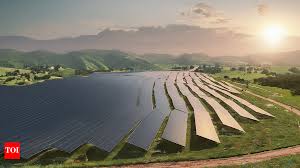
India’s electricity generation capacity expanded significantly in 2025, with overall installed power capacity increasing by more than 11 per cent to over 509 gigawatts (GW), and renewable sources accounting for nearly half of that total — a critical threshold in the nation’s transition to low-carbon energy and climate-resilient urban economies. This expansion, detailed in the latest national Economic Survey, underscores the growing role of clean energy in powering homes, businesses and cities while narrowing supply gaps and supporting inclusive development. The rise in installed capacity reflects sustained investment and policy efforts to strengthen generation and distribution infrastructure. Urban and rural electrification efforts under flagship programmes have contributed to greater access to electricity, shrinking the historical demand-supply mismatch to near zero by late 2025 — a vital development for urban productivity, small industry resilience and equitable quality of life across regions.
Renewable energy’s share — approaching 50 per cent of total capacity — marks a watershed moment in India’s energy transition. Solar, wind and other non-fossil sources have more than tripled their footprint over the past decade, positioning India among the top countries globally for renewable energy capacity. Rapid additions in solar capacity continue to outpace fossil fuel growth, driven by policy support and falling technology costs, and are vital for reducing carbon intensity across the national grid while enabling more resilient, decentralised urban power systems. Despite these gains, experts note the transition still hinges on systemic challenges. Integration of intermittent renewable generation into the grid demands smarter infrastructure, energy storage solutions and expanded transmission links — particularly to serve fast-growing metropolitan and peri-urban regions where demand volatility and peak loads stress existing networks. Investment pipelines now prioritise grid upgrades and technologies like distributed energy resources to address these constraints.
The broader economic implication of this infrastructure build-out is significant. Power sector reforms, including revamped distribution schemes, have improved the financial health of electricity utilities, which in years past struggled with losses and inefficiencies. Stronger balance sheets for distribution companies help reduce tariffs and support long-term planning for developers and investors in urban real estate and industrial clusters. Urban planners and climate specialists highlight that increased renewable capacity can transform energy planning in cities, enabling demand-side flexibility, lower pollution, and localised microgrid deployments that support resilience against extreme weather events. Achieving a truly low-carbon power mix will also require scaling storage technologies, sourcing critical raw materials ethically, and balancing economic competitiveness with sustainability goals.
As India moves forward, the challenge will be to sustain this momentum while ensuring that infrastructure growth aligns with inclusive, people-centred urban development. Strengthening regulatory frameworks, enhancing skills for clean energy deployment, and integrating energy access with affordable housing and smart city initiatives will be essential next steps in shaping a resilient, equitable energy landscape.
Also Read: Citywide Electricity Maintenance To Disrupt Bengaluru
India Clean Energy Capacity Hits Major Growth Mark
